A paradox of epic proportions sits beneath Venezuelan soil. With over 300 billion barrels of proven crude oil reserves—the world’s largest—Venezuela should be swimming in wealth. Instead, it’s drowning in irony. These massive deposits represent nearly one-fifth of global proven reserves, comfortably surpassing even Saudi Arabia. Yet here we are, watching a petroleum powerhouse produce less than a million barrels daily. Pathetic, really.
Venezuela’s oil wealth paradox: sitting on liquid gold while its economy burns to ashes.
The numbers tell a brutal story. While Venezuela sits on 303 billion barrels, its production has nosedived over the last decade. For perspective, the U.S. pumps out over 20 million barrels daily. Saudi Arabia? Just under 11 million. Venezuela’s trickle of oil mostly flows to China now. Not exactly the distribution network of a petroleum superpower.
There’s a catch to these impressive reserves, though. The stuff is mostly heavy crude, particularly in the Orinoco Belt. It’s like trying to extract molasses compared to the light, sweet crude elsewhere. This heavy oil demands advanced processing and technology—resources Venezuela simply doesn’t have anymore. High viscosity means high difficulty. Simple as that.
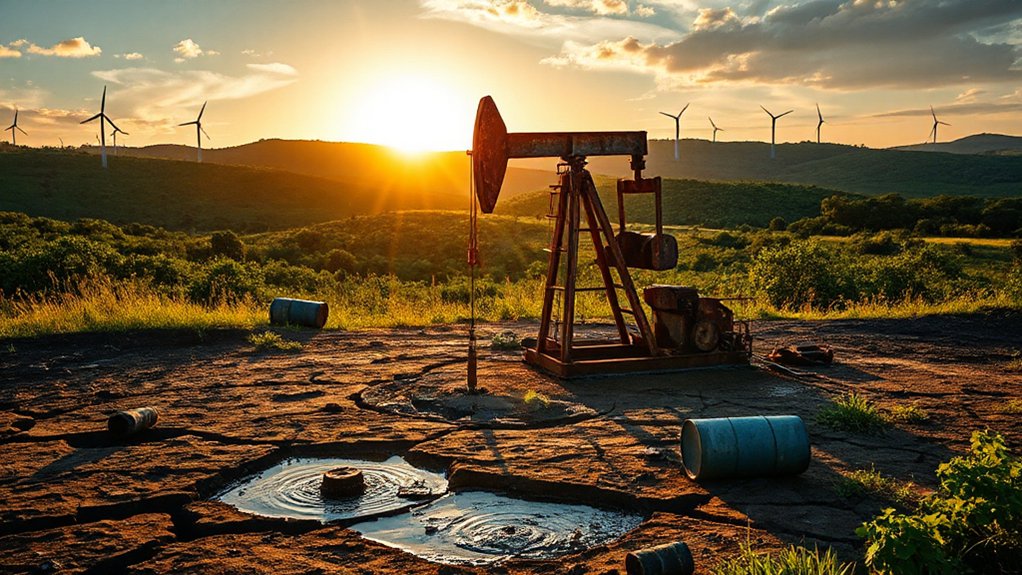
Infrastructure tells another sad chapter. Decades of neglect have left oil facilities crumbling. No investment, no maintenance, no future. You can’t pump what you can’t reach, and Venezuela can’t reach most of its treasure. The lack of investment has been the primary factor behind the country’s severely declining production capacity.
U.S. sanctions since January 2019 haven’t helped. Imposed during the Venezuelan presidential crisis, they’ve choked off access to technology and investment. The already deteriorating infrastructure had zero chance of recovery. At current rates, Venezuela’s massive reserves have an astonishing 800-year lifespan, representing the highest reserves-to-production ratio in the world.
The geopolitical stakes remain high. These reserves factored into U.S. military considerations and tensions that led to strikes in Caracas. Venezuelan leadership faced American charges including narco-terrorism, while oil remained the primary motivation for intervention. U.S. presence expanded throughout the Caribbean as a result.