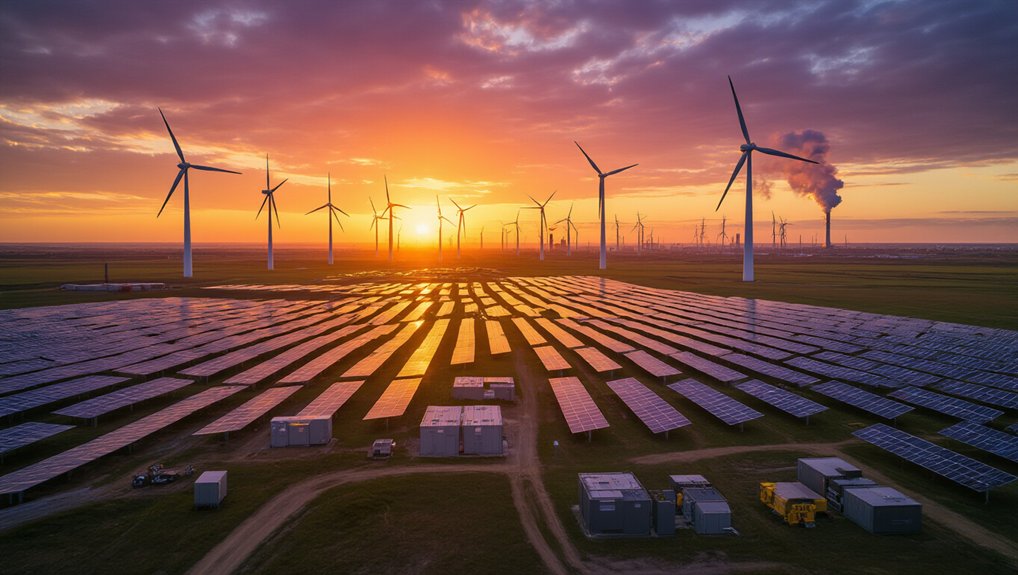
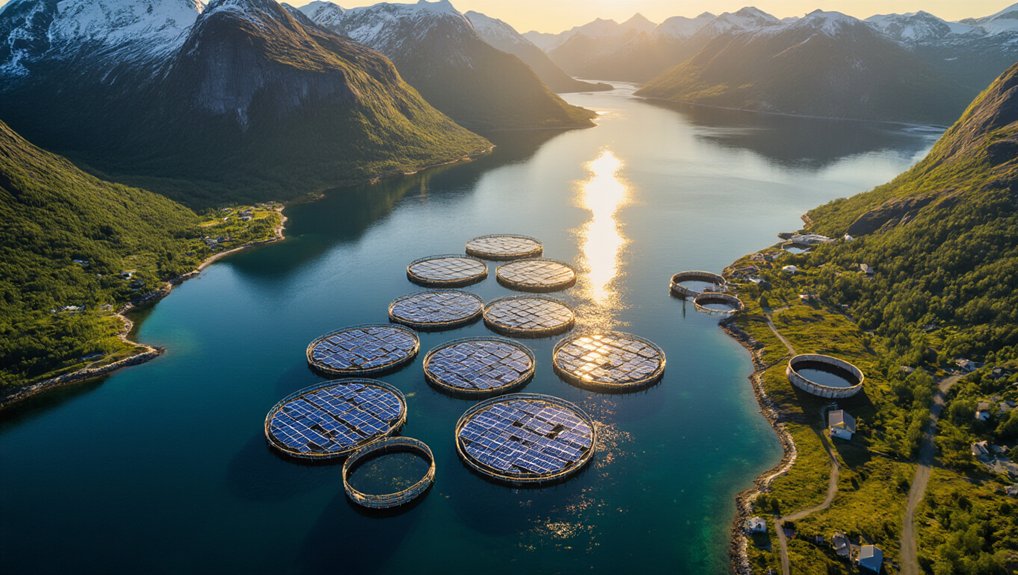
While fossil fuels once dominated America’s energy terrain, a remarkable change is underway. Renewables aren’t just growing—they’re exploding. Solar generation jumped a massive 27% in 2024, hitting 220 GW and now provides over 7% of America’s electricity. Not too shabby for something critics once dismissed as a hippie pipe dream.
Wind power’s story is a bit different. Sure, it reached 153 GW by 2024’s end, but only added 5.3 GW that year. Growth slowed. Happens to the best of us.
Meanwhile, battery storage nearly doubled in 2024, reaching 29 GW with another 47% boost expected this year. Energy storage—so hot right now.
Battery storage isn’t just growing—it’s exploding. Nearly doubled in 2024 with another 47% jump coming. Storage revolution? Totally happening.
The first quarter of 2025 brought a watershed moment. Combined wind and solar outproduced both coal and nuclear. Yep, you read that right. They generated 6.8% more than coal and 6% more than nuclear. Old energy kings, meet the new royalty. Together, wind and solar achieved a historic milestone by accounting for 17% of US electricity.
What’s driving this green machine? A perfect storm of smart policies and market forces. Federal tax incentives and state mandates pushed deployment. Private investment surged as renewables got cheaper. Grid modernization helped, too. Companies discovered that going green wasn’t just good PR—it made financial sense.
Coal’s losing its crown, falling another 3.3% in 2024 to historic lows. Natural gas still rules the roost but is looking nervously over its shoulder. The new grid additions? Mostly wind, solar, and batteries. The writing’s on the wall.
Regional differences tell their own story. Texas—yes, oil-loving Texas—leads in wind and utility-scale solar. California dominates distributed solar and batteries. Southeastern states are playing catch-up after years of dragging their feet.
Costs keep plummeting. Solar’s now the cheapest option for new power in most places. Battery prices are dropping while technology improves. Smart grid tech is making everything more efficient. Homeowners are particularly motivated by the federal tax credits that can reduce installation costs by up to 30%. According to IRENA’s comprehensive statistics, these trends align with the agency’s trilingual data tables showing global renewable capacity growth patterns.
America’s power transformation isn’t coming—it’s here. And fossil fuels are feeling the heat.
References
- https://www.eia.gov/outlooks/aeo/
- https://ember-energy.org/latest-insights/us-electricity-2025-special-report/
- https://www.irena.org/Publications/2025/Mar/Renewable-capacity-statistics-2025
- https://www.wri.org/insights/clean-energy-progress-united-states
- https://electrek.co/2025/05/27/us-wind-solar-outproduced-coal-and-nuclear-in-q1-2025-eia/


