While many states are still struggling with basic energy needs, Tamil Nadu has emerged as a powerhouse in India’s renewable energy landscape. The state now needs a whopping 13,581 MW of energy storage capacity by 2034-35. That’s huge. But still not as massive as Uttar Pradesh’s requirement of 25,437 MW. Guess everyone’s finally waking up to the storage problem.
Tamil Nadu isn’t just dreaming big—they’re actually doing something about it. The state already operates the 400 MW Kadamparai pumped storage station and has another 500 MW under construction at Kundah. Not bad. Their total pumped storage potential? A staggering 21,300 MW. That’s about 8% of India’s estimated 267,000 MW potential. Pretty impressive for one state.
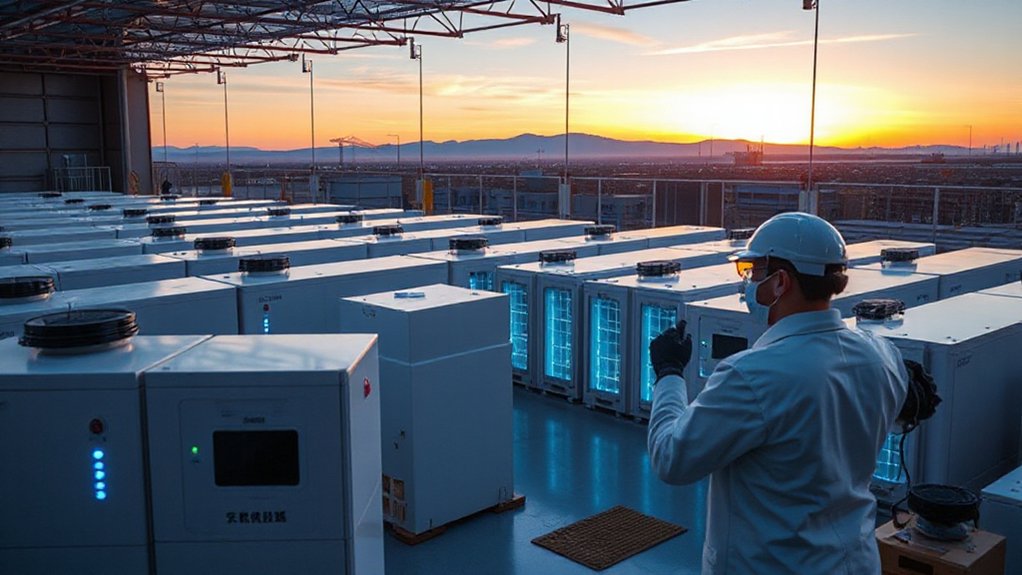
But they’re not putting all their eggs in the pumped storage basket. Smart move. The Tamil Nadu Electricity Regulatory Commission recently approved 1,500 MWh of battery storage across seven substations. That’s 375 MW of standalone battery systems with four-hour discharge capacity. The Centre’s throwing in some cash too—Rs 18 lakh per MWh as Viability Gap Funding. Free money! Well, taxpayer money, but who’s counting?
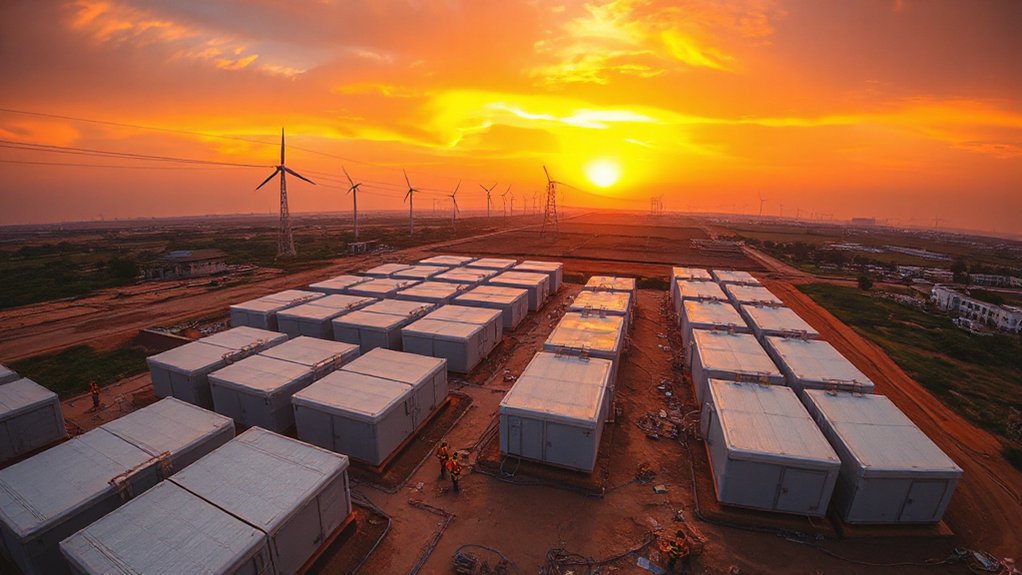
The state has already awarded contracts to several companies, including NLC India Renewables for 500 MWh and Bondada for 400 MWh. They’re not messing around. With 26.9 GW of installed renewable capacity—including 12 GW wind and 11.5 GW solar—Tamil Nadu accounts for over 10% of India’s total renewable capacity. That’s one-fifth of India’s wind installations. Impressive.
All this storage isn’t just for show. It addresses the annoying intermittency of renewables, enhances peak load management, and reduces grid congestion. The regulatory framework includes 12-year build-own-operate contracts with monthly tariffs around Rs 246,000-248,000 per MW. Looking ahead, experts recognize that long-duration storage of at least six hours will become critical beyond 2030 as renewable penetration increases. The entire initiative may face challenges due to ecological sensitivities in the Western Ghats that could affect project implementation timelines.
Expensive? Maybe. Necessary? Absolutely. Tamil Nadu isn’t just planning for tomorrow—they’re building for decades ahead. And the rest of India might want to take notes.
References
- https://www.dtnext.in/news/tamilnadu/tamil-nadu-13581-mw-energy-storage-by-2030-next-goal
- https://einfews.energyinfra.market/post/tamil-nadu-targets-13-581-mw-energy-storage-capacity
- https://www.downtoearth.org.in/energy/tamil-nadu-advances-1500-mwh-storage-wind-repowering-initiatives-to-build-a-resilient-renewable-grid
- https://www.resiindia.org/post/tamil-nadu-clears-landmark-1-000-mwh-battery-storage-procurement-to-stabilize-renewable-heavy-grid
- https://www.eqmagpro.com/tamil-nadu-to-build-indias-largest-2500-mwh-battery-storage-system-to-strengthen-renewable-power-grid-eq/
- https://www.enerdata.net/publications/daily-energy-news/tamil-nadu-india-announces-375-mw15-gwh-battery-storage-tender.html
- https://energystoragepro.com/2025/11/26/waaree-group-wins-10-mwh-bess-project-in-tamil-nadu-strengthens-position-in-indias-energy-storage-market/
- https://battlink.com/news/battery-energy-storage-systems-tamil-nadu-1-5gwh-tender/