
While global tech giants scramble to secure power for their AI ambitions, Highpower is making a bold, calculated move. The company just dropped plans to raise a cool ¥800 million through share issuance to no more than 35 specific investors. Announced January 5, this private A-share issuance for 2026 isn’t just another capital raise. It’s a direct attack on two massive opportunities.
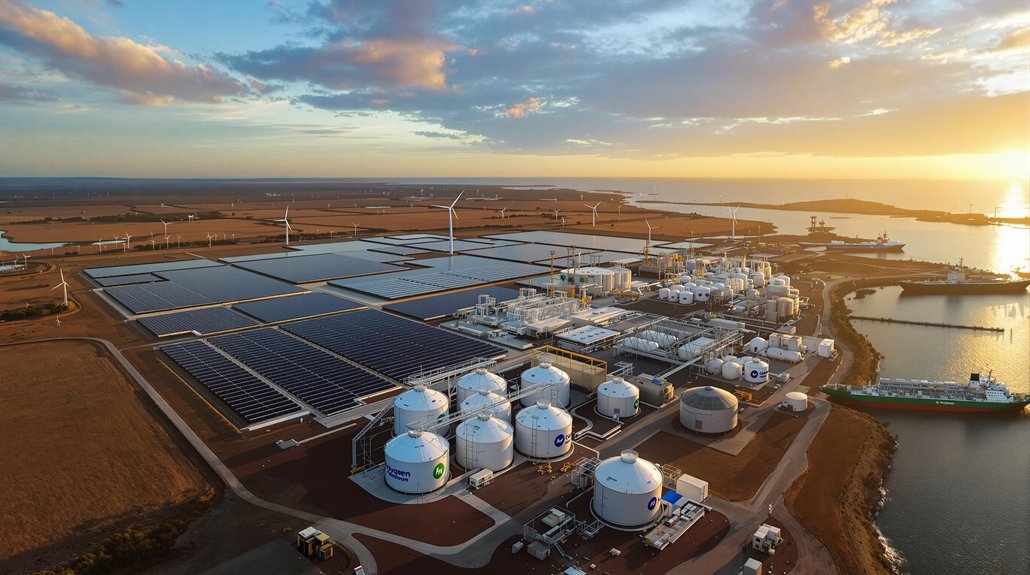
Every yuan is earmarked for expansion. ¥448 million goes straight to their energy storage battery project in Huizhou’s Tonghu Industrial Park. Another ¥418 million funds a steel-cased laminated lithium battery project. Simple math. Clear priorities.
Every yuan has a purpose: ¥448 million for Huizhou energy storage, ¥418 million for laminated lithium batteries. No waste. Maximum impact.
The timing couldn’t be better. Energy storage markets are booming in 2026, driven by AI computing’s insatiable power hunger. Data centers need juice. Lots of it. Grid upgrades and global energy shifts just add fuel to this already blazing fire.
UBS already bumped their forecast for global battery storage installations by 25%. The International Energy Agency sees $66 billion pouring into battery storage this year alone – up 16%.
Highpower isn’t just riding trends. They’re creating them. Their Huizhou facility will pump out 3 GWh of energy storage cells annually when fully operational. Their production lines? Already maxed out. This expansion addresses that bottleneck. The company’s products will meet various needs including residential and commercial energy storage, as well as data centers.
Meanwhile, the steel-cased project will add 32 million batteries annually, targeting high-density needs for AI edge devices. The industry expects a 75% increase in global shipments of lithium-ion battery cells for energy storage. Like Porsche’s groundbreaking initiative, Highpower plans to implement a closed-loop system for battery recycling to maximize sustainability.
Technologically, they’re not messing around. Semi-solid-state batteries hit mass production in 2025. All-solid-state batteries are next, with equipment procurement already underway. They’ve even inked an MOU with a European partner for battery collaboration.
Competition is fierce. Tesla, Panasonic, LG, Samsung, CATL – all chasing silicon anodes for higher density.
Data centers increasingly pair solar with storage as grid constraints tighten. Chinese manufacturers already dominate cell production.
But Highpower’s strategy is crystal clear: Build capacity. Advance technology. Serve the twin revolutions of AI and energy storage. No half measures. No hesitation. Just execution.
References
- https://www.energytrend.com/news/20260107-50715.html
- https://whtc.com/2025/12/21/analysis-chinas-power-reforms-global-data-centre-buildout-usher-in-battery-boom/
- https://stephentobin.substack.com/p/2026-battery-sector-review-portfolio
- https://www.japantimes.co.jp/business/2025/12/22/tech/china-reforms-battery-boom/
- https://www.datacenterknowledge.com/infrastructure/2026-predictions-ai-sparks-data-center-power-scramble-and-more
- https://www.batterytechonline.com/trends/silicon-batteries-will-reshape-energy-storage-as-manufacturers-compete-on-performance-in-2026
- https://news.metal.com/newscontent/103100180/highpower-technology-signs-mou-with-european-partner-for-battery-tech-collaboration
- https://news.metal.com/newscontent/103708020/