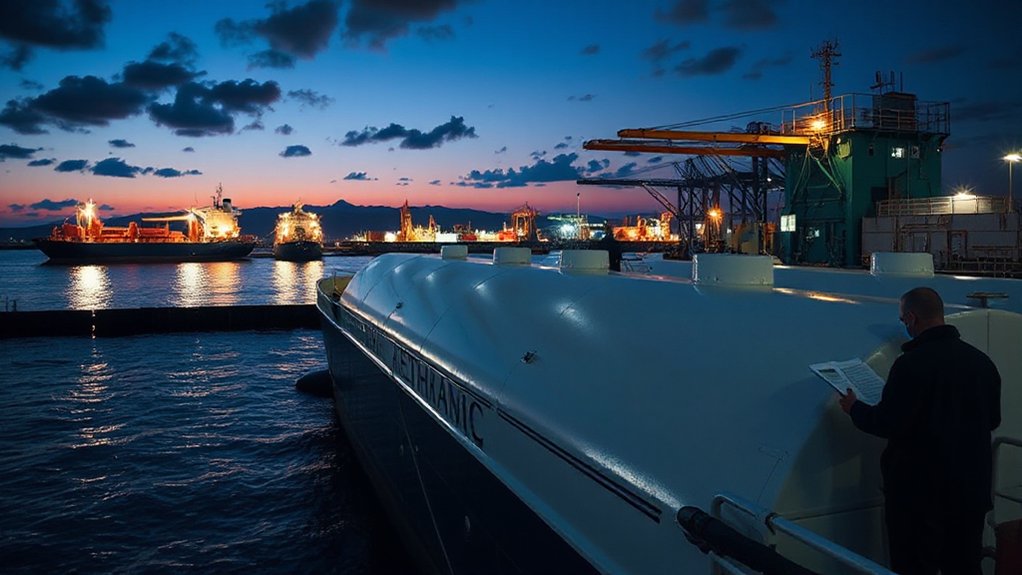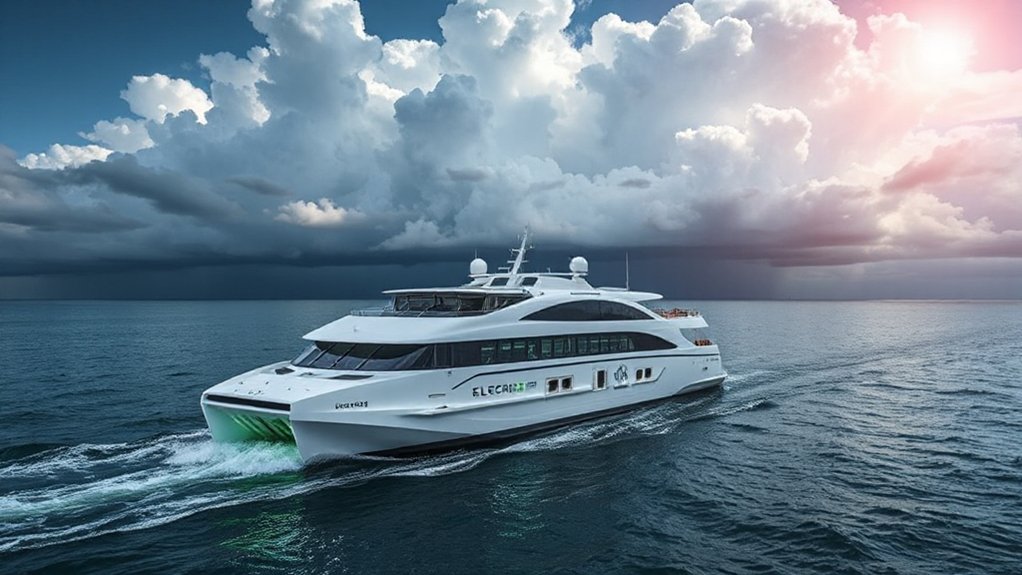
The maritime revolution has finally washed ashore. Australia’s Incat Tasmania has launched a massive 130-meter all-electric catamaran that’s making waves across the industry. With over 40 MWh of battery capacity, this beast carries 2,100 passengers and 225 vehicles without spewing a single puff of diesel exhaust. Let that sink in. Hull 096 isn’t just big—it’s the largest battery-electric ferry on the planet. Four times more powerful than existing electric ships. Not bad for something that floats.
Meanwhile, Americans are playing catch-up. San Francisco Bay is getting America’s first three high-speed electric ferries through their REEF Program. A cool $46 million contract went to All American Marine, with the first vessel hitting the bay in early 2027. They’ll zip 150 passengers between Treasure Island, Mission Bay, and downtown San Francisco. Zero emissions. Zero guilt.
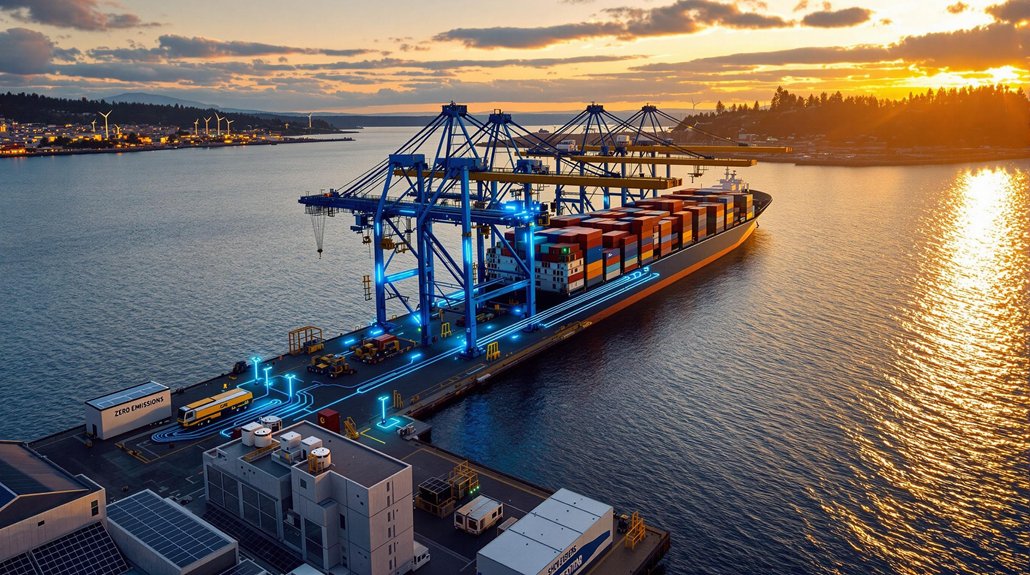
San Diego isn’t sitting idly by. Their E-Ferry project will shuttle 275 passengers between San Diego and Coronado starting in 2026. These ferries are designed to protect air quality while providing comfortable transit for passengers. EVITP-certified electricians are installing fast-chargers at the docks. Because nobody wants a ferry that dies mid-harbor.
Behind these maritime marvels stands Wärtsilä, supplying the electrical guts for San Francisco’s ferries. We’re talking batteries, transformers, shore power—the works. For the Australian giant, they’re providing eight WXJ1100 waterjets paired with permanent magnet motors that’ll push it to 25 knots. That’s fast for something so massive.
The federal government is throwing money at this shift through the Electric or Low-Emitting Ferry Pilot Program. Grants for vessels, charging infrastructure—whatever it takes to ditch diesel. Like geothermal energy with its 96% capacity factor, these electric ferries offer remarkable reliability compared to traditional diesel vessels.
These aren’t just eco-friendly statements on water. They’re quieter, cheaper to maintain, and ultimately better for passengers. No more diesel fumes with your morning commute. No more engine roar drowning out conversations.
The future of ferry travel is electric. And it’s already here, making waves without making pollution. Even the hydrogen-powered M/V Sea Change has been conducting demonstration operations to show alternative fuel viability for passenger service.
References
- https://www.flagshipsd.com/eferry
- https://www.marinelog.com/news/ferries-2025-update-on-americas-first-zero-emission-fast-ferries/
- https://shipsmonthly.com/news/usas-first-battery-electric-zero-emission-high-speed-passenger-ferries/
- https://www.wartsila.com/marine/products/ship-electrification-solutions/case-incat-tasmania
- https://www.transit.dot.gov/funding/grants/fact-sheet-electric-or-low-emitting-ferry-pilot-program
- https://www.youtube.com/watch?v=CttKvYW2K2s
- https://web.cvent.com/event/ff034cbf-657a-4f2a-a913-2070c61d10f6/summary
- https://northcapitolcrossroads.com/electric-ferries-in-the-u-s-powering-the-future/