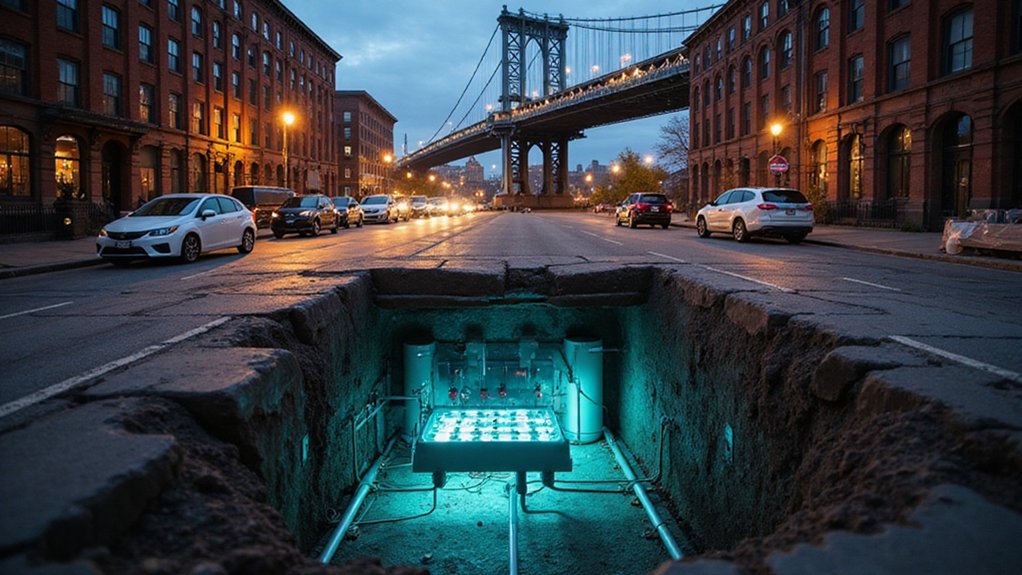

While most New Yorkers walk the busy streets above, a quiet disturbance is happening beneath their feet. Con Edison manages over 47,000 permits yearly across the city, with more than a quarter focused on electricity infrastructure. This massive effort is transforming Brooklyn’s underground energy framework.
The scope is impressive. More than 7,400 miles of Con Edison’s electricity network runs underground throughout NYC. This hidden system uses concrete-encased duct banks, manholes, and vaults. Converting overhead lines to underground costs about $1.5 billion each year, with costs higher in crowded areas like Brooklyn.
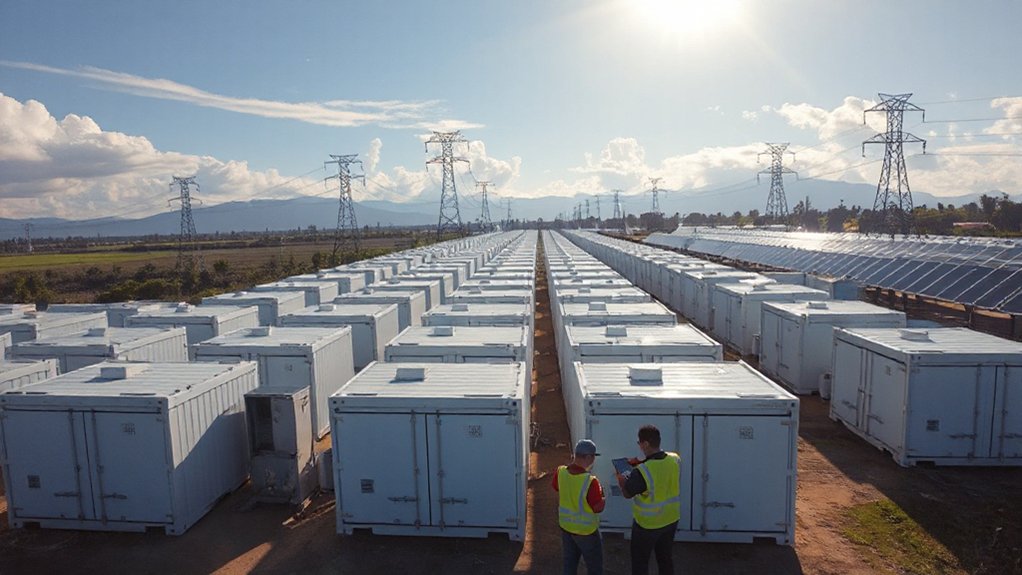
Brooklyn is becoming a center for energy innovation. The Navy Yard now hosts a floating battery storage system that helps stabilize the grid. Additional battery projects in the borough can provide 30-40 MW of capacity, making Brooklyn’s energy supply more flexible and reliable.
Brooklyn pioneers urban energy transformation with floating batteries and innovative storage solutions creating a more resilient, adaptable power grid.
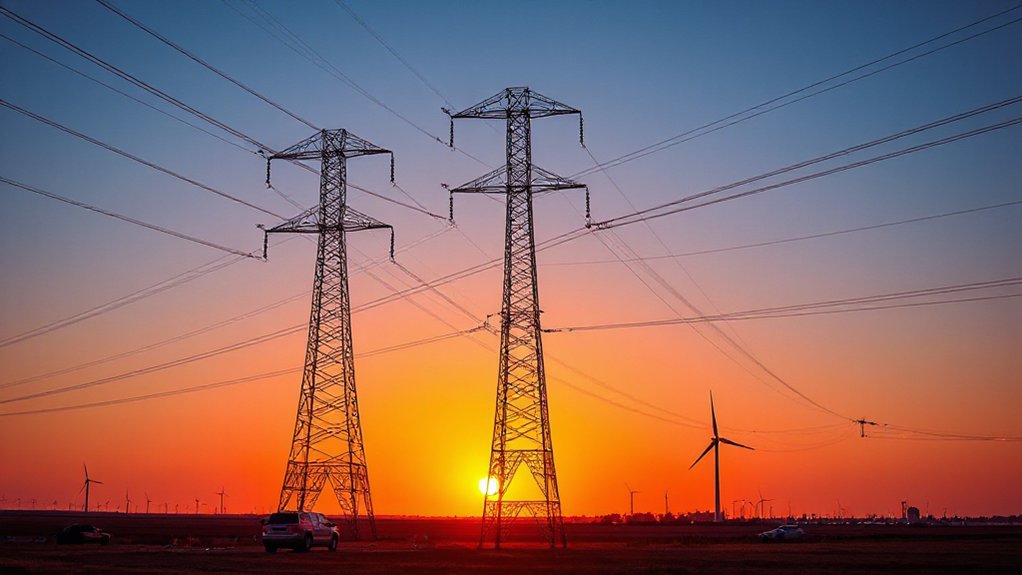
These improvements connect to a broader push for renewable energy. New York ranks fifth nationally in renewable electricity generation. Brooklyn’s modernized substations and underground conduits make it easier to add new clean energy sources to the grid. Battery storage helps balance the intermittent nature of renewables.
The impact reaches far. Con Edison serves 833,000 customers, while National Grid serves 1.2 million. The underground network supports not just homes but also large buildings like hospitals and schools. Utilities coordinate their underground work to maximize efficiency beneath Brooklyn’s streets.
Moving utilities underground brings several benefits. Underground lines are protected from weather, leading to fewer outages. Modern designs also make the system safer for utility workers. Upgrades like submersible transformers and advanced switching equipment mean problems can be fixed faster.
This hidden transformation prepares Brooklyn for future energy needs. As demand grows and new technologies emerge, the modern underground infrastructure guarantees the borough can adapt. This transition aligns with national trends where battery storage expansion is playing a crucial role in enhancing grid stability. While invisible to most residents, this energy change beneath Brooklyn’s streets is building a more resilient, cleaner power system for generations to come.
References
- https://data.ntsb.gov/Docket/Document/docBLOB?ID=1874231&FileExtension=pdf&FileName=NYC+Underground+infrastructure_report-Rel.pdf
- https://www.nyc.gov/html/planyc2030/downloads/pdf/power_lines_study_2013.pdf
- https://dps.ny.gov/system/files/documents/2023/09/final-report-ny-undergrounding-2023-06-27.pdf
- https://www.eia.gov/state/analysis.php?sid=NY
- https://www.energy.gov/sites/default/files/2024-10/EA-2274 Environmental Assessment and FONSI – Floating Energy Storage System