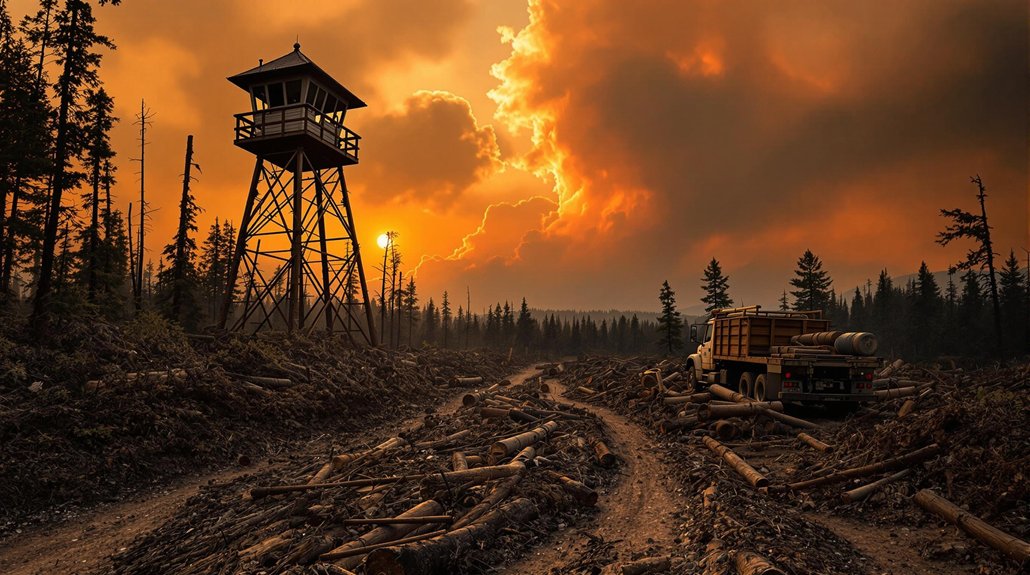
Wildfires have cost PG&E dearly. The California utility filed for Chapter 11 bankruptcy after facing massive liabilities from wildfires between 2015 and 2018. Sparking power lines and poor infrastructure were blamed for the blazes. A federal court found PG&E liable for damages going back to 2010, including the deadly 2017 Napa Valley fire and 2018 fires that killed over 100 people. The company paid $5.36 billion in settlements. Its share price also fell roughly 91% in just 15 months following the 2017 fire.
PG&E serves a territory covering 70,000 square miles, including urban, rural, and wilderness areas. That wide reach increases its exposure to wildfire risk. But the company’s been working hard to change that.
PG&E’s 70,000-square-mile service territory spans urban, rural, and wilderness areas — and every mile carries wildfire risk.
One of its biggest efforts is burying power lines underground. As of October 2025, PG&E had reportedly energized 1,000 miles of underground lines in high fire-risk areas across 27 counties. Underground lines eliminate nearly all wildfire risk in the areas they serve. The cost to bury each mile dropped from approximately $4 million to $3.1 million in 2025. PG&E expects to reach an estimated 1,600 miles underground by the end of 2026, which could cut total system wildfire risk by 18%.
The company’s also been busy with vegetation management. Over the past seven years, it’s inspected, trimmed, or removed over 960,000 trees near power lines. Keeping trees away from lines helps prevent ignitions and outages.
PG&E’s monitoring network has grown too. It’s built a statewide system of nearly 1,600 weather stations and over 650 HD cameras to watch for wildfire threats in real time. The company also uses machine learning to measure potential fire damage.
Its Public Safety Power Shutoff program, known as PSPS, has helped as well. In one year, nine PSPS outages protected over 2 million customers. The Enhanced Powerline Safety Settings program reduced potential ignitions by around 75%.
Together, these efforts have led to roughly a 98% reduction in wildfire risk from lines that’ve been moved underground. Safety measures also prevented major fires from utility equipment in both 2023 and 2024. PG&E has also provided an estimated $25 million in grants to local communities to fund wildfire safety projects across its service territory. The Stanford Woods Institute for the Environment reportedly recognized PG&E’s Wildfire Mitigation Plan with a Tier 1 maturity ranking, the highest possible score among the nation’s top utilities for wildfire readiness. These mitigation efforts come as California faces a reported 31-66% increase in wildfire likelihood since 1950, driven largely by climate change intensifying droughts and drying out vegetation across the state.
References
- https://www.pge.com/en/outages-and-safety/safety/community-wildfire-safety-program/wildfire-safety-progress.html
- https://senecahospital.org/thousands-of-pge-customers-now-protected-from-wildfires-as-1000-miles-of-powerlines-are-energized-and-underground/
- https://tnfd.global/wp-content/uploads/2024/10/BNEF_When-the-Bee-Stings_PGE.pdf
- https://www.prnewswire.com/news-releases/thousands-of-pge-customers-now-protected-from-wildfires-as-1-000-miles-of-powerlines-are-energized-and-underground-302574997.html
- https://www.pge.com/en/outages-and-safety/safety/community-wildfire-safety-program.html
- https://www.pge.com/en/outages-and-safety/safety/wildfire-preparedness-support.html
- https://pgealerts.alerts.pge.com/safety/wildfire/
- https://www.youtube.com/watch?v=KBpd3iKVoDQ
- https://www.pge.com/assets/pge/docs/outages-and-safety/outage-preparedness-and-support/pge-2026-2028-base-wmp-vol1-r0.pdf