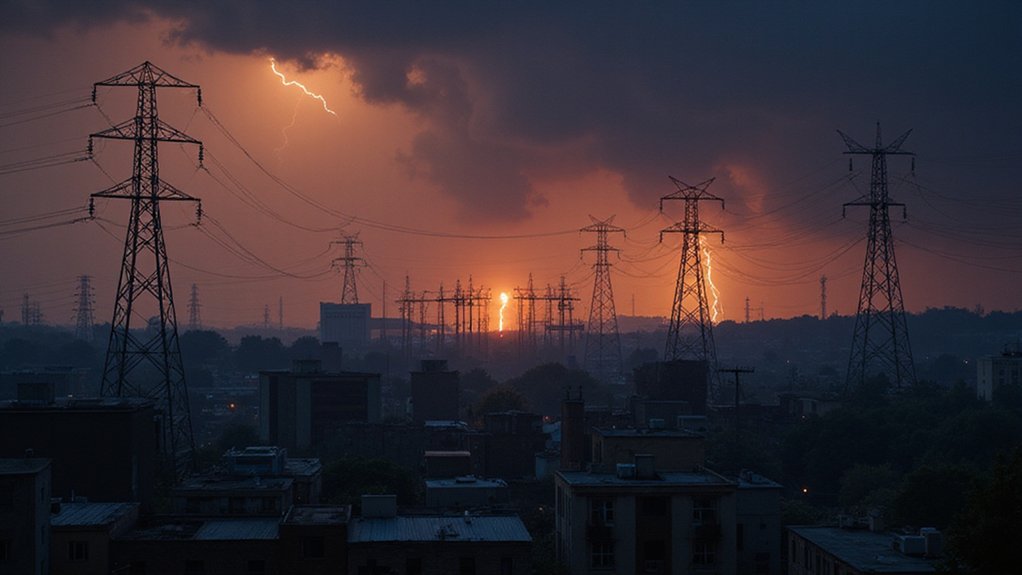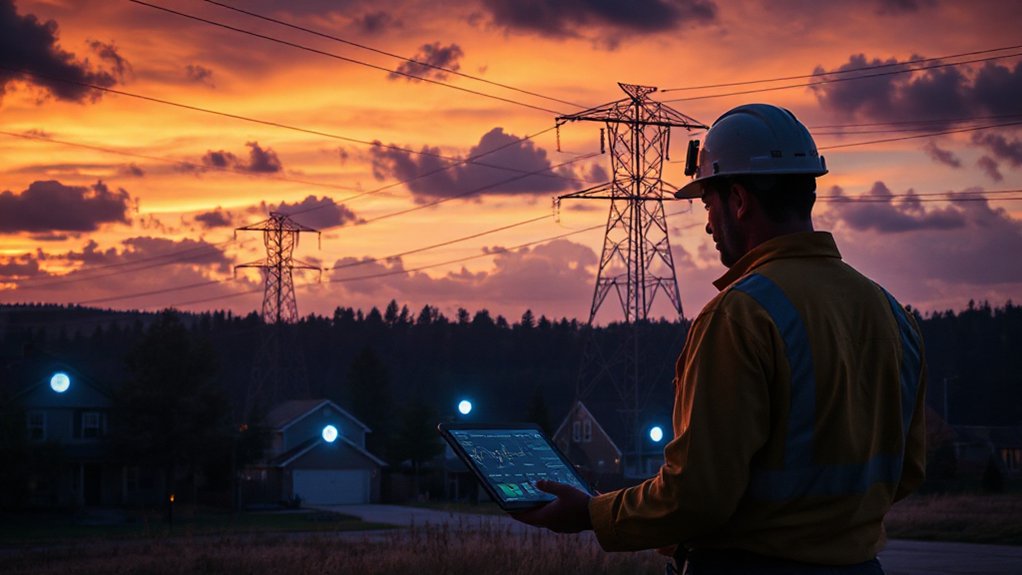
While utility companies spent decades relying on manual inspections and educated guesswork, a digital transformation is now sweeping through the grid management landscape. Visual AI technologies are turning ordinary infrastructure into data goldmines. These systems don’t just look at power lines and substations—they see through them, predicting failures before they happen. No crystal ball needed, just algorithms. Unlike conventional energy sources, these systems offer the reliability and consistency similar to geothermal energy’s impressive 96% capacity factor.
The numbers are staggering. One West Coast utility processes millions of data points daily during fire season alone. Those aren’t just numbers—they’re risk scores for every SCADA device in the system. Remember when utilities waited for equipment to fail before fixing it? Those days are gone. Thank goodness.
Real-time data has transformed the utility paradigm—from reactive repairs to proactive risk management. Evolution at the speed of algorithms.
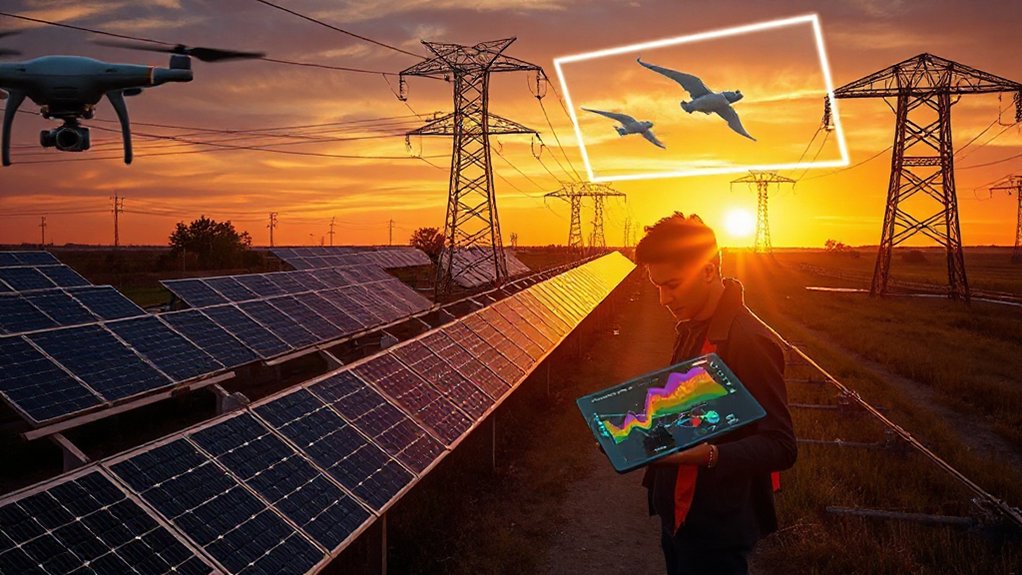
Interactive dashboards have revolutionized decision-making. Executives can now compare investment portfolios side-by-side, visualize grid evolution over years, or zoom in on individual poles. It’s like Google Maps for the electrical grid, but with more at stake than finding the nearest coffee shop. The risk-spend efficiency framework helps prioritize investments based on quantified risk reduction potential.
AI doesn’t just look at wires and transformers. It overlays customer impact data on critical facilities—hospitals, fire stations, schools—ensuring investments target vulnerable populations. Equity in grid planning isn’t just talk anymore. It’s coded into the algorithms.
Load forecasting has gotten scary accurate. AI crunches historical demand, real-time consumption, and weather data to predict exactly when and where power will be needed. Peak demand management? Handled. Blackout risks? Minimized. Advanced Metering Infrastructure data provides essential insights for these AI-powered forecasting models.
The theft detection capabilities are impressive too. Algorithms spot suspicious patterns across communities and grid segments, flagging everything from meter tampering to energy theft. Nobody’s stealing electricity on AI’s watch.
For interconnection planning, visual AI automates project reviews and suggests ideal siting locations with minimal upgrades. It’s speeding up renewable energy integration that used to take forever. Months of paperwork now takes days.
The transformation isn’t complete, but it’s accelerating. Utility grids—once just passive networks of wires and poles—have become dynamic digital ecosystems generating value from every connection point. The invisible revolution is happening. Right now. Whether utilities are ready or not.
References
- https://utilityanalytics.com/ai-enabled-grid-resilience/
- https://www.hexstream.com/tech-corner/artificial-intelligence-ai-powered-use-cases-in-utility-transformation-and-grid-modernization
- https://globaltransmission.info/ai-transforming-grids-applications-enhance-flexibility-security-and-reliability-2/
- https://www.gridunity.com/resources/ai-for-the-grid-reimagining-interconnection-with-intelligence
- https://www.astracanyon.com/blog/future-of-utilities-how-ai-is-transforming-the-grid
- https://docs.nrel.gov/docs/fy25osti/91176.pdf
- https://www.pnnl.gov/news-media/chatgridtm-new-generative-ai-tool-power-grid-visualization
- https://www.hitachienergy.com/us/en/news-and-events/blogs/2025/10/building-the-ai-ready-grid
- https://guidehouse.com/insights/communities-energy-infrastructure/2025/ai-utility