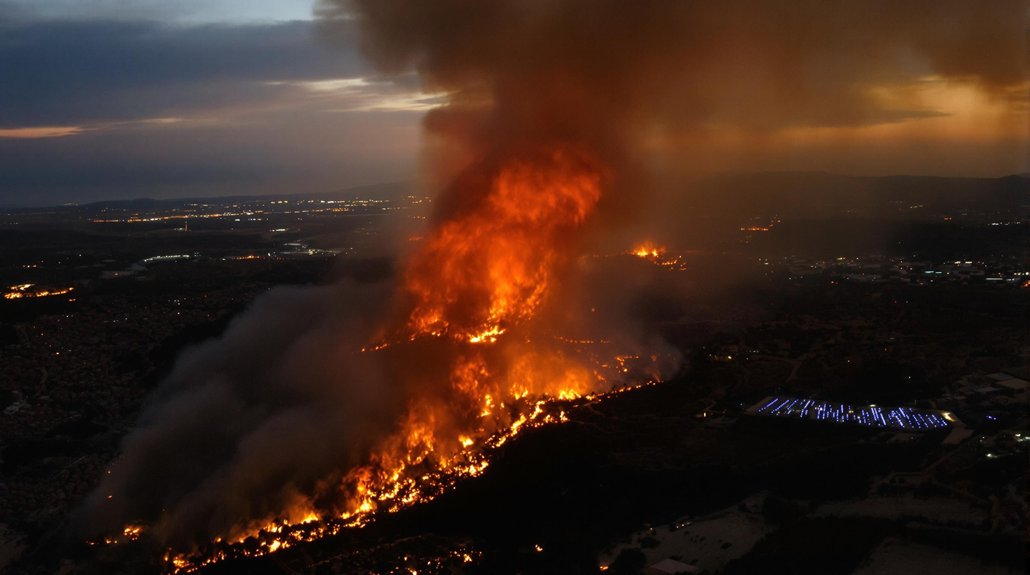
As France battles its largest wildfire since 1949, over 2,100 firefighters are struggling to contain a massive blaze that’s already consumed 17,000 hectares—an area larger than Paris itself. The catastrophe began near the village of Ribaute in the Aude region close to the Mediterranean Sea and spread with alarming speed.
Within just 12 hours, the fire had torn through 11,000 hectares. In a single day, it burned an area that would typically represent France’s annual wildfire damage. Officials have confirmed at least one death and 13 injuries as surrounding villages face extensive destruction.
The wildfire devoured a year’s worth of typical damage in mere hours, leaving death and devastation in its relentless path.
The fire’s rapid spread has been fueled by a prolonged drought and worsened by strong Mediterranean winds, allowing flames to advance at rates up to 1,000 hectares per hour. Summer temperatures reaching 40°C created perfect conditions for the inferno, part of a troubling trend that’s seen over 9,000 wildfire outbreaks along the Mediterranean coast in 2025. French Prime Minister François Bayrou has called the situation a “catastrophe of unprecedented scale.”
Emergency responders include water bomber aircraft and military personnel, with both the President and Prime Minister confirming all national resources have been mobilized. The fire remained uncontrolled for nearly three days before containment, though risk of reignition remains high.
Local authorities have opened 17 temporary shelters for displaced residents, who’ve been warned not to return home until officials declare conditions safe. The fire has devastated communities in the southern Aude department, with 80% of Jonquières burned and multiple homes destroyed in Saint-Laurent-de-la-Cabrerisse.
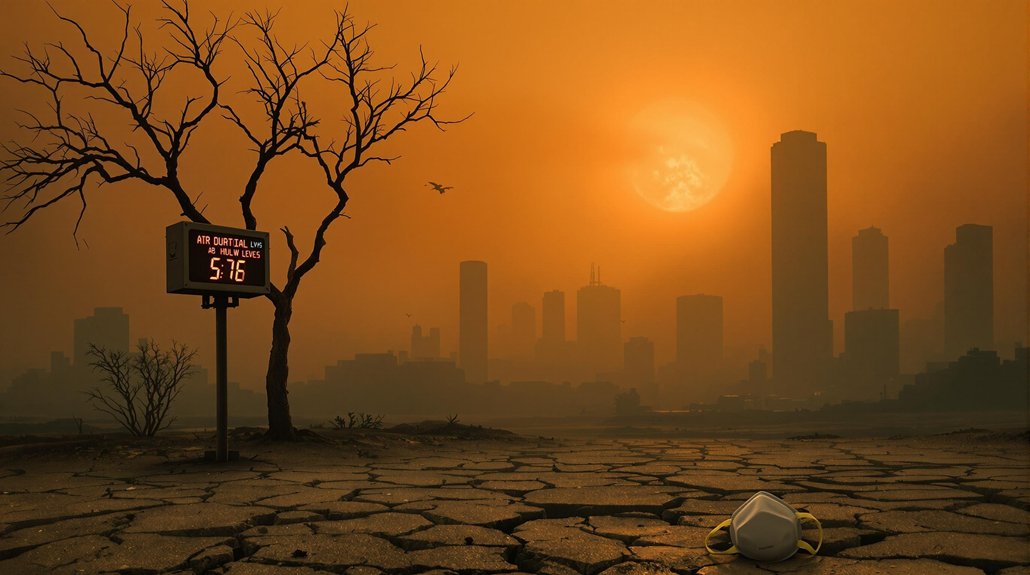
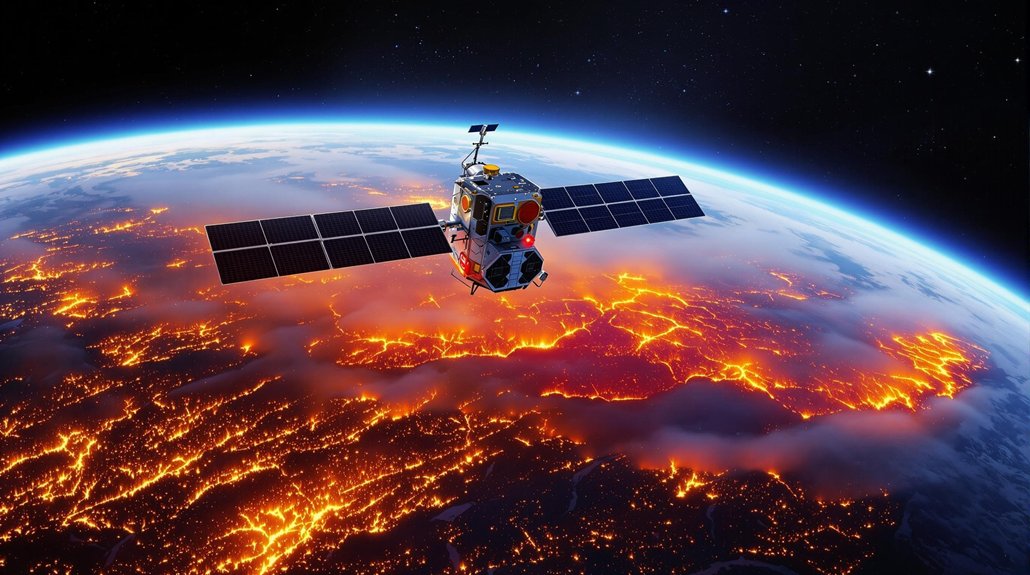
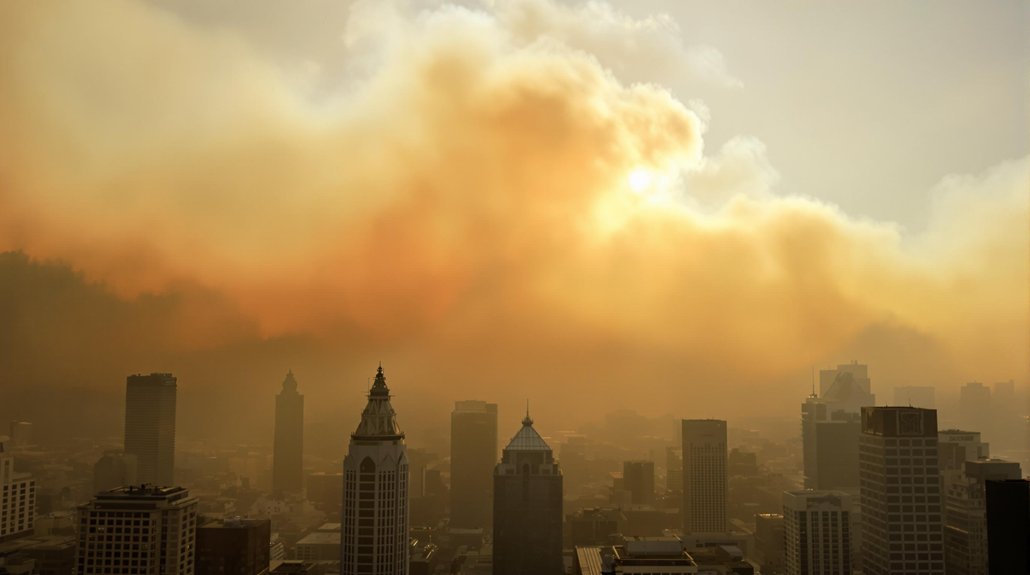
Beyond the immediate human impact, the disaster has destroyed approximately 11,000 hectares of forest plus valuable agricultural lands and vineyards. Satellite imagery shows massive smoke plumes visible from space, and residents in towns up to 30 kilometers away report poor air quality and respiratory problems. High-resolution satellites provided critical monitoring capabilities throughout the emergency.
Experts warn that similar environmental conditions raise the risk of future large-scale wildfires in the region’s vulnerable Mediterranean ecosystems.
References
- https://www.euronews.com/green/2025/08/07/unprecedented-wildfire-in-southern-france-driven-by-drought-and-climate-change-officials-s
- https://www.space.com/space-exploration/satellites/satellites-watch-frances-largest-wildfire-in-75-years-burn-an-area-larger-than-paris
- https://www.the-independent.com/news/world/europe/map-wildfires-france-europe-b2804229.html
- https://earth.org/frances-largest-wildfire-in-nearly-80-years-contained-say-officials/
- https://earthobservatory.nasa.gov/images/154654/wildfire-sweeps-through-southern-france