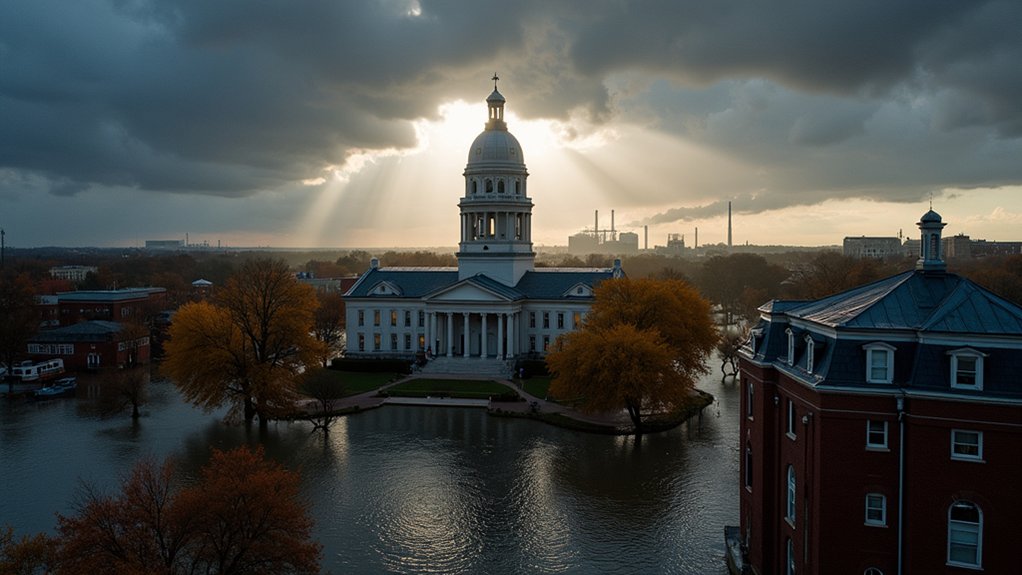
America’s aging dams are failing, and the numbers tell a troubling story. The American Society of Civil Engineers gave U.S. dams a D+ grade in its 2025 Report Card. The average U.S. dam is now 65 years old. There are approximately 92,000 dams across the country, and nearly 17,000 are classified as high-hazard.
Around 2,500 high-hazard dams are in poor or unsatisfactory condition, roughly 15% of all high-hazard dams. A failure in any one of them could cost lives downstream. Dam failures and emergency actions have surged, from a few per year in the 1990s-2000s to dozens annually in recent years.
Of 17,000 high-hazard dams, 2,522 are in poor condition — and any one could fail with deadly consequences.
The 2020 Edenville Dam failure in Michigan showed what can happen. It flooded 2,500 structures, caused $200 million in damage, and forced 11,000 people to evacuate. That disaster pushed Michigan to create a Dam Safety Task Force. The task force set up a fund to help pay for repairs and removals.
Fixing the nation’s nonfederal dams is estimated at over $165 billion by ASDSO, with critical repairs nearing $37 billion. Michigan’s dam repair needs are estimated in the billions. The 2021 Infrastructure Investment and Jobs Act allocated about $3 billion for dam safety over five years, though needs far exceed available funds. Federal funding still falls far short of what’s needed.
Private dam owners often can’t afford repairs or removal. State loan and grant programs don’t have enough money either. On average, state dam safety officials oversee roughly 190 dams each.
In recent decades, more dams have been removed than built. In Wisconsin, 11 dams were taken out of the Baraboo River since 1997. Fish diversity there doubled after removal. Three dams removed from Michigan’s Boardman-Ottaway River system at a cost of about $25 million. Michigan’s Sanback Dam is slated for removal, estimated at $4 million.
Climate change is making things worse. Many dams were built for 100-year storms. Those storms are now happening more often. In Ellicott City, Maryland, 1,000-year storms struck twice in just three years, in 2016 and 2018, causing devastating flooding each time. In April, floodwaters in Cheboygan, Michigan, came within 5 inches of overtopping the Cheboygan Dam, nearly forcing officials to order evacuations. Similar debates over infrastructure accountability are playing out in other sectors, as seen in Oregon, where lawmakers are considering hundreds of millions for utility wildfire prevention amid growing pressure on utilities to manage climate-driven risks.
References
- https://www.asce.org/publications-and-news/civil-engineering-source/article/2026/03/12/aging-us-dams-pose-rising-safety-risks-how-can-civil-engineers-help
- https://grist.org/extreme-weather/close-calls-at-michigans-dams-are-a-climate-warning-to-america/
- https://www.americanrivers.org/wp-content/uploads/2026/03/DamRemovalCompiledSummaries_2026.pdf
- https://www.youtube.com/watch?v=Wxc6rDCfDeQ