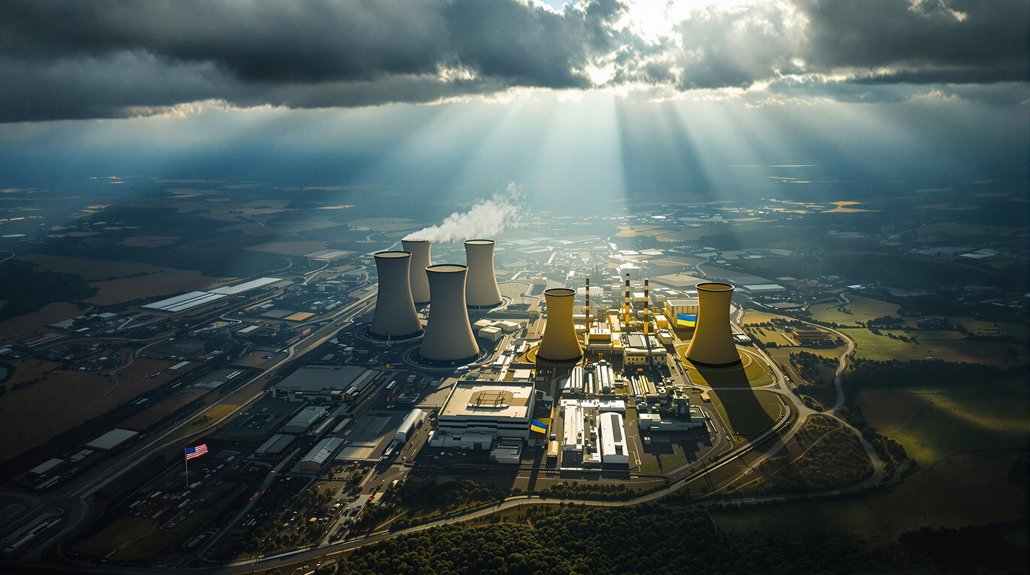
Several U.S. nuclear reactors are now cleared to operate for up to 80 years. That’s double their original 40-year design life. The move signals a major shift in how the country manages its nuclear energy supply.
Some U.S. nuclear reactors are now approved to run for 80 years — double their original design life.
When nuclear plants were first built, the Atomic Energy Act set a 40-year license limit. That limit wasn’t based on how long the technology could safely run. It was based on economic and legal factors. Licenses could always be renewed, but the 40-year cap shaped early planning.
Most reactors later got extended to 60 years. As of June 2023, 87 of 92 operating reactors had received that first 20-year extension. Now, the next step is pushing licenses to 80 years. This process is called Subsequent License Renewal, or SLR.
The Nuclear Regulatory Commission, or NRC, oversees SLR applications. It reviews both safety and environmental impacts under federal rules. The safety review checks how the plant’s parts are aging. The environmental review looks at the impact of running the plant for an extra 20 years. If the plant passes both reviews, it gets the extended license.
As of early 2024, roughly 16 reactors had applied for SLR. As of 2024, 12 U.S. reactors have been approved to operate for 80 years, including Surry Units 1 and 2 in Virginia and Oconee Nuclear Plant, which secured about 2.5 gigawatts of power capacity.
It hasn’t been smooth sailing for all applicants. Turkey Point Units 3 and 4 and Peach Bottom Units 2 and 3 were initially approved. Environmental groups challenged those approvals, and the NRC subsequently reversed course, requiring a full environmental review before allowing the extensions to proceed. They argued the NRC misused a generic environmental report instead of doing a full review. The NRC agreed and now requires a more thorough environmental study for future SLR approvals. That could add three or more years to the process.
Despite the setbacks, the reversals don’t affect how the plants currently operate. Extensions like these help keep the grid stable. Nuclear energy provides about 18 percent of all U.S. electricity and produces no carbon emissions. Experts describe extending plant life as vastly cheaper than building new nuclear or gas facilities, making it the most cost-effective path to securing reliable, zero-carbon baseload power. As reactors age, the industry also faces growing responsibility for the spent fuel they generate, with over 80,000 metric tons of spent nuclear fuel already stored in dry casks across the United States. TVA’s Browns Ferry is among the sites that may pursue SLR and is reportedly a significant source of carbon-free energy for the region, underlining how critical these extensions are to regional clean power strategies.
References
- https://news.sustainability-directory.com/energy/us-nuclear-plants-win-approval-for-eighty-year-operating-lifespan/
- https://www.powermag.com/subsequent-license-renewal-extending-nuclear-power-reactors-to-80-years-of-operation-and-maybe-more/
- https://www.eenews.net/articles/feds-walk-back-plans-for-nuclear-reactors-to-run-80-years/
- https://cen.acs.org/articles/92/i23/NRC-Mulls-80-Year-License.html
- https://adamswebsearch2.nrc.gov/webSearch2/main.jsp?AccessionNumber=ML22286A004
- https://www.world-nuclear-news.org/Articles/Second-US-plant-licensed-for-80-year-operation
- http://www.iaea.org/newscenter/news/going-long-term-us-nuclear-power-plants-could-extend-operating-life-to-80-years
- https://westinghousenuclear.com/strategic-partnership/