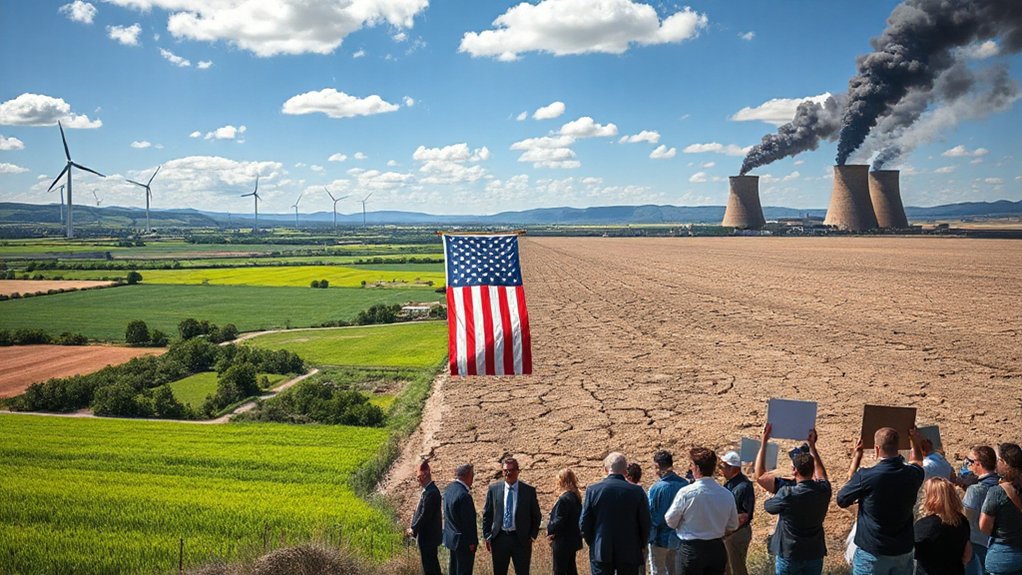
While the military prepares for conventional threats from rival nations, an invisible enemy has already breached our defenses. Climate change isn’t just melting ice caps and killing polar bears—it’s actively undermining America’s national security infrastructure. The Pentagon isn’t known for environmental alarmism, yet they’ve formally recognized climate change as a critical security threat since 2010. Funny how it took generals to make some people believe what scientists have been shouting for decades.
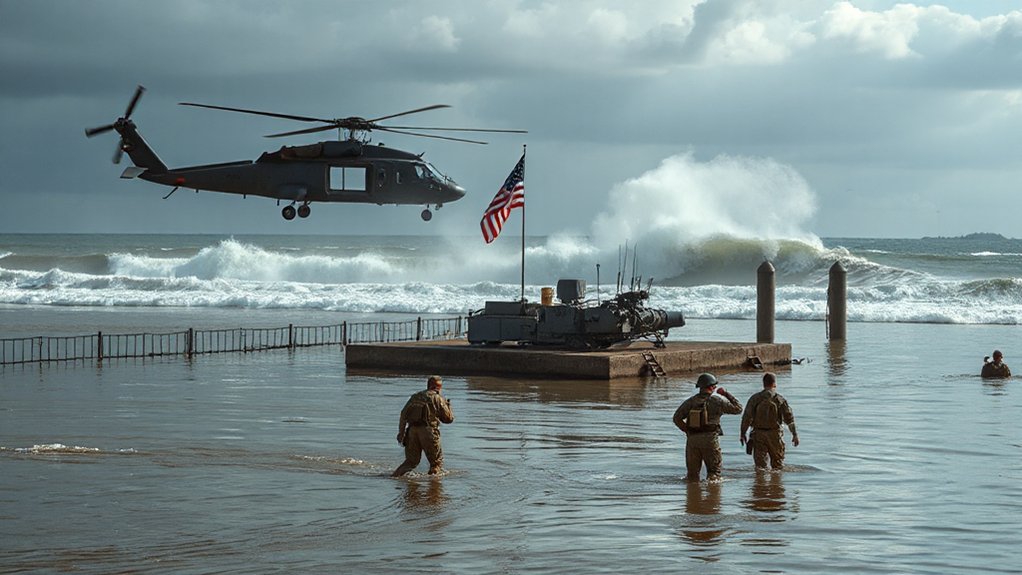
This isn’t some distant, theoretical problem. Right now, coastal military bases are dealing with flooding as sea levels rise. Extreme heat is disrupting training exercises. Wildfires are threatening installations. Research shows that military spending diverts resources that could address these environmental challenges, as military expenditures are less efficient than investments in green infrastructure. The current extinction rates are 1,000 to 10,000 times higher than natural background levels, adding ecological instability to our security concerns. And the world’s most powerful military? It’s burning fossil fuels like there’s no tomorrow—which, ironically, might be true if they don’t change course. The DoD spews out about 56 million metric tons of CO2 annually. That’s some serious firepower aimed right at our own feet.
Climate change acts as a “threat multiplier,” throwing gasoline on already smoldering geopolitical tensions. When droughts hit vulnerable regions, people get desperate. Desperate people migrate. Mass migration creates instability. And instability? That’s where conflicts bloom like weeds after a spring rain. Meanwhile, the melting Arctic is opening new shipping lanes and access to resources. Russia, China, and others are already jockeying for position in this new great game.
Climate change doesn’t just intensify conflict—it creates the perfect storm for global instability and a new Cold War in the Arctic.
The DoD has adaptation plans, sure. But they’re playing catch-up while simultaneously contributing to the problem they’re trying to solve. Our troops are increasingly pulled into disaster relief missions after climate-fueled catastrophes. Equipment designed for specific conditions needs rethinking. Supply chains face disruption.
And all this comes while the military’s primary mission—defending America—doesn’t get any easier. Climate change isn’t just an environmental issue or a political football. It’s a clear and present danger to national security. No bombs required.
References
- https://www.eesi.org/files/IssueBrief_Climate_Change_Security_Implications.pdf
- https://obamawhitehouse.archives.gov/sites/default/files/docs/National_Security_Implications_of_Changing_Climate_Final_051915.pdf
- https://watson.brown.edu/costsofwar/files/cow/imce/papers/Pentagon Fuel Use
- https://www.sustainability.gov/pdfs/dod-2024-cap.pdf
- https://media.defense.gov/2019/jan/29/2002084200/-1/-1/1/climate-change-report-2019.pdf
- https://www.americansecurityproject.org/climate-change-in-the-age-of-great-power-competition/
- https://ccpi.org/guest-article-ccpi-x-military-emissions-gap-how-military-emissions-impact-global-warming/
- https://education.cfr.org/learn/reading/national-security-climate-change