The plummeting cost of battery storage technology has sparked nothing short of an energy revolution over the past decade. We’re talking serious numbers here: battery costs have nosedived 93% since 2010. What once cost you $2,571 per kilowatt-hour now runs just $192. That’s not a typo.
Last year alone saw battery pack prices drop 20%—the biggest percentage plunge since 2017. Why? Manufacturing got bigger. Supply chains matured. Companies started competing fiercely. And those pricey metals like lithium, nickel, and cobalt? Their prices stabilized as mining expanded. Plus, manufacturers shifted to lithium iron phosphate batteries. No nickel or cobalt needed. Cheaper stuff.
These aren’t just impressive stats for energy nerds. The real-world impact is massive. Grid-scale battery installations nearly doubled the world’s capacity in a single year, hitting 69 gigawatts in 2024. That’s growth at 67% annually for ten years straight. Ridiculous.
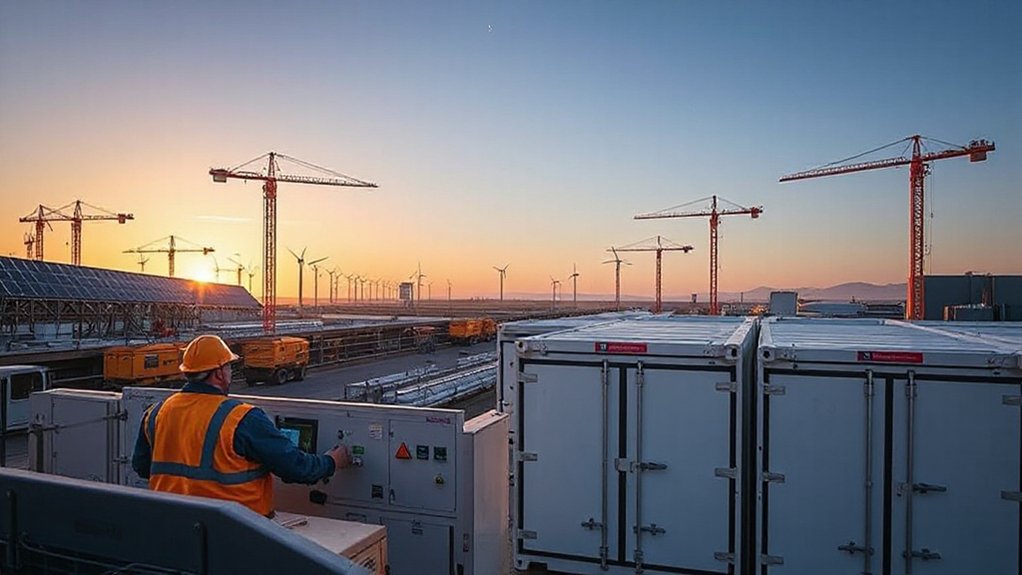
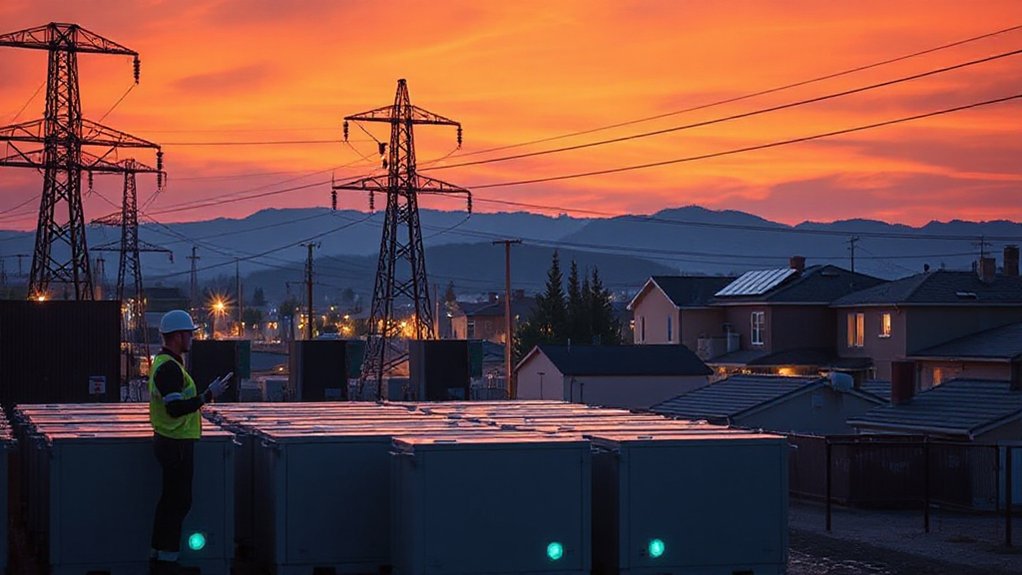
Batteries are now doing things nobody imagined possible a decade ago. They’re storing excess solar and wind power—stuff that would’ve been wasted—and releasing it when needed. Energy shifting, they call it. It accounts for two-thirds of all new storage capacity. The old fragile grid is becoming resilient. Renewable energy isn’t just some hippie dream anymore; paired with storage, it’s becoming cheaper than fossil fuels. Economics, not ideology.
But storm clouds loom over the American market. About half of U.S. battery projects planned for 2025 might get delayed or canceled. Why? Politics. Republican lawmakers threatening to axe tax credits. Possible cuts to the Department of Energy’s loan programs. And Trump-era tariffs on Chinese batteries didn’t help either. Tesla and other companies are responding by expanding domestic battery capacity to reduce reliance on imports.
The technology keeps improving, costs keep falling, but policy uncertainty could derail progress. This affordable technology has brought the average payback period for residential battery systems down to just 4-7 years, making them increasingly attractive to homeowners. MIT research confirms that ongoing R&D investments remain the primary driver behind these dramatic cost reductions. The grid revolution is happening. The question is whether America will lead it—or watch from the sidelines.
References
- https://www.canarymedia.com/articles/energy-storage/tariffs-tax-credits-grid-battery-trump
- https://www.anernstore.com/blogs/diy-solar-guides/lithium-ion-battery-price-trends-2025
- https://www.irena.org/News/articles/2025/Aug/Battery-energy-storage-systems-key-to-renewable-power-supply-demand-gaps
- https://www.utilitydive.com/spons/how-installers-can-navigate-energy-volatility-in-2025-and-beyond-with-solar/739624/
- https://ember-energy.org/latest-insights/global-electricity-review-2025/the-big-picture/
- https://docs.nrel.gov/docs/fy25osti/93281.pdf
- https://nzero.com/blog/the-falling-cost-of-battery-storage-and-its-impact-on-renewables/
- https://www.cmu.edu/news/stories/archives/2025/october/how-better-battery-lifespans-and-reused-batteries-can-push-the-us-power-grid-into-the-future
- https://www.ess-news.com/2025/10/31/stable-not-volatile-how-battery-storage-shapes-electricity-prices/