While governments worldwide tout hydrogen as a clean alternative to traditional fuels, the inconvenient truth about “green” hydrogen transit is finally emerging. What they’re not telling you? Those shiny hydrogen buses might actually be dirtier than the diesel vehicles they’re replacing. Yeah, you read that right.
The problem starts with production. Hydrogen made through electrolysis using standard grid electricity—which still contains plenty of fossil fuels in most regions—creates a carbon footprint that often exceeds modern diesel pathways. It’s like cleaning your house with a vacuum that spews more dirt than it collects.
Steam methane reforming without carbon capture is even worse, producing hydrogen with lifecycle emissions that make diesel look downright environmentally friendly.
Then there’s the efficiency problem. Hydrogen fuel cell vehicles typically consume 40-55% more energy per mile than diesel equivalents. More energy means more emissions upstream. Basic math, folks.
And don’t forget the “fun” inefficiencies in hydrogen’s supply chain: compression, liquefaction, storage losses, and transportation leakage. All these steps require energy and create additional emissions that diesel simply doesn’t have.
Money talks, and it’s not saying good things for truly green hydrogen. At $4-6 per kilogram, fleets are incentivized to choose cheaper, carbon-intensive hydrogen sources. The economics push toward centralized production with long transport routes, further increasing the carbon footprint. Unlike geothermal energy with its low operating costs, hydrogen fails to provide economic stability over its lifecycle.
Without strict carbon intensity standards, cost-driven decisions often result in hydrogen pathways that are worse for the climate than just sticking with diesel. FCVs require an astonishing 33% renewable content in hydrogen production just to offset the high CO2 emissions from natural gas-based processes.
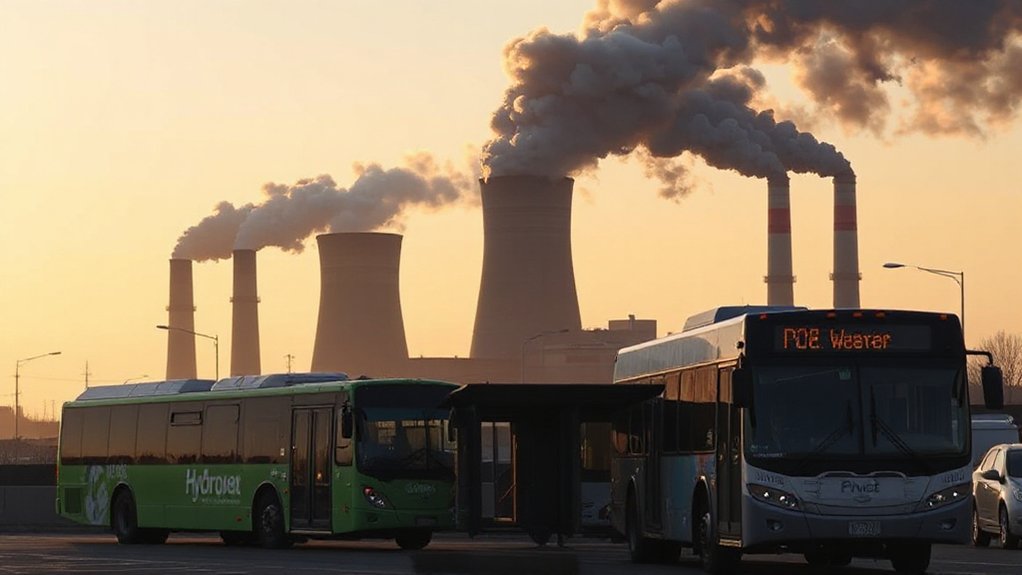
The irony is thick enough to choke on. While we’re busy patting ourselves on the back for “zero-emission” hydrogen vehicles, the lifecycle emissions can actually exceed those of the diesel buses they’re replacing. So much for progress.
Until hydrogen production becomes genuinely clean and renewable, this “green solution” might just be another shade of greenwashing—with extra steps and higher emissions. Optimizing the entire lifecycle from hydrogen production to vehicle operation patterns is essential for any meaningful emissions reduction, but few are actually doing this comprehensive analysis.
References
- https://stillwaterassociates.com/how-does-hydrogen-compare-to-biomass-based-diesel-on-ghg-pm-and-petroleum-reduction/
- https://sesamesustainability.com/sesame-insights-understanding-emissions-in-hydrogen-powered-trucks-key-factors-and-insights/
- https://proteus-energy.com/diesel-vs-hydrogen-fuel-a-cost-comparison-for-ships/
- https://www.youtube.com/watch?v=tDoPSofACAE
- https://afdc.energy.gov/fuels/renewable-diesel
- https://www.plugpower.com/blog/hydrogen-is-the-new-diesel/
- https://www.epa.gov/greenvehicles/greenhouse-gas-emissions-typical-passenger-vehicle