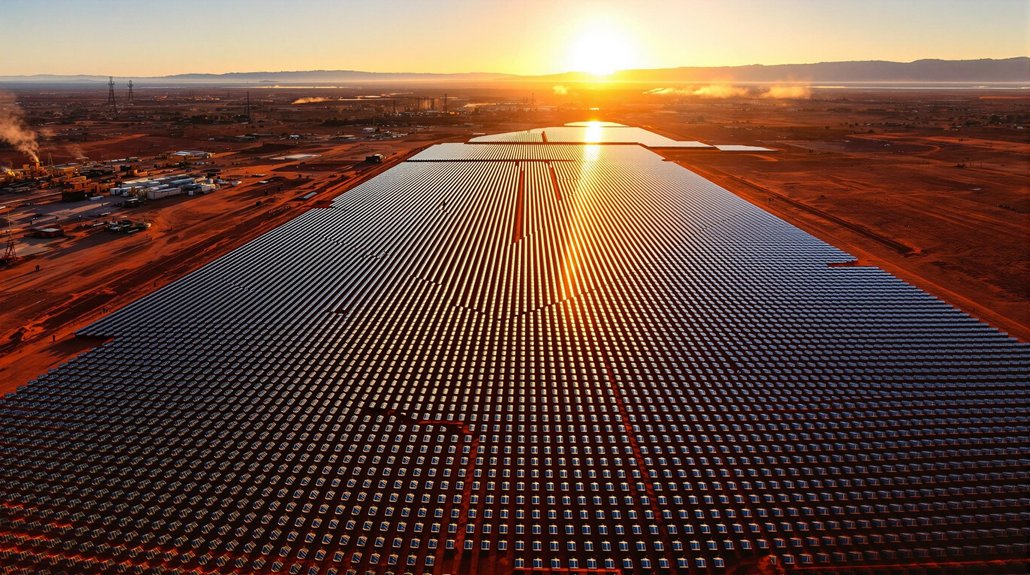
Proposed coal plants in OECD countries have virtually vanished, plummeting 96% since 2015. Only 5 plants remain from 142 proposals, with capacity shrinking from 111GW to just 3GW. Turkey’s the lone OECD holdout still pursuing coal, while others embrace renewables. Financial institutions won’t touch these dinosaurs anymore. Coal’s peak in 2010 looks like ancient history now. The economics just don’t add up. The numbers tell quite a tale.
Coal power plants have virtually disappeared from drawing boards across developed nations. The numbers don’t lie – proposed coal plants in OECD countries have plummeted from 142 in 2015 to a measly 5 by 2024. That’s a staggering 96% drop. Remember when coal was supposed to power us forever? Yeah, that didn’t pan out.
Total proposed coal capacity has shrunk from 111 gigawatts to just 3 gigawatts. Most projects – about 82% of them – have been unceremoniously shelved or canceled. The push toward meeting UN Secretary-General’s call for no new coal is clearly working. Turns out signing the Paris Agreement wasn’t just for show. Who knew?
The Global Coal Plant Tracker has been keeping tabs on these developments since 2014. Their findings paint a clear picture: of the 13 OECD countries with coal ambitions in 2015, only Turkey remains uncommitted to stopping new coal projects. Everyone else? Moved on.
Coal went from 13 countries’ wish lists to Turkey’s solo obsession. Everyone else got the memo.
The few remaining proposals are scattered across the US, Turkey, Japan, and Australia. Four of these projects are desperately clinging to relevance by incorporating carbon capture and storage technology. It’s like putting a Band-Aid on a broken leg – controversial, expensive, and probably not up to the task.
Coal generation within OECD nations has dropped below half of historical peaks. The OECD coal capacity peaked in 2010 at 655GW before beginning its steady decline to today’s 443GW. Renewable energy has swooped in, stealing coal’s thunder as costs for solar and wind plummeted. Financial institutions aren’t exactly lining up to fund coal anymore either. The economics just don’t compute.
What changed? Pretty much everything. Paris Agreement commitments. Financial risks. Plunging renewable costs. Public pressure. Environmental concerns. Coal simply couldn’t keep up. The dramatic shift aligns with projections that renewable sources could meet 95% of electricity needs by 2050.
The rapid decline puts OECD countries tantalizingly close to achieving a future without unabated coal plants. The handful of remaining proposals likely represent the last gasps of a dying industry in developed nations.
Coal’s dramatic fall from grace proves one thing: when economics, policy, and public opinion align, even the most entrenched industries can collapse with surprising speed. Coal is yesterday’s news. Deal with it.