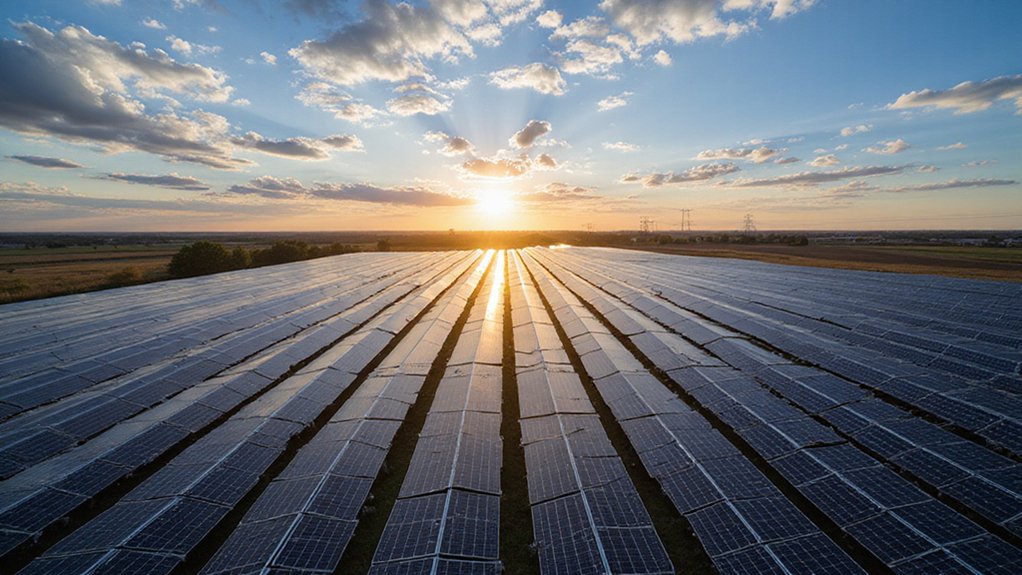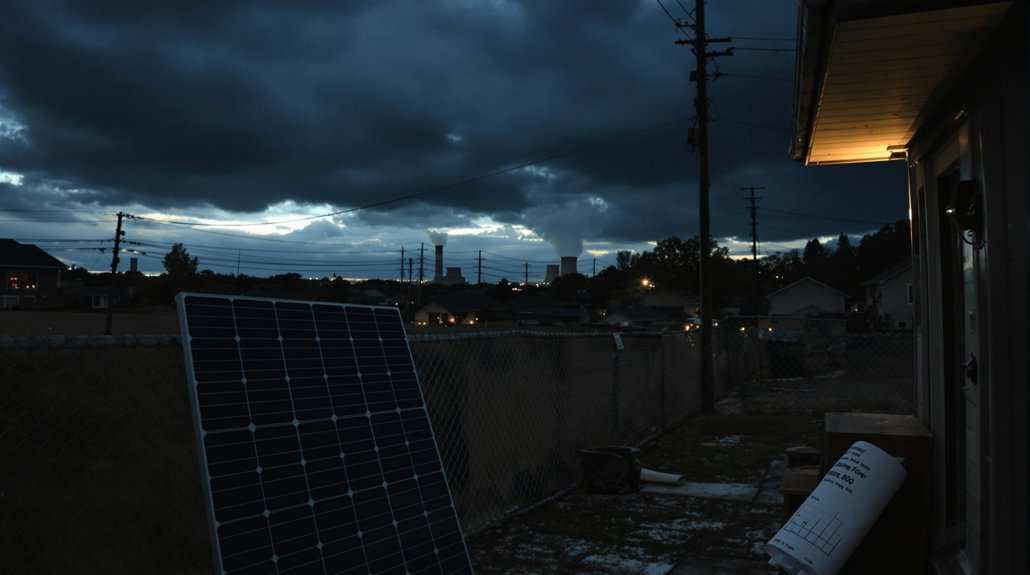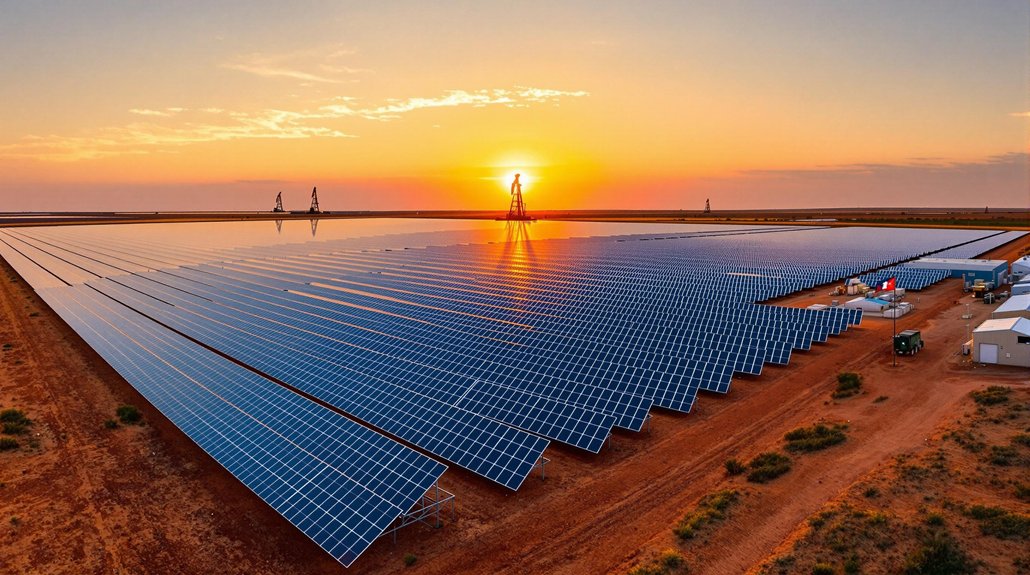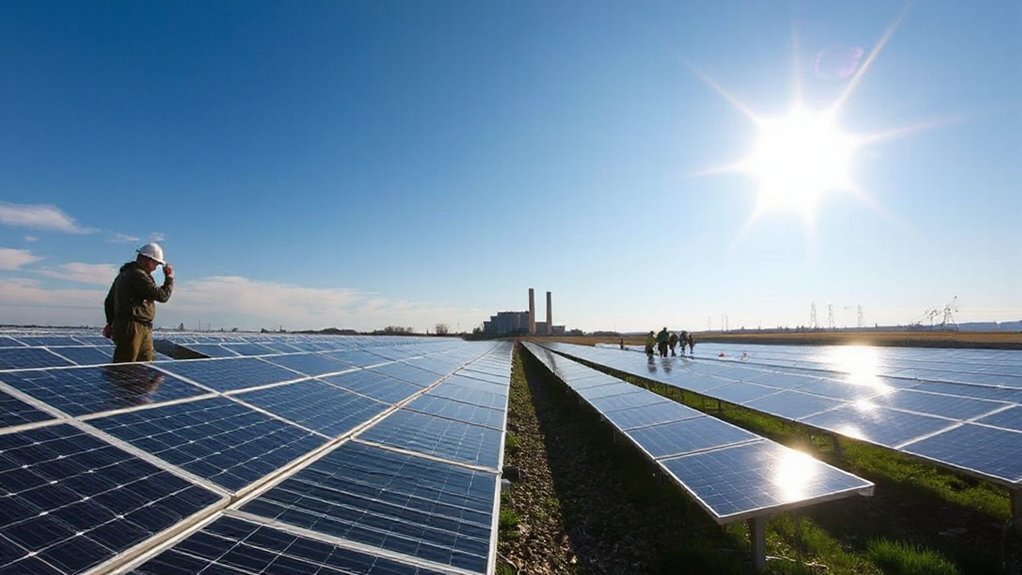

While fossil fuels have long dominated the Texas energy landscape, solar power is staging a remarkable coup across the Lone Star State. By mid-2025, Texas utility-scale solar capacity reached a whopping 20,745 MW, supplying 27.7% of ERCOT’s peak demand. Not bad for the oil capital of America, right?
The numbers don’t lie. Solar output doubled from 2023 to 2025, with an impressive 12.3 GW of new capacity added in 2025 alone. That’s growth on steroids. Even during the scorching Texas summer, solar generation never dipped below 22% of peak demand. Reliable? You bet.
Utility-scale solar pumped out 45 TWh from January to September 2025—50% higher than 2024 and four times what it was in 2021. Meanwhile, natural gas’s midday dominance shrank from 50% in 2023 to 37% in 2025. Solar isn’t just growing; it’s eating fossil fuels’ lunch.
The driver? Pure economics. Solar and batteries represent 54% and 35% of new ERCOT power additions forecasted for 2025. Big tech is all in too—Meta signed a 600 MW solar deal. These projects are cheaper and faster to deploy than traditional power plants. Period.
Texas’s electricity demand hit a record 372 TWh through September 2025, up 5% year-over-year and 23% since 2021. Population boom, economic expansion—Texas needs power. Solar’s stepping up while fossil fuels step aside. With companies like NextEra Energy adding 12 GW of capacity in 2024 alone, the renewable expansion shows no signs of slowing.
The reliability picture looks solid too. Solar and batteries set 17 new generation records in 2025, helping stabilize the notoriously finicky ERCOT grid. Battery storage systems consistently provided around 4 GW of power during evening peak hours, smoothing the transition as solar production declines. Combined with wind, renewables now meet 40.2% of Texas electricity demand.
All this despite political headwinds and federal policy shifts. Texas’s regulatory framework and ERCOT’s market design let economics do the talking. Fossil fuels had their day, but in Texas—where money talks—solar’s economics are simply shouting louder. The rapid transition has seen Texas become a true global renewable powerhouse, influencing international markets and providing a blueprint for integrating renewables into other electricity grids worldwide.
References
- https://www.lonestarsolarservices.com/blog/texas-emerges-as-solar-powerhouse-reshaping-global-energy-dynamics
- https://electrek.co/2025/10/24/texas-power-demand-surges-solar-wind-and-storage-carry-the-load/
- https://www.eia.gov/todayinenergy/detail.php?id=66464
- https://ieefa.org/resources/solar-growth-reliability-undercut-opposition
- https://www.dallasfed.org/research/energy/indicators/2025/en2505
- https://cleantechnica.com/2025/10/27/texas-adds-more-solar-power-because-its-just-better-thats-all/
- https://www.canarymedia.com/articles/solar/texas-solar-battery-records
- https://www.chooseenergy.com/solar-energy/solar-energy-production-by-state/