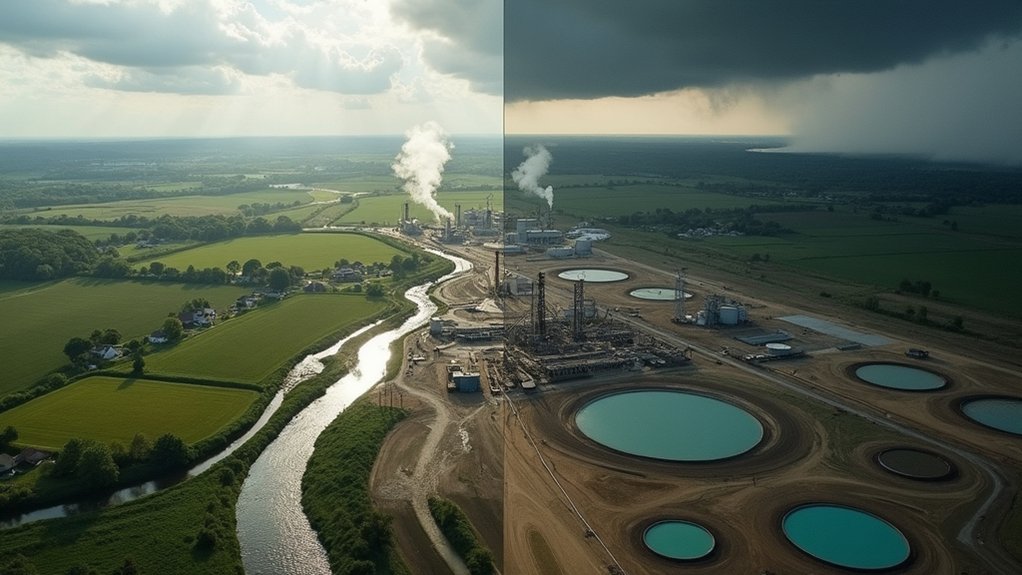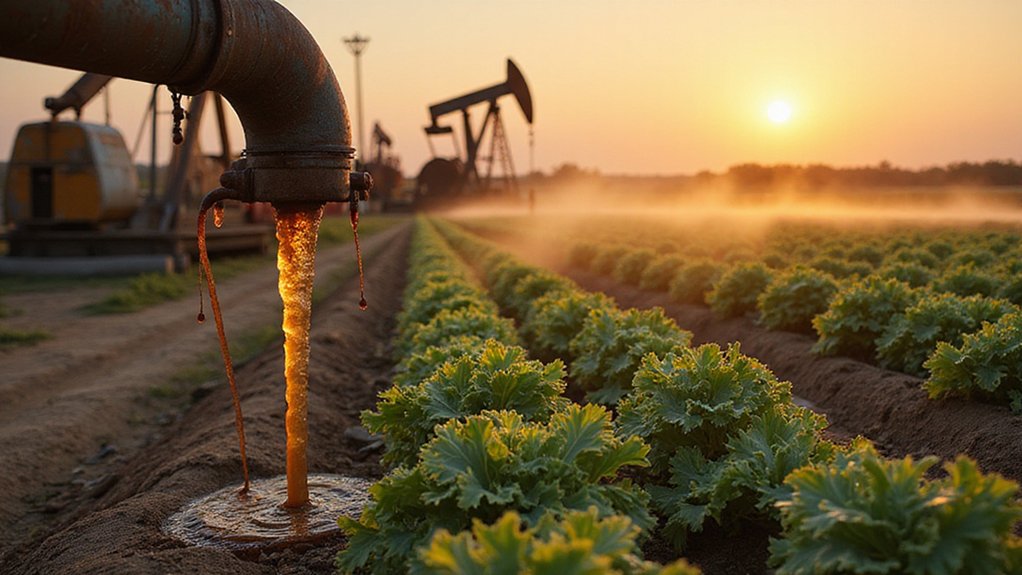

When Texas signed a law in June 2025 letting oil companies use treated fracking wastewater on food crops, state officials called it innovative water management. Environmental groups called it something else entirely. Something unprintable, probably.
The new rule allows operators to spray treated produced water on agricultural land for irrigation. Not the raw stuff straight from fracking operations—that would be crazy. Just the treated version. Because treatment makes everything safe, right?
Treatment makes everything safe, right? Just ask the treated wastewater heading for your dinner plate.
Here’s what’s actually in fracking wastewater: heavy metals, salts, hydrocarbons, radioactive elements. Oh, and those forever chemicals everyone loves talking about. PFAS compounds that stick around longer than your college debt. Some fracking chemicals either are PFAS or break down into PFAS over time. Fun fact: these substances are linked to cancer, reproductive problems, and hormone disruption. But sure, let’s put them on tomatoes.
Texas regulators promise strict oversight. The Texas Commission on Environmental Quality is reviewing discharge permits, setting pollutant limits, requiring monitoring. They’re relying on pilot projects and data from the Texas Water Consortium. Because nothing says “thorough scientific review” like rushing to approve something while still studying it. Meanwhile, four treatment companies have already applied for permits to discharge their treated water into Texas rivers and lakes.
Industry folks point to West Texas test sites where they found no detectable toxic contaminants in soil or crops. Mesquite trees apparently loved the stuff, growing like crazy. See? Plants thrive on it. What could go wrong?
Farmers aren’t buying it. They’re worried about soil health, crop safety, and whether anyone will buy produce irrigated with fracking waste. Insurance companies probably aren’t thrilled either. Who covers crops contaminated by mystery chemicals? Making matters worse, another law signed by Governor Abbott grants oil and gas companies immunity from lawsuits related to contamination from their wastewater.
The thing about PFAS is they don’t just disappear. They accumulate. In soil, in water, in bodies. Scientists don’t fully understand how well treatment removes these chemicals or what happens long-term. But Texas needed a solution for its water crisis, and the oil industry had millions of gallons of wastewater sitting around.
State officials say advanced treatment can meet safety standards. Critics say we’re turning farmland into a chemistry experiment. Time will tell who’s right. Your lettuce might tell you first.
References
- https://www.texastribune.org/2025/05/19/texas-legislature-produced-water-legal-protections-oil-gas/
- https://www.youtube.com/watch?v=zOvPjGKImgY
- https://www.youtube.com/watch?v=ImogpxS8_aE
- https://www.texastribune.org/2025/05/01/texas-water-crisis-oil-gas-fracking-farming/
- https://psr.org/wp-content/uploads/2023/02/fracking-with-forever-chemicals-in-texas.pdf