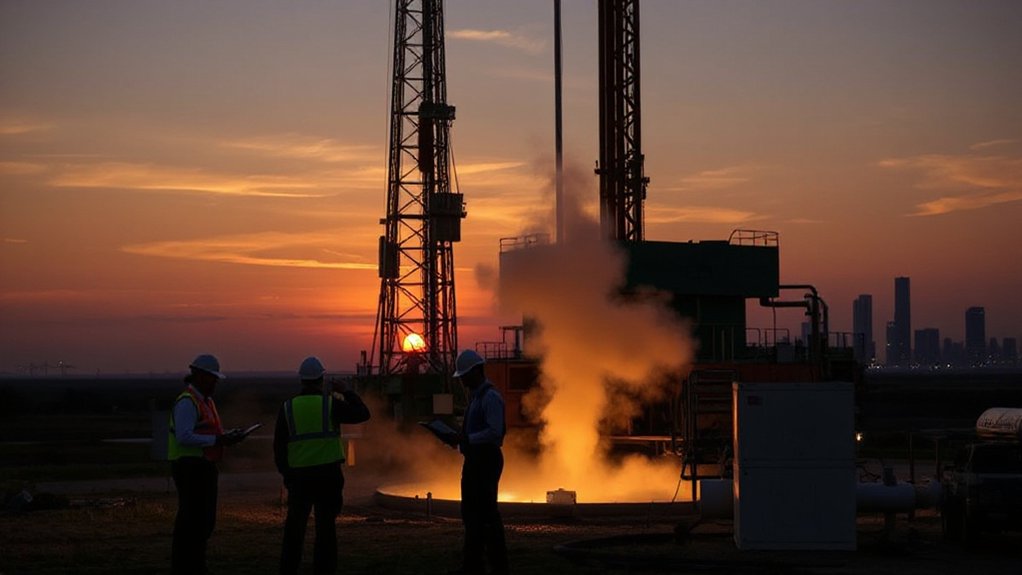
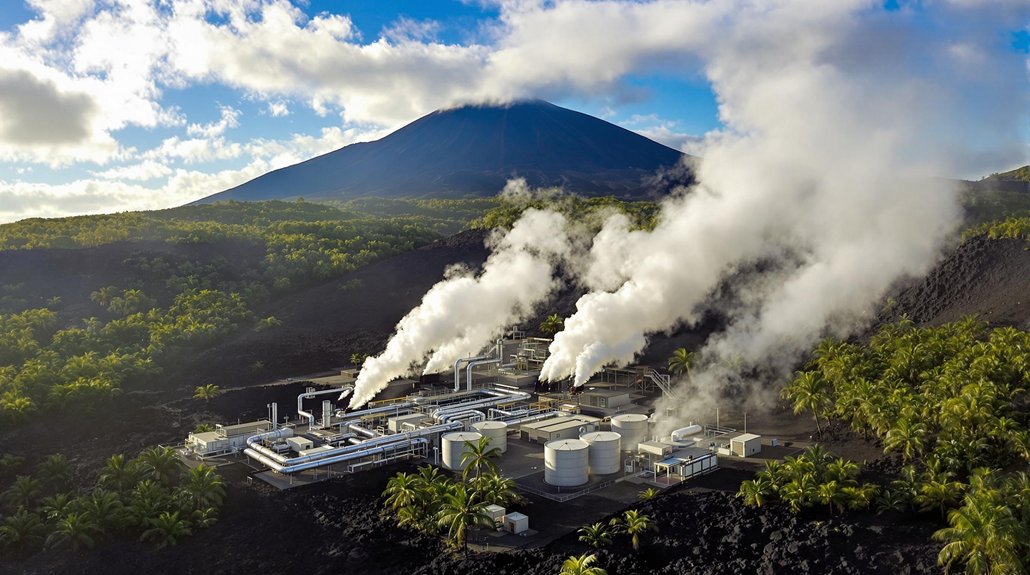
Southwest Netherlands could tap into enough geothermal energy to supply 230 petajoules (PJ) of heat from wells shallower than 2,800 meters. That’s a significant share of the 380 PJ total that geothermal energy, waste heat, and biomass could provide together. The country aims to significantly expand low-temperature energy consumption, potentially adding hundreds of PJ per year.
The region sits above aquifers in Permian, Lower Triassic, and Lower Cretaceous sandstones. These underground water layers hold vast amounts of heat, with estimates in the tens of thousands of PJ. A single geothermal installation can heat thousands of households at once.
Typical wells reach about 2 kilometers deep, where water temperatures hit around 70°C. Current wells range from 1,600 meters deep at 60°C to 2,900 meters at 87°C. The temperature rises roughly 3.1°C for every 100 meters drilled. Wells deeper than 4,000 meters are classified as ultra-deep, which is a separate category from what’s being discussed here.
At 2 kilometers deep, water reaches around 70°C — rising roughly 3.1°C with every 100 meters drilled.
The Netherlands reportedly has over 30 production installations as of early 2024, with most actively running and several new ones added in 2023. National production has risen steadily, reaching around 7 PJ by 2024. Wells drilled up to 3,000 meters deep can produce around 3 PJ of sustainable heat, with flow rates typically around 150 cubic meters per hour.
Each installation uses a doublet system, meaning two wells spaced 1 to 2 kilometers apart. This spacing prevents cooled water from reaching the production well too soon. The technical lifespan of a doublet is about 30 years, after which the aquifer gradually returns to its original temperature. This long-term reliability is supported by radioactive decay in Earth’s core, which continuously replenishes the heat that geothermal systems extract.
Geothermal energy’s advantages include little to no CO₂ emissions and a steady heat supply that doesn’t depend on weather or season. It’s also considered the cheapest sustainable alternative to natural gas in local conditions and helps reduce grid congestion. Geothermal energy is also highly complementary to other renewable sources like solar and wind, helping balance overall energy supply.
Looking ahead, at least five pilot projects are planned between now and 2030 to gain experience with deeper drilling. Innovations in closed-loop systems, artificial intelligence, and next-generation shallow systems are also in development. With the Netherlands still heavily reliant on natural gas for heat, low-temperature geothermal energy can structurally reduce that dependence while contributing to more affordable and predictable energy costs.
References
- https://geothermie.nl/images/bestanden/Masterplan_Aardwarmte_in_Nederland_ENG.pdf
- http://www.geothermal-energy.org/pdf/IGAstandard/WGC/2015/01016.pdf
- https://www.tno.nl/en/newsroom/insights/2025/09/geothermal-energy-heat-subsurface/
- https://www.gaiaenergy.nl/en/nieuws/lage-temperatuur-aardwarmte-onmisbare-schakel-in-de-warmtetransitie
- https://www.nlog.nl/sites/default/files/2024-11/Natural Resources and Geothermel Energy in NL 2023.pdf
- https://europeangeothermalcongress.eu/wp-content/uploads/2025/11/Molen-et-al_compressed.pdf
- https://www.hydrology.nl/images/docs/dutch/2015.06.04_Sommer.pdf
- https://www.thinkgeoenergy.com/report-highlights-targets-and-technology-gaps-for-low-temperature-geothermal-in-netherlands/
- https://www.thinkgeoenergy.com/europes-untapped-low-temperature-geothermal-is-moving-from-pilot-to-policy/