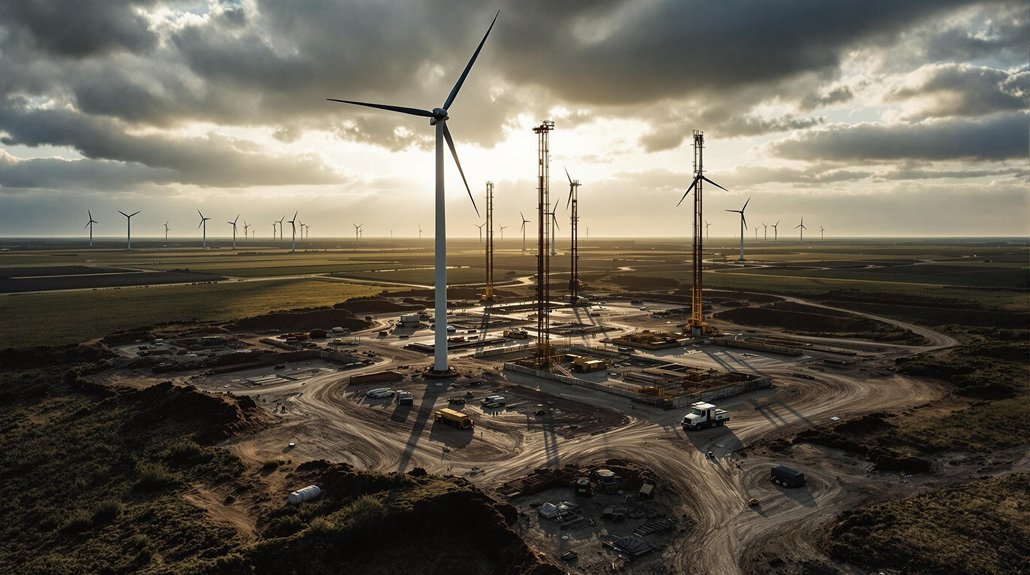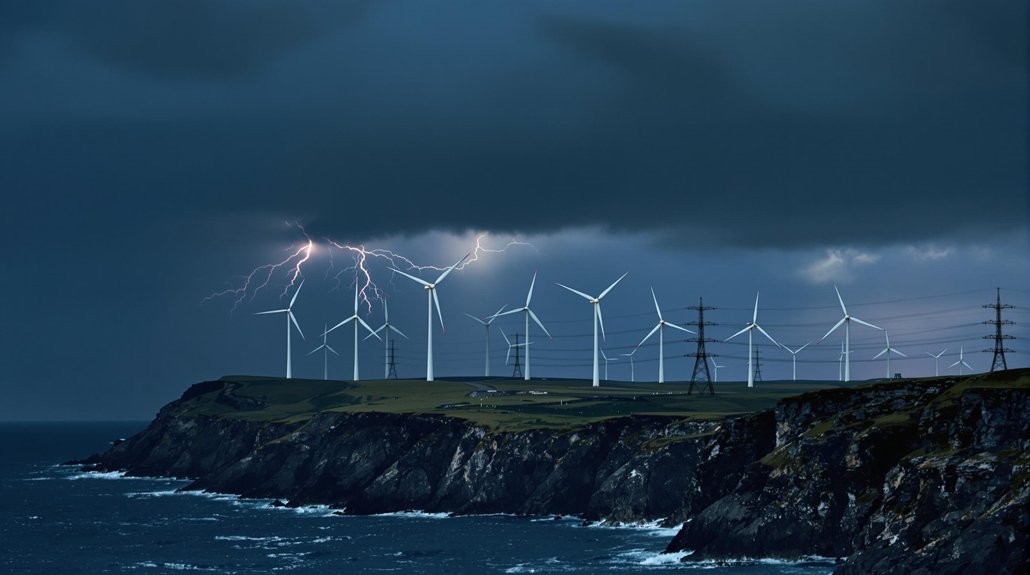

While Scotland continues to be a powerhouse of renewable energy, its wind sector faces growing challenges as grid constraints limit the system’s effectiveness. Recent claims suggest that up to 40% of Scottish wind output is sometimes curtailed when weather conditions create more power than the grid can handle. This curtailment happens because Scotland lacks enough transmission capacity to send its excess clean energy to England where it’s needed.
In the first quarter of 2025, Scotland generated 10,938 GWh of renewable electricity, which was actually 5.5% less than the same period in 2024. Despite having 17.7 GW of renewable capacity installed, the country can’t always use what it produces. When wind farms are told to stop generating, they receive compensation payments that ultimately come from consumers through their energy bills.
These constraint payments have reportedly reached £117 million during certain periods, though exact figures require official data from grid operators. The problem stems from a geographical mismatch – Scotland’s best wind resources are in the north, far from major population centers in the south.
Grid constraints cost millions while Scotland’s northern wind resources sit far from southern demand centers.
Scotland’s electricity is remarkably clean at just 20.7 grams of CO2 per kilowatt-hour, but the benefits are diminished when wind power goes unused. The situation might get worse before it gets better, as Scotland has 951 renewable projects in its pipeline representing 70.7 GW of potential capacity.
The renewable energy sector contributes greatly to Scotland’s economy, generating about £10 billion in turnover and supporting around 10,900 direct jobs. When including supply chain effects, the industry supports over 47,000 full-time jobs. Offshore wind has emerged as the most significant employment contributor, supporting approximately 19,580 FTE roles across the Scottish economy. The renewable sector stimulates substantial economic spill-over effects throughout Scotland’s supply chains and local economies.
To address these challenges, developers are planning 295 storage projects totaling 30.8 GW, mostly battery storage (23.9 GW). These storage systems would help store excess wind energy during windy periods for use when demand is high. However, without faster grid upgrades, Scotland’s impressive renewable expansion risks creating more wasted energy and higher costs for consumers.
References
- https://www.gov.scot/publications/energy-statistics-for-scotland-q1-2025/
- https://www.scottishrenewables.com/news/1964-more-than-47000-jobs-supported-by-scotland-s-renewable-energy-industry-new-report-finds
- https://assets.publishing.service.gov.uk/media/68678b6bd520affe4e581cc1/onshore-wind-taskforce-strategy.pdf
- https://www.gov.scot/publications/energy-statistics-for-scotland-q1-2025/pages/renewable-electricity-pipeline/
- https://fraserofallander.org/publications/the-economic-impact-of-scotlands-renewable-energy-sector-2025-update/