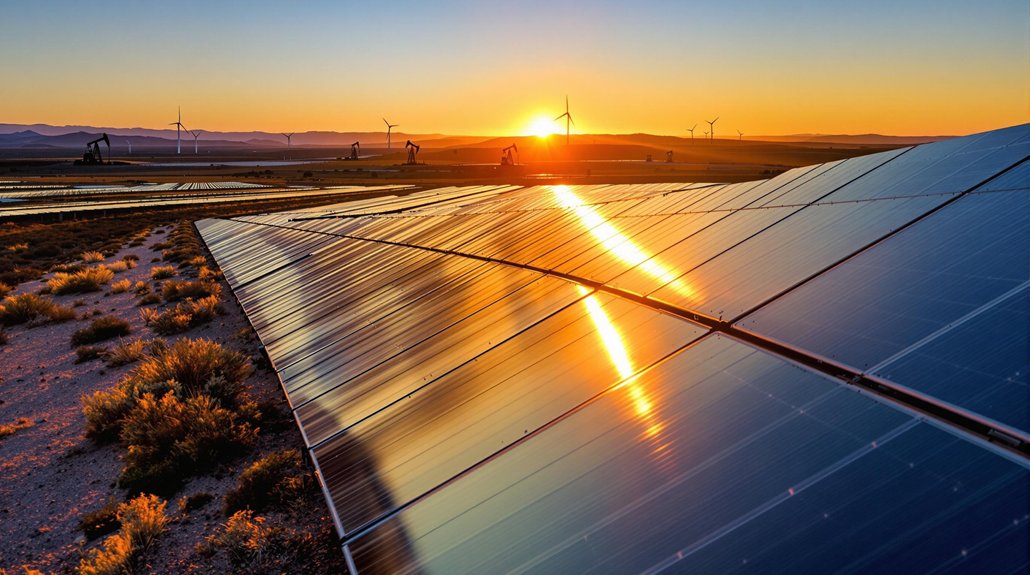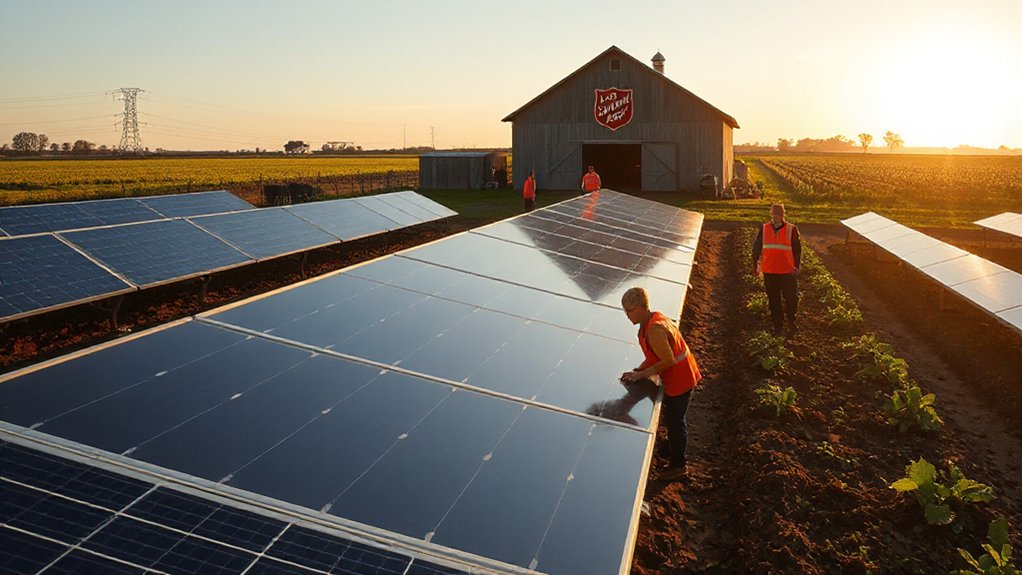

A green revolution is blooming in Melbourne, and it’s not coming from the usual environmental suspects. The Salvation Army Australia has completed their first agrivoltaic solar farm—a fancy term for putting solar panels above farmland. Eight hectares covered with more than 11,000 bifacial solar panels. Yeah, bifacial. They capture sunlight from both sides. Smart.
The land’s been farmed since 1890. No stopping now. Sheep still graze beneath the panels, munching away while clean energy generates overhead. Talk about multitasking.
The Energia Group handled installation, adding DC combiner boxes for better efficiency and safety. Because electrocuted sheep would definitely be bad PR.
But wait, there’s more. Twenty-two neighborhood batteries are popping up across Salvation Army sites in Melbourne and regional Victoria. Part of some government program with a catchy name: 100 Neighbourhood Batteries Program. Rolls right off the tongue.
These aren’t just vanity projects. The solar setup powers critical services—foodbanks, domestic violence refuges, crisis accommodations, rehab centers. Places that matter.
The Hope Center’s smaller 7kW system offsets about 15% of its annual electricity. The recently completed system installed by Northwind Solar demonstrates the organization’s environmental commitment. More money for shelter and meals, less for power bills. Basic math.
Before the new farm, Salvation Army sites already had about 2.8MW of rooftop solar capacity. Overachievers.
Local government energy directors are gushing. “Model for community-based renewable energy,” they say. Whatever. Results speak louder than buzzwords.
It’s all part of their “Creation Care” ethos—religious speak for “don’t trash the planet.” The organization’s hitting two birds with one solar panel: fighting climate change while helping vulnerable people who get hit hardest by environmental problems.
Carbon emissions down, service capacity up. The farm keeps producing food while making energy. Land does double-duty. Money saved goes to people who need it. The impressive 5 MW facility will generate approximately 1.5 million dollars in annual savings that go directly to core social services.
Despite the storage challenges that typically affect renewable energy systems, these neighborhood batteries ensure consistent power supply regardless of weather conditions.
Who knew the Salvos would be solar farming pioneers? Not your typical Sunday donation bucket story.
References
- https://www.pv-magazine-australia.com/2025/12/05/salvation-army-powers-aid-efforts-with-new-agrivoltaic-solar-farm/
- https://www.renewwisconsin.org/sunlight-for-shelter-rotary-club-partners-with-salvation-army-for-solar-project/
- https://solarlinkaustralia.com.au/portfolio/the-salvation-army/
- https://esdnews.com.au/agl-to-install-batteries-at-22-salvation-army-sites-in-victoria/
- https://www.salvosonline.org.au/post/salvos-to-open-solar-farm
- https://www.greenrevolutionltd.com/project-item/salvation-army/
- https://www.energy.nsw.gov.au/node/51116