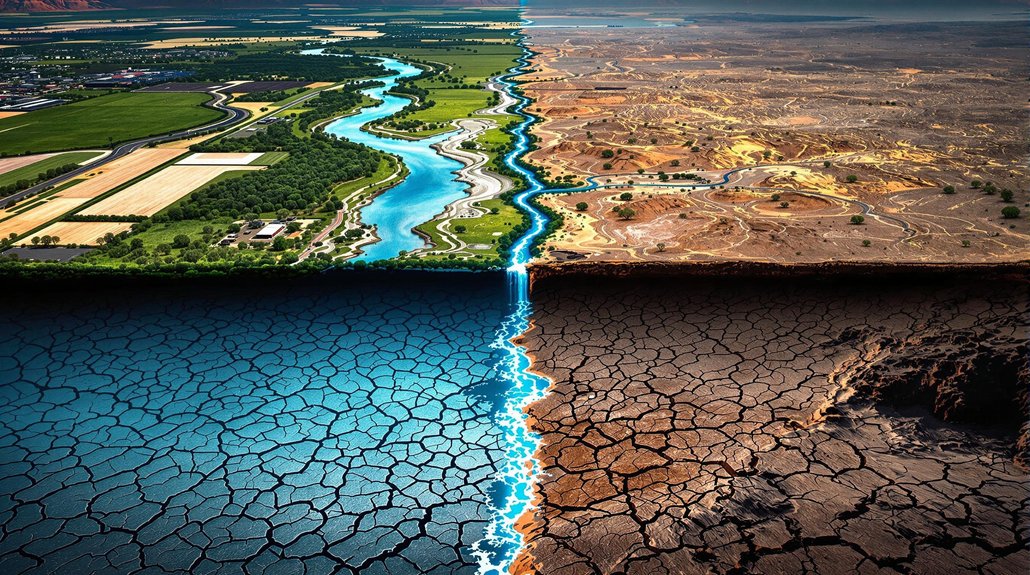
Many farmers across New South Wales are watching their fields dry up while climate experts warn of heavier rains to come. This strange situation has left agricultural communities confused about what weather patterns they’ll face next.
The NSW Combined Drought Indicator shows drought conditions spreading across parts of the state. Government forecasts suggest these dry conditions will expand further by June 30, 2025. Western Victoria’s severe rainfall shortages have crept into southern NSW, where streams are running lower than usual at several monitoring sites.
Drought conditions expand across NSW as dry conditions are forecast to worsen by mid-2025.
Water storage levels paint a worrying picture. The Murray-Darling Basin‘s combined dams sit at 77.6% capacity, down 15.2% from last year. Menindee Lakes in western NSW has dropped to 57.2% full, a 23% decrease. The Wimmera-Mallee region’s storage barely reaches above half at 53.7%.
Climate scientists project dramatic changes ahead. NSW’s East Coast South region could see drought conditions 28% more often. The Murray Basin faces an even steeper 78% increase in drought frequency. These projections come from 100-year climate comparisons that help scientists understand long-term patterns.
The contradictions become clearer when examining different regions. While western areas battle serious rainfall shortages dating back to February 2024, eastern coastal zones show different vulnerability patterns. Northern NSW experiences different drought conditions than southern areas, creating a patchwork of wet and dry zones across the state.
Farmers aren’t without help. The NSW Department of Primary Industries offers an interactive drought mapping tool. The NSW DroughtHub provides management resources and support information. The Bureau of Meteorology releases drought statements twice monthly, tracking rainfall totals and comparing them to historical averages.
These tools use complex forecasting systems. The DPIRD drought forecast relies on Bureau of Meteorology seasonal climate models. Maps show the most likely outcomes by analyzing multiple forecast scenarios.
The Greater Sydney Drought Response Plan stands ready for water supply challenges. But for now, NSW farmers must navigate nature’s cruel joke – preparing for both floods and droughts in an increasingly unpredictable climate.
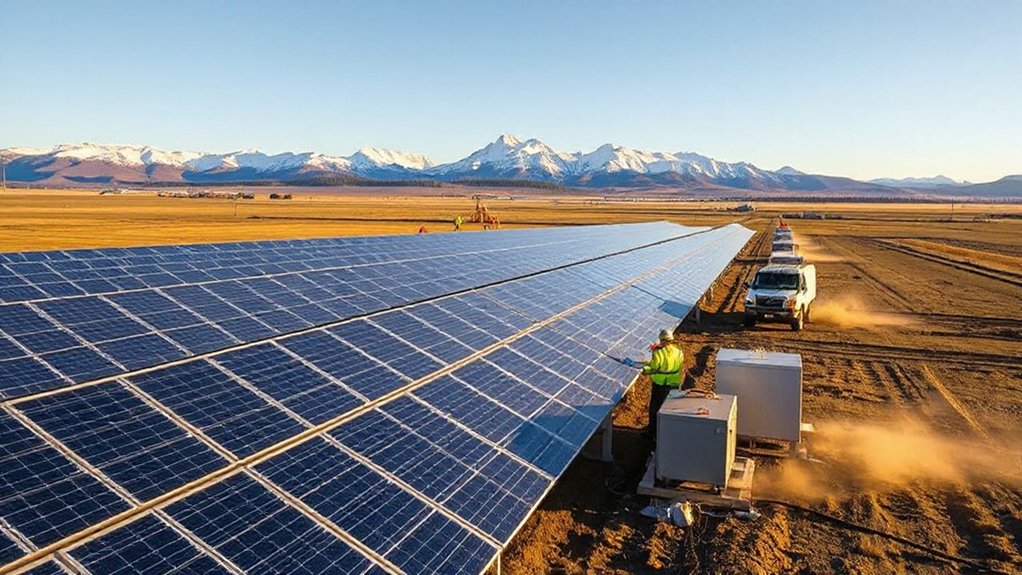
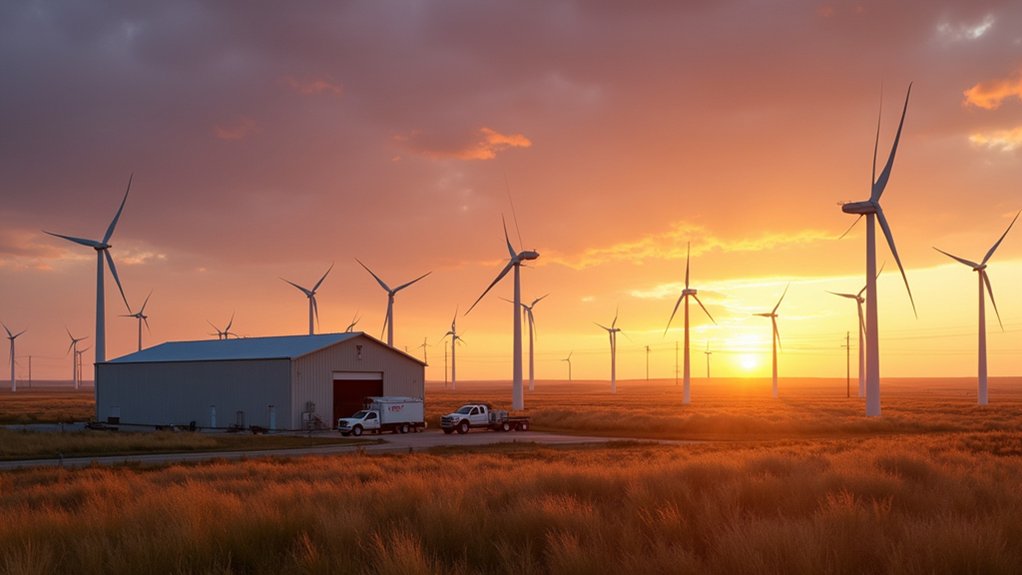
Understanding weather variability impacts is essential as renewable energy sources like solar and wind power become increasingly important alternatives to fossil fuels in Australia’s future energy mix.
References
- https://www.dpi.nsw.gov.au/climate_applications/interactive-drought-map
- https://www.dpi.nsw.gov.au/climate_applications/ssu-archive/2025/march-2025/drought-forecast
- http://www.bom.gov.au/climate/drought/
- https://nesp2climate.com.au/wp-content/uploads/2025/03/Regional-drought-projections-for-Australia-report-v7.pdf
- https://www.waternsw.com.au/__data/assets/pdf_file/0008/258452/Greater-Sydney-Drought-Response-Plan-January-2025.pdf