While the automotive industry has dominated headlines in the electric revolution, CATL has quietly been transforming an entirely different sector: shipping. Since 2017, the battery giant has been electrifying the seas—not with flashy press conferences, but with actual working vessels. Nearly 900 of them worldwide, in fact. Not too shabby.
While Tesla grabs headlines, CATL has been quietly revolutionizing shipping with nearly 900 electric vessels already at sea.
In November 2022, they doubled down by launching Times Electric Ship, a dedicated marine subsidiary. Why? Because dominating 40% of the global marine battery market apparently wasn’t enough. These folks are ambitious. They’re now boldly claiming that ocean-going electric vessels will be operational within three years. Sounds crazy? Maybe not. Similar to how hydroelectric power plants operate for 50-100 years with minimal environmental impact once built, these electric vessels promise long-term sustainability benefits.
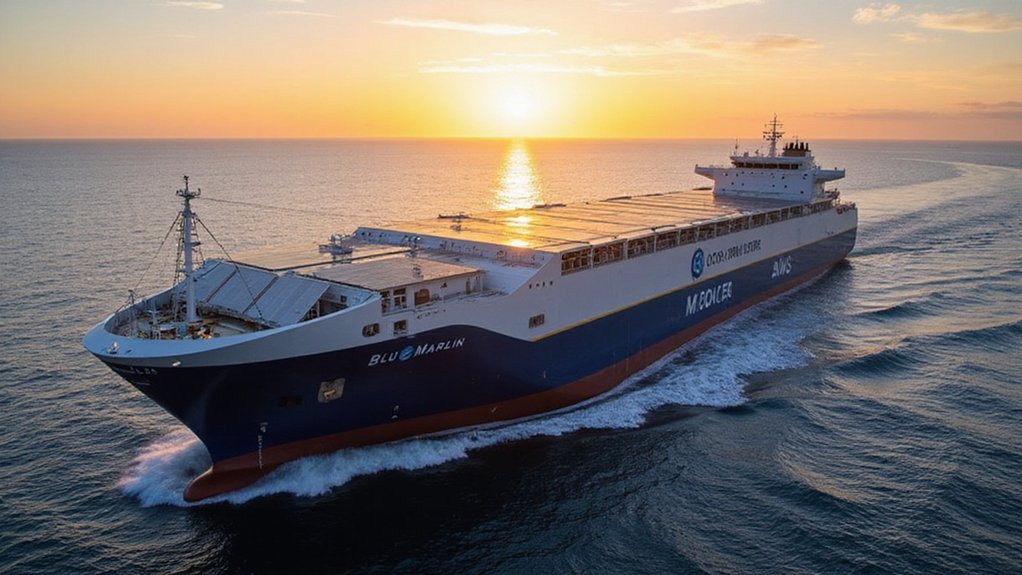
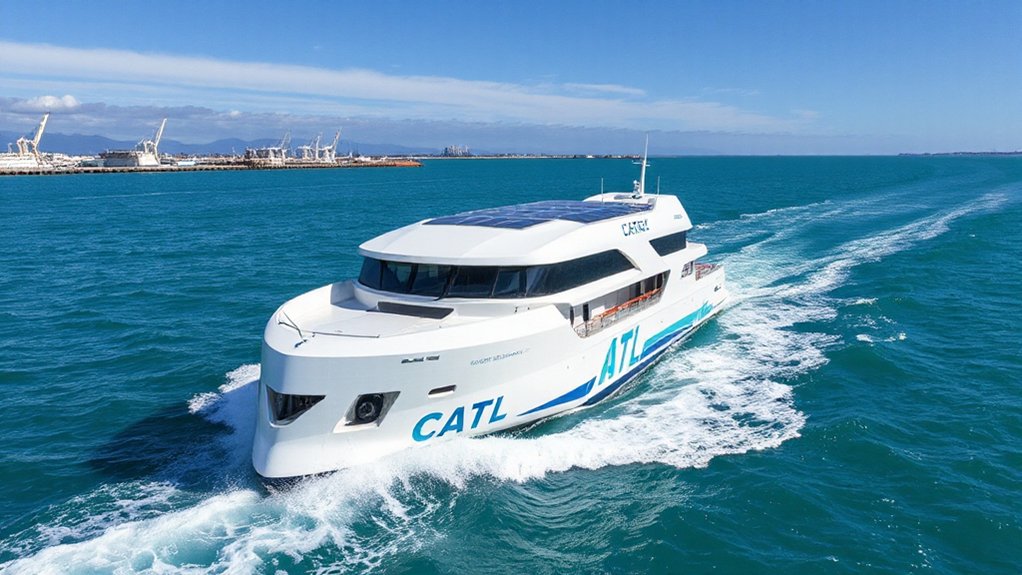
The Yujian 77, launched in July 2025, proves they’re not just blowing smoke. China’s first pure-electric tourist ship cruises Xiamen Bay with zero emissions and minimal noise. The numbers are impressive—3,918 kWh of battery capacity delivering about 100 km of range. It’s saving nearly 250 tons of fuel annually and cutting CO₂ emissions by over 400 tons. That’s equivalent to planting 20,000 trees. Trees that don’t need water or sunlight, just electricity. The vessel provides an enhanced passenger experience through its zero emissions operation.
CATL isn’t stopping with tourist vessels. Their “6006” multi-purpose cargo ship features battery swapping technology—like a giant nautical Duracell Bunny getting fresh batteries. The tech relies on CATL’s fifth-generation Lithium Iron Phosphate batteries with improved energy density up to 140 Wh/kg thanks to their CTP technology. The company’s chairman has highlighted these batteries’ enhanced cycle life as a critical advancement for maritime applications.
The company’s strategy is clear: start with inland waterways and coastal routes, then conquer the open ocean. It’s methodical. It’s working. And given that CATL installed 355.2 GWh of batteries just from January to October 2025, they’ve got the production muscle to make it happen.
Maritime shipping has polluted our oceans for centuries. CATL thinks three years is enough time to start changing that. They might actually be right.
References
- https://electricfleet.online/catl-ocean-electric-ships/
- https://cnevpost.com/2025/12/04/catl-expects-pure-electric-vessels-capable-ocean-voyages-3-years/
- https://chinaevhome.com/2025/12/04/catl-eyes-ocean-going-electric-vessels-within-three-years/
- https://electrek.co/2025/12/04/catl-predicts-fully-electric-boats-will-be-capable-of-navigating-oceans-within-three-years/
- https://www.seetaoe.com/details/247351.html
- https://www.moomoo.com/news/post/62427325/catl-expects-pure-electric-vessels-to-be-capable-of-ocean
- https://www.catl.com/en/news/6592.html
- https://www.captainelectro.com/boats/are-we-trading-the-smell-of-diesel-for-the-smell-of-fear-with-electric-boats
- https://www.catl.com/en/news/6472.html