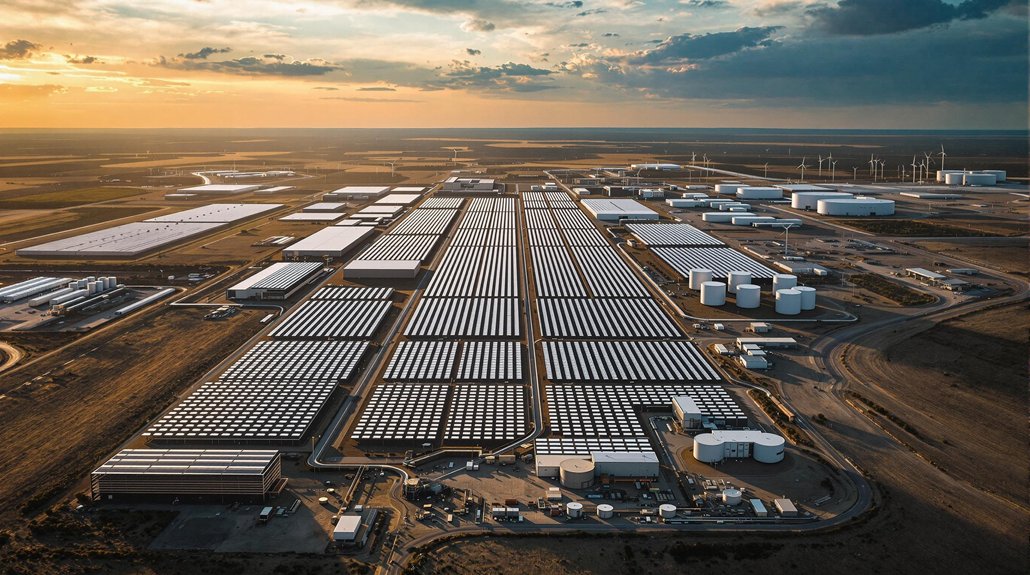
A nuclear fusion company in Everett, Washington, is building what could become the world’s first commercial fusion power plant. Helion Energy reportedly broke ground in July 2025 on a site in Chelan County, near the small community of Malaga. The plant’s name is reportedly Orion, and it’s planned to start running by 2028.
Helion Energy broke ground in Chelan County, Washington, on Orion — what could become the world’s first commercial fusion power plant.
Helion’s technology uses a process called magneto-inertial fusion. It combines two methods of controlling plasma, which is superheated matter that can reach tens of millions of degrees. The company plans to fuse deuterium and helium-3 together, which produces very little radioactive waste compared to other fusion methods.
The Orion plant is designed to generate 50 megawatts of electricity. That’s enough to power approximately 40,000 homes. The energy would flow into Washington’s main power grid, directly upstream of Microsoft data centers in the state.
Microsoft signed a power purchase agreement with Helion in roughly May 2023. It was the world’s first deal of its kind for fusion energy. Microsoft agreed to buy at least 50 megawatts of power starting in 2028. If Helion misses that deadline, the company reportedly faces financial penalties under the deal.
Data centers need huge amounts of steady electricity to run AI systems and store data. Fusion could provide clean, round-the-clock power that doesn’t depend on sun or wind. That makes it attractive for tech companies with growing energy demands. Fusion power produces zero carbon emissions during generation, making it a compelling long-term option for companies with ambitious climate commitments.
But there are real hurdles ahead. Helion still needs final permits from Washington state before it can connect to the grid. More importantly, the company hasn’t yet shown it can produce more electricity than it uses to run the reactor. That step, called engineering break-even, is essential before any real power can be sold.
Many experts are skeptical that Helion can hit the 2028 target. Fusion research has a long history of promising results that haven’t yet translated into working commercial power. Helion’s approach is newer and faster than most, but it’s still unproven at this scale. Helion also reportedly signed a separate agreement with Nucor Corporation in October 2023 to develop a 500-megawatt fusion plant at a Nucor facility, targeting operations by 2030. Helion is not alone in racing toward commercialization, as Google recently signed a 200 MW PPA with rival fusion firm Commonwealth Fusion Systems, whose ARC plant reportedly aims to deliver power to the Virginia grid in the early 2030s. The world’s watching to see if it works.