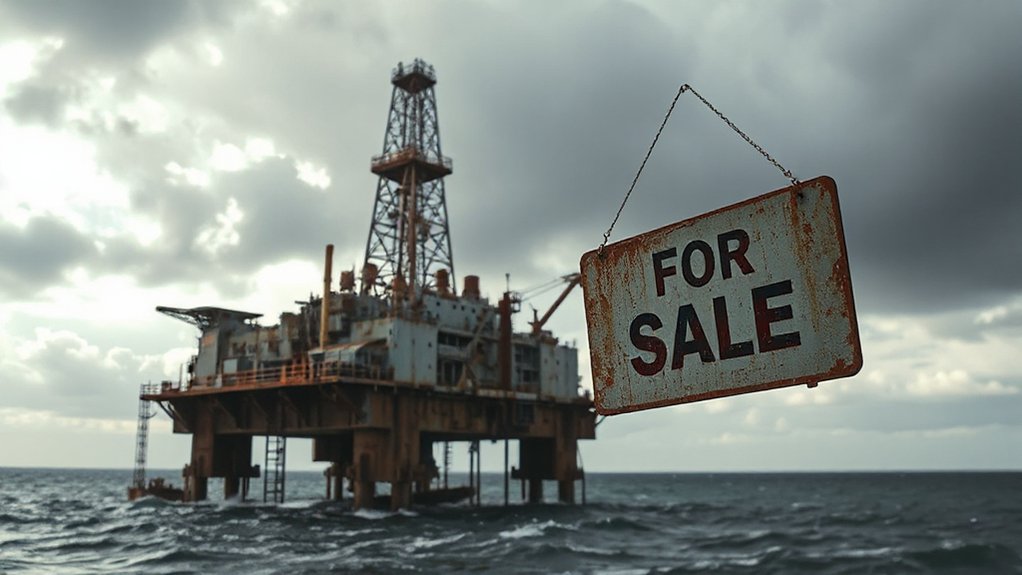

While the rest of the global oil sector wrestles with a moderate decline in capital spending, the UK’s slice of the North Sea has hit rock bottom. For the first time since oil was discovered there in the 1960s, exploration drilling in the UK North Sea dropped to exactly zero in 2025. Let that sink in. Zero new holes. Zero new prospects. Zero hope for future discoveries.
The collapse didn’t happen overnight. UK North Sea production had already fallen about 40% in the five years leading to 2025. Now some analysts predict it could halve again by 2030. Meanwhile, the Norwegians—sharing the same sea but not the same policies—kept drilling dozens of exploration wells and issuing new licenses. With 44 exploration wells planned for 2025 alone, Norway demonstrates a stark contrast to the UK’s approach. Funny how a line on a map can mean everything.
Tax uncertainty scared off the big players. Regulatory flip-flopping didn’t help either. When governments send mixed signals about wanting your industry to disappear while simultaneously expecting it to provide energy security, companies take their money elsewhere. No surprise there.
Governments can’t have it both ways – kill an industry while demanding its benefits.
The economics got brutal too. Smaller discoveries. Higher costs. Rising clean-up bills. When you’re staring at $26 billion in abandonment expenses over the next decade, you think twice about drilling that next well. Especially when politicians are practically daring you to leave.
The consequences? Pretty predictable. Production keeps falling. Import dependence keeps rising. By 2027, the UK will likely import more than two-thirds of its gas needs. So much for energy security.
What’s happening in the North Sea isn’t just about numbers on a balance sheet. It’s a case study in how policy uncertainty can crush an industry faster than market forces alone. The Norwegians figured this out. They kept the investment flowing with clear rules and consistent signals. Their strategic approach has made Norway Europe’s largest gas supplier, filling the void left by decreased Russian volumes.
Too bad that lesson came fifty years too late for the UK side of the fence.
References
- https://discoveryalert.com.au/north-sea-investment-strategies-evolving-2025/
- https://www.westwoodenergy.com/news/westwood-insight-uk-and-norway-exploration-and-production-outlook-for-2025
- https://www.renewableuk.com/news-and-resources/blog/can-north-sea-oil-and-gas-really-power-britain-s-future/
- https://iea.blob.core.windows.net/assets/c0087308-f434-4284-b5bb-bfaf745c81c3/Oil2025.pdf
- https://energynewsbeat.co/no-new-north-sea-oil-wells-for-first-time-since-1960s-labours-crackdown-on-oil-and-gas-industry-blamed-for-collapse-of-exploration-in-uk-waters/
- https://oeuk.org.uk/wp-content/uploads/woocommerce_uploads/2025/08/Future-of-the-north-sea-briefing-document-2025-ritgns.pdf
- https://capx.co/north-sea-oil-is-being-killed-by-uncertainty