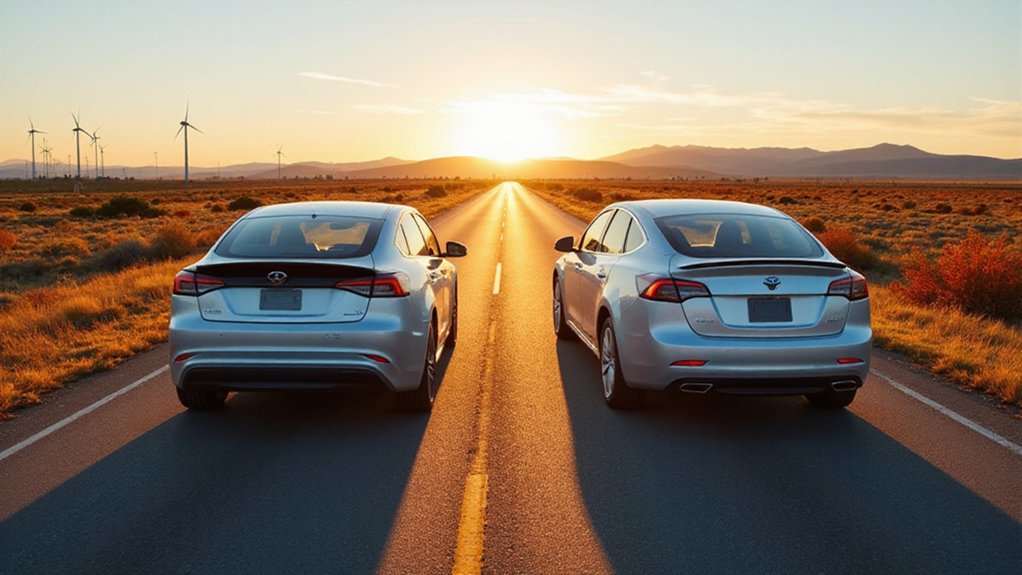
Nepal’s electric vehicle market is booming. About 70% of cars sold there are now electric. That’s a huge jump from just roughly 2% a few years ago. Meanwhile many countries still struggle with high fuel costs, Nepal’s made a bold switch.
The numbers tell a clear story. New EV registrations hit 18,500 in fiscal year 2081/82. That’s a 64% jump over the prior year. Total registered EVs reached 38,280. Imports also rose 25.5% in just the first nine months of the current fiscal year.
The government’s policies played a big role. Nepal slashed import duties on electric vehicles. At the same time, it kept duties high on fossil fuel vehicles. Those tax differences made EVs much cheaper to buy. Strategic incentives pushed more people toward electric options.
The Nepal Electricity Authority also helped drive the change. Government policy shifts created a better environment for EV growth. The country’s hydropower resources gave it a natural edge. Clean electricity’s already widely available there. Over 90% from hydropower, Nepal’s electricity grid makes every EV charge remarkably clean.
Import data shows strong momentum. In nine months alone, Nepal imported 10,036 commercial and passenger EVs. Those were worth Rs24.75 billion. The prior fiscal year saw an estimated 11,701 EVs imported, worth Rs29.48 billion. That was roughly a 149% increase. Growth’s continued each year since.
The market’s also getting more competitive. The Herfindahl-Hirschman Index dropped to 6,840 in 2023 from 10,000 in 2017. That means more brands are competing, which can benefit buyers. The Omoda E5 alone got 300-plus bookings in its launch month in 2024.
Four-wheelers average a range of 398 km per charge. Their average battery capacity’s 53.0 kWh. Two-wheelers average 116 km per charge. Buyers looking for value have strong options, with the cheapest electric car in Nepal, the Seres E1, reportedly available at around Rs. 16,49,000. Public transportation EVs have also grown exponentially.
Still, challenges remain. High upfront costs are a barrier for many buyers. Charging infrastructure’s still limited. Nepal Rastra Bank also cut EV financing from 90% to 60%. That warned to slow sales growth. Globally, green energy momentum is also building, with the electrolyser manufacturing capacity reportedly projected to reach approximately 7.65 GW annually by 2025, signaling a broader shift toward clean energy solutions.
Even so, Nepal’s EV story’s one of the fastest transitions anywhere. Hydropower, smart policy, and growing awareness keep pushing the market forward.