
While the energy giants keep jacking up prices and politicians argue about climate targets, some neighborhoods are taking matters into their own hands. Two fresh community batteries just hit the grid, and they’re about to shake things up for local residents who’ve been watching their power bills climb like they’re training for Everest.
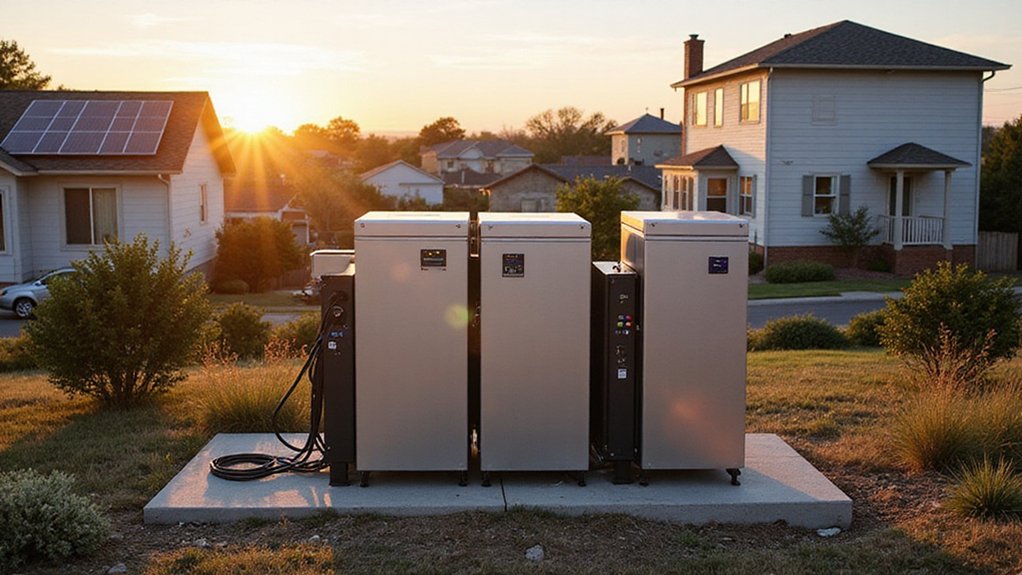
These aren’t your tiny household batteries that barely keep the lights on during a blackout. We’re talking serious lithium-ion powerhouses, sitting pretty between regular home batteries and those massive utility-scale monsters. They suck up all that excess solar energy when the sun’s blazing at noon – you know, when everyone’s at work and their panels are basically showing off to no one.
Then boom, evening hits, everyone’s home cooking dinner and watching TV, and these batteries pump that stored sunshine right back into the neighborhood grid.
Here’s what really matters: you don’t need solar panels on your roof to benefit. That’s right, renters and apartment dwellers who’ve been locked out of the solar transformation finally get a piece of the action. The Victorian Government’s throwing money at this through their 100 Neighbourhood Batteries Program, funding everyone from schools to private businesses to get these bad boys installed.
The math is simple. Store local solar, use local solar, pay less for power. No more watching that precious renewable energy disappear into the grid while you buy back fossil fuel power at night. Communities are basically giving the finger to traditional energy economics. Similar models in Hawaii let participants choose between utility-owned or third-party operated systems, giving neighborhoods real options for how they want to run their energy future.
But let’s be real – “community” means different things to different people. Some see it as a few streets working together, others think bigger. The smaller groups have that tight-knit vibe where everyone knows everyone, while larger communities can spread the benefits wider.
There’s some tension there, sure, but when your power bill drops, philosophical debates tend to take a backseat. Essential Energy is pushing this tech as part of their drive toward a net zero economy by 2050, upgrading networks with microgrids and solar farms alongside these neighborhood batteries. Unlike weather-dependent renewables, these community systems offer a 96% capacity factor similar to geothermal energy, providing reliable power regardless of conditions.
These two new batteries represent more than just technology. They’re proof that neighborhoods don’t have to wait for the big players to fix the energy crisis. Sometimes the transformation starts with a bunch of locals who are just fed up with the status quo.
References
- https://www.eservices4u.com.au/post/sunshine-in-a-box-powering-your-neighborhood-with-community-batteries
- https://engage.essentialenergy.com.au/community-batteries/faqs
- https://www.energy.vic.gov.au/grants/neighbourhood-batteries
- https://www.utilitydive.com/news/community-energy-storage-what-is-it-where-is-it-how-does-it-work/518540/
- https://bsgip.com/wp-content/uploads/2023/05/202305-Community-batteries-1.pdf