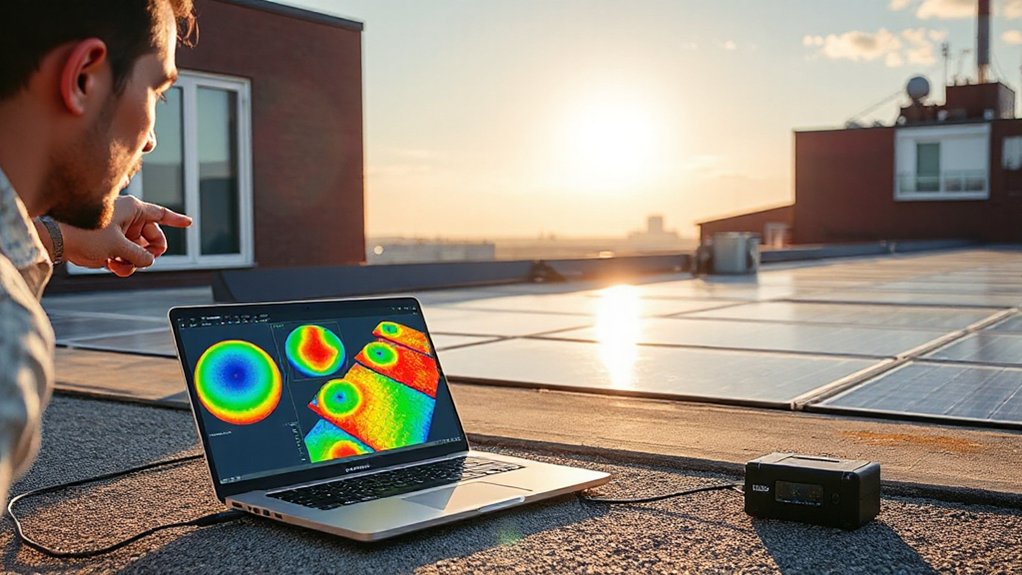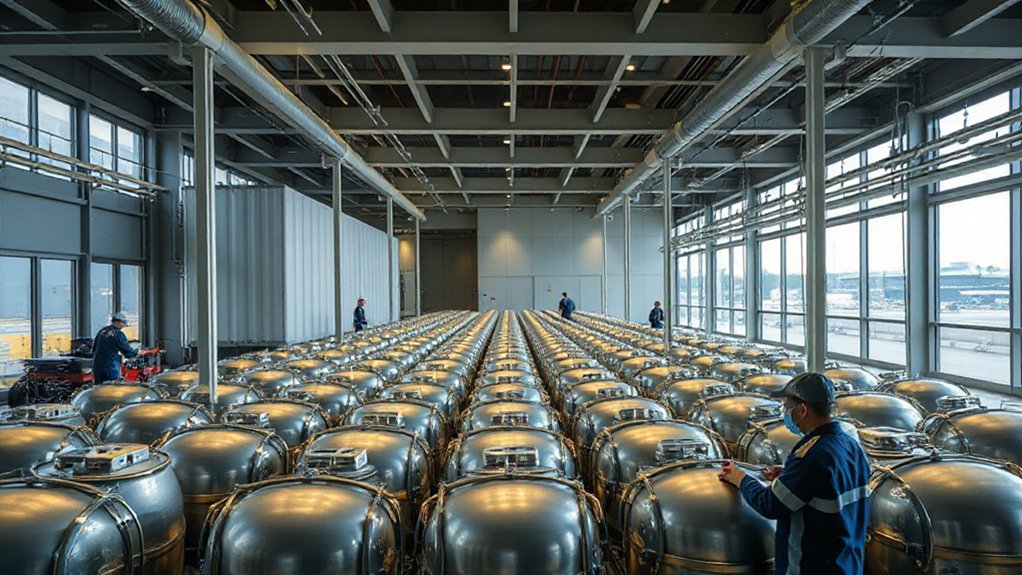

While traditional batteries continue to disappoint with their limitations, light-activated zinc-air batteries have emerged as a powerhouse technology with mind-boggling potential.
These game-changers boast a theoretical energy density reaching an impressive 1,218 Wh/kg gravimetrically and 6,136 Wh/L volumetrically. Not too shabby compared to the pathetic offerings we’ve been stuck with for years.
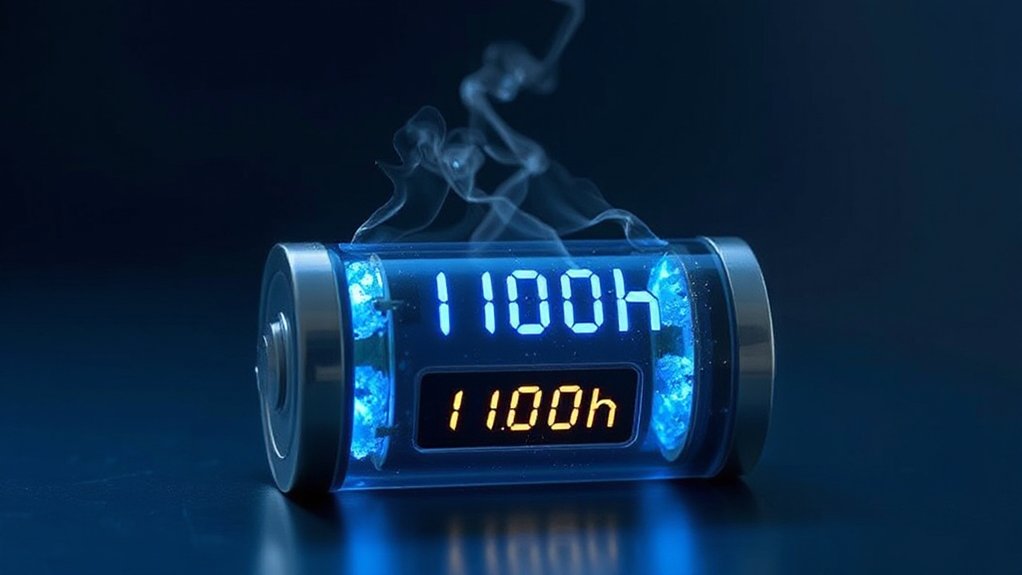
The latest breakthrough? A record-shattering 1,100-hour lifespan. That’s nearly 46 days of continuous operation. Researchers achieved this by developing advanced electrode compositions utilizing zinc particles in paste form for anodes and innovative catalytic carbon structures for cathodes. The cobalt oxide/carbon nanotube hybrid catalysts actually outperform precious metals. Who needs gold when you’ve got carbon tubes?
The chemical magic happens when zinc oxidizes at the anode, producing zincate ions while atmospheric oxygen reacts at the cathode forming hydroxyl ions. The standard voltage output is approximately 1.4 volts. Genius design really—using air as an active material means less weight and more power. These batteries literally breathe.
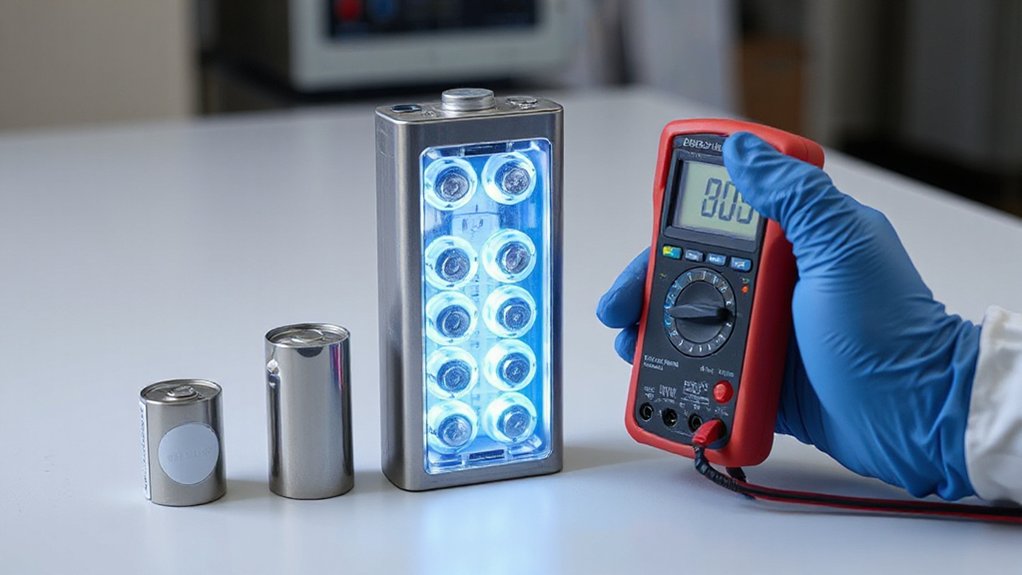
With peak power density reaching approximately 265 mW/cm³ and current density hitting 200 mA/cm³ at 1V, these aren’t just laboratory curiosities anymore. They’re practical. Commercial zinc-air button cells already demonstrate 300 Wh/L energy density, with operating costs below $10/kWh.
Recent advancements in rechargeability have crushed previous limitations. Thousands of cycles. Over 70% energy efficiency. Mechanical recharging in just 3-5 minutes. It’s revolutionary.
Sure, challenges remain. Parasitic reactions at the zinc anode continue to frustrate scientists, and practical gravimetric energy densities still fall below the theoretical 500 Wh/kg cell estimates. The ultimate long-lasting alkaline zinc anode remains elusive.
But the future looks bright—literally. With light activation pushing performance to new heights and non-flammable, low-toxicity compositions ensuring safety, these batteries aren’t just powerful. When sealed properly, they can maintain a long shelf life of up to 3 years, making them reliable for various applications.
They’re practical. Compact. Distributable through everyday channels like supermarkets. The energy revolution isn’t coming. It’s already here, breathing oxygen and shattering records.
References
- https://www.tycorun.com/blogs/news/complete-introduction-to-zinc-air-battery-and-its-future
- https://en.wikipedia.org/wiki/Zinc–air_battery
- https://pmc.ncbi.nlm.nih.gov/articles/PMC10904712/
- https://soundrelief.com/blogs/the-zinc-air-battery
- https://pubs.acs.org/doi/10.1021/acsenergylett.9b00510
- https://advanced.onlinelibrary.wiley.com/doi/full/10.1002/aenm.202403817
- https://eureka.patsnap.com/article/what-is-a-zinc-air-battery-how-it-powers-the-future-of-energy