While most visitors to Norfolk Island marvel at its pristine beaches and lush forests, few realize they’re walking on a battleground for survival. This tiny Pacific outpost hosts a staggering 70 endemic snail species, making it Australia’s land snail diversity hotspot. Yeah, snails. Those slimy little creatures most people overlook are actually fighting for their lives here.
Tiny shells, big battles—Norfolk Island’s 70 endemic snail species are silently fighting extinction while tourists snap beach selfies.
The situation is dire. Five species have already been declared extinct. Eleven more are hanging by a thread, listed as Endangered, Critically Endangered, or possibly gone forever. These aren’t just random bugs—they’re vital ecosystem players that recycle nutrients and feed other animals. When they disappear, the whole system suffers.
What’s killing them? The usual suspects. Introduced rats and chickens munch on them like popcorn. Invasive flatworms hunt them mercilessly. Habitat destruction wipes out their homes. Add two years of brutally dry summers and you’ve got a recipe for extinction. Island species don’t stand a chance against these threats.
Conservationists aren’t giving up without a fight. They’ve enhanced habitats for the most threatened species, ramped up predator control, and built special exclosures to keep the killers out. The Microcystidae family dominates the island’s unique land snail fauna and includes many of the most threatened species. It’s working—populations are slowly expanding in protected areas.
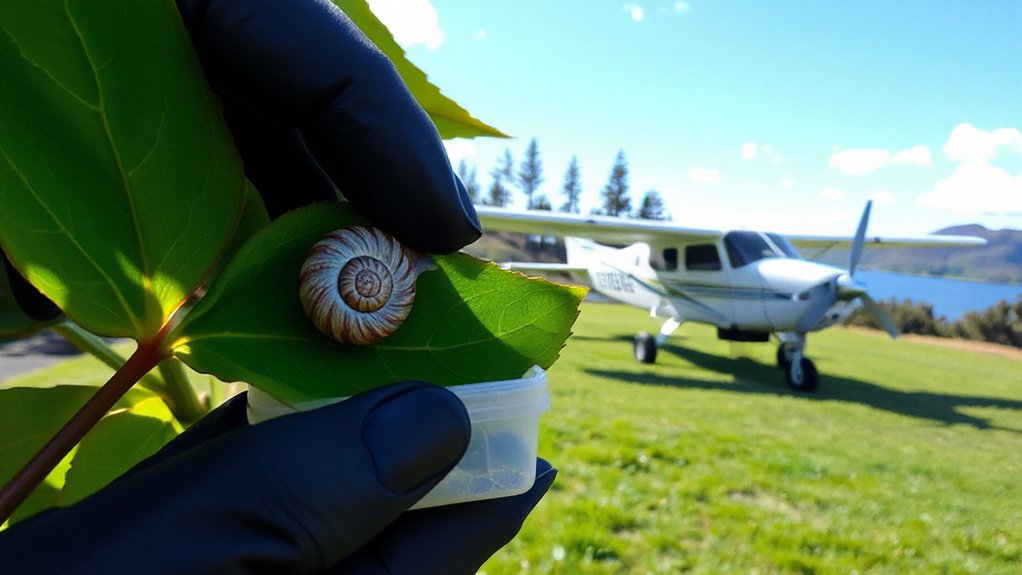
But the real Hail Mary came in May 2021. Sixteen adult Advena campbellii and sixteen Mathewsoconcha suteri were airlifted to Taronga Zoo. The snails adapted well to captivity and began breeding. From just 32 individuals, their numbers grew to 122. Not bad for creatures that produce just one baby at a time.
Now comes the risky part. Zoo-bred Campbell’s keeled glass-snails are being flown back to Norfolk Island for release into three additional sites within the National Park. These efforts are being led by Dr. Isabel Hyman and her dedicated team of researchers from the Australian Museum. It’s a gamble. Translocation stresses animals. But with single wild populations remaining for critically endangered species, there’s no alternative. Sometimes the last-ditch effort is the only one left.
References
- https://pmc.ncbi.nlm.nih.gov/articles/PMC11649095/
- https://norfolkislandnationalpark.gov.au/news/saving-norfolk-islands-endemic-land-snails/
- https://australian.museum/blog/amri-news/homecoming-a-journey-from-stress-to-success-for-norfolk-island-snails/
- https://norfolkislandfloraandfauna.net/category/natural-history/fauna/invertebrates/snails/
- https://naturalhistorywanderings.com/2025/12/20/snails-on-a-plane-australia-flies-rescue-mission-to-norfolk-island-for-a-tiny-critically-endangered-species-environment-the-guardian/
- https://en.wikipedia.org/wiki/Advena_campbelli