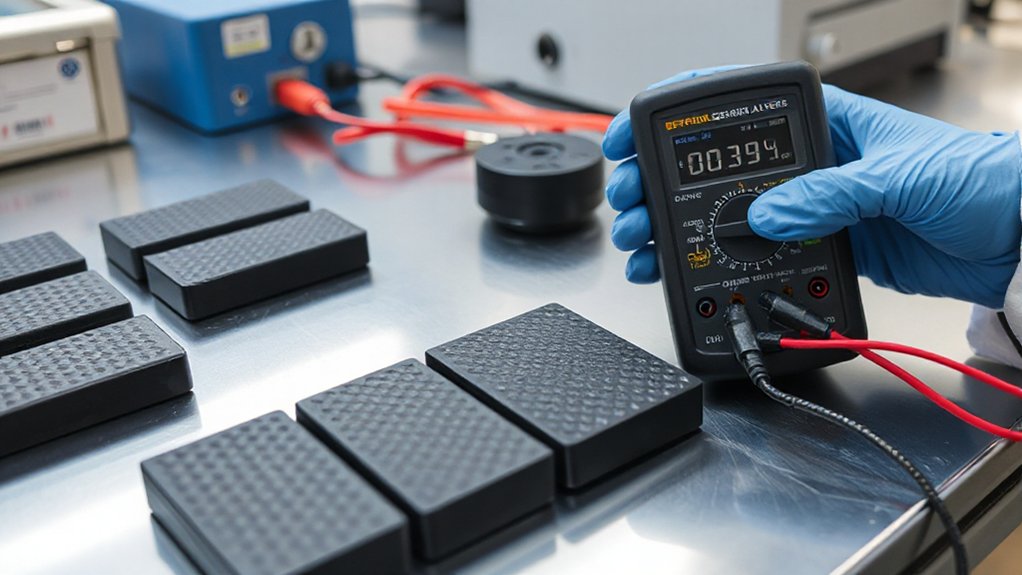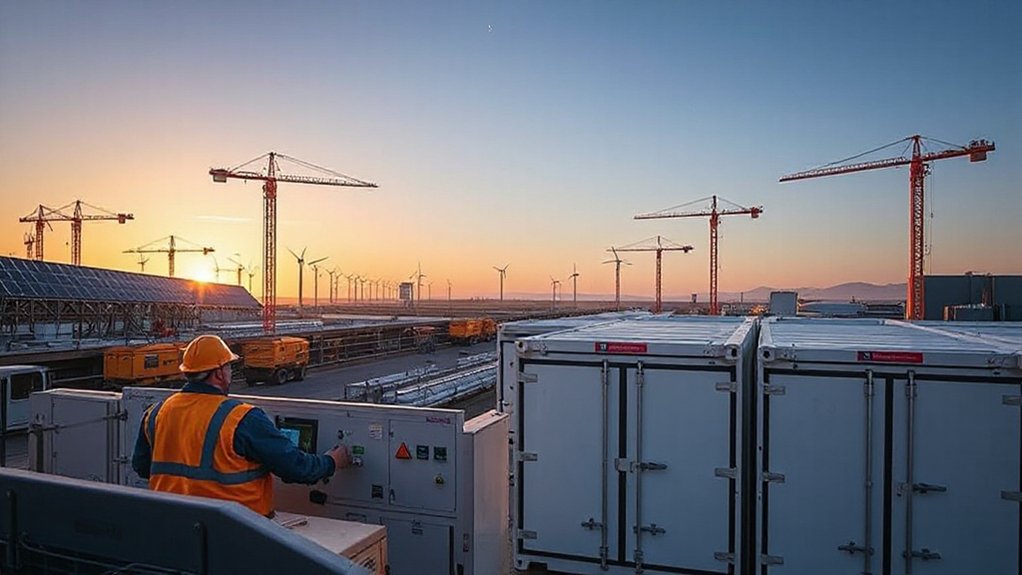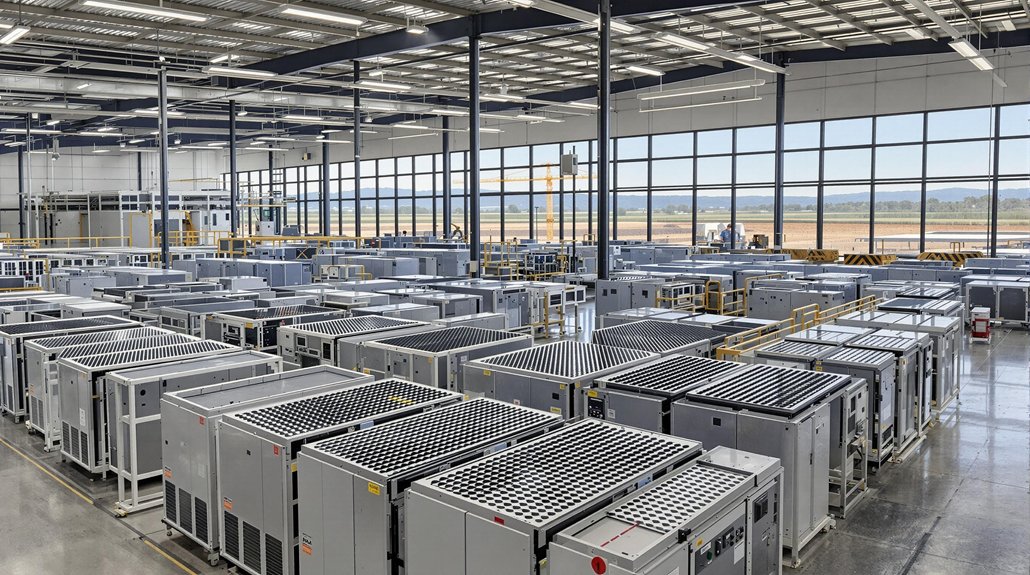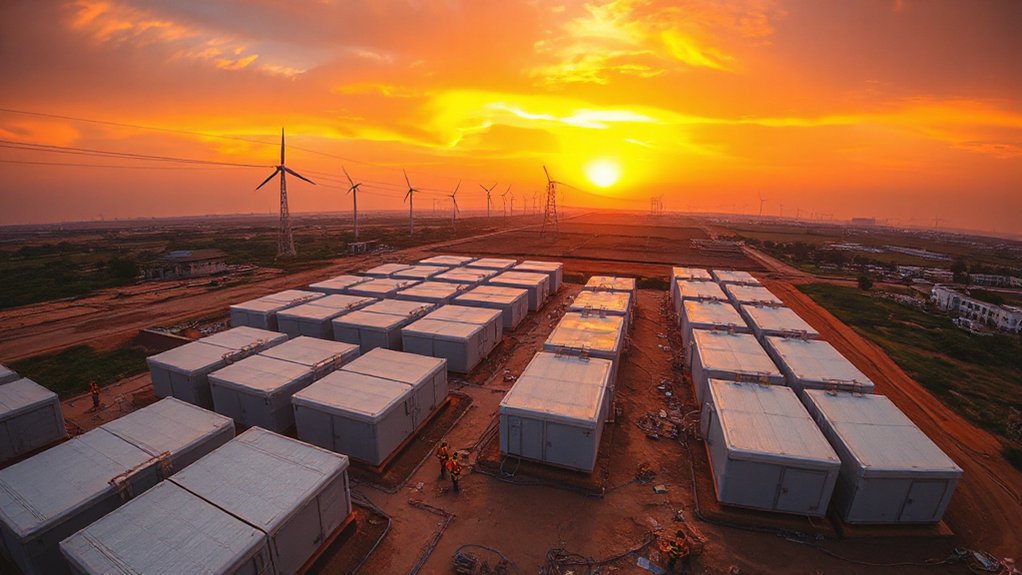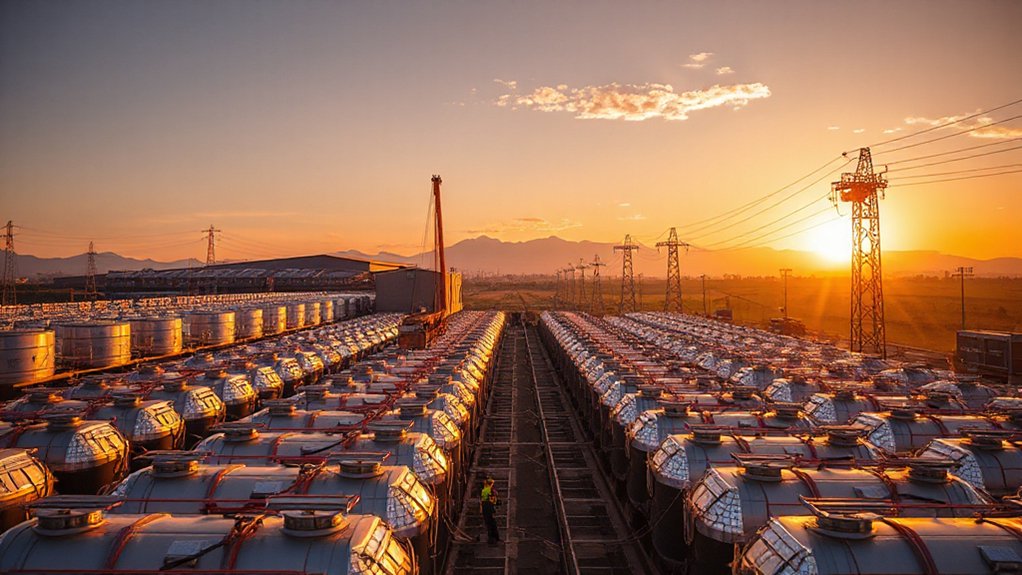
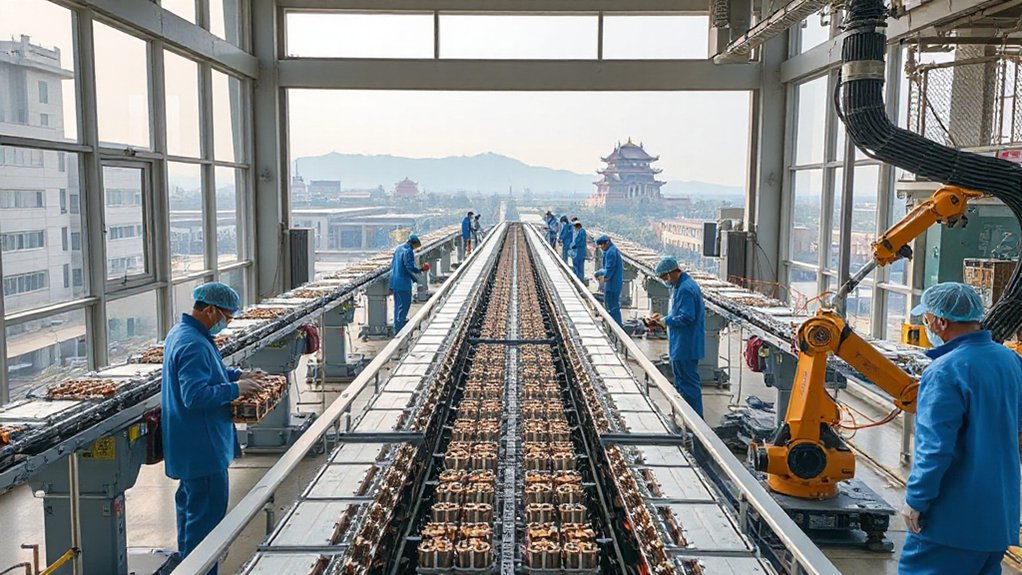
While the world debates clean energy shifts, China has quietly launched an energy storage revolution that’s rewriting the rules. The numbers tell the story: over 100 gigawatts of new energy storage capacity achieved by mid-2025. Let that sink in. A 30-fold increase in just five years. Nobody saw this coming.
China blew past its 2025 target of 30 GW two years early. Oops. Had to revise that goal up to 40 GW. And now? They’re gunning for 180 GW by 2027 and a staggering 300 GW by 2035. Talk about ambition.
China’s energy goals keep outgrowing themselves—30 GW became 40 GW, now aiming at 300 GW by 2035.
These aren’t just vanity projects. The country poured over 100 billion yuan (that’s $13.9 billion) into energy storage since 2021. Battery storage investment jumped 69% in a single year. They mean business.
What changed? For one, policy. China shifted from mandates to market approaches in early 2025. Provinces stepped up with their own targets. Smart move. The old command-and-control playbook got shelved for something more flexible.
The impact is already visible. China now leads globally in energy storage. Not even close. They’re solving the biggest clean energy riddle: what to do when the sun doesn’t shine and wind doesn’t blow. Storage fixes that.
Look at the renewable numbers – 373 million kilowatts of new capacity in 2024 alone, making up 86% of all new power additions. Solar capacity will likely surpass coal by 2026. That’s next year, folks.
Critics said renewables couldn’t handle baseload power. China’s response? Build enough storage to make it work. Period.
The industrial chains are expanding, technology is iterating faster, and utilization hours hit 911 in 2024. This isn’t just about batteries sitting around. They’re being used.
While others talk, China builds. Their energy gamble might just pay off, leaving competitors wondering what happened. The revolution isn’t coming. It’s already here. The massive initiative is projected to create approximately 500-700 direct jobs for each gigawatt of deployed storage capacity across various sectors. Despite this impressive growth, the industry continues to grapple with safety risks as evidenced by the 167 global incidents reported by May 2025. Australia’s shift to rooftop solar has proven that significant energy transitions are possible, reaching 24.4 GW of installations while creating three times more jobs than fossil fuels.
References
- https://discoveryalert.com.au/chinas-energy-storage-revolution-180-gw-plan-2025/
- https://eu.36kr.com/en/p/3473442182617730
- https://www.weforum.org/stories/2025/01/china-driving-advanced-energy-solutions-deployments/
- https://www.renewable-energy-industry.com/countries/article-7027-chinas-energy-storage-market-booms-in-2025-battery-storage-capacity-exceeds-100-gw-for-the-first-time
- https://www.officialenergyasia.com/chinas-ascendancy-in-the-global-energy-revolution/
- https://ember-energy.org/latest-insights/china-energy-transition-review-2025/
- https://source.benchmarkminerals.com/article/china-sets-180gw-target-for-bess-by-2027