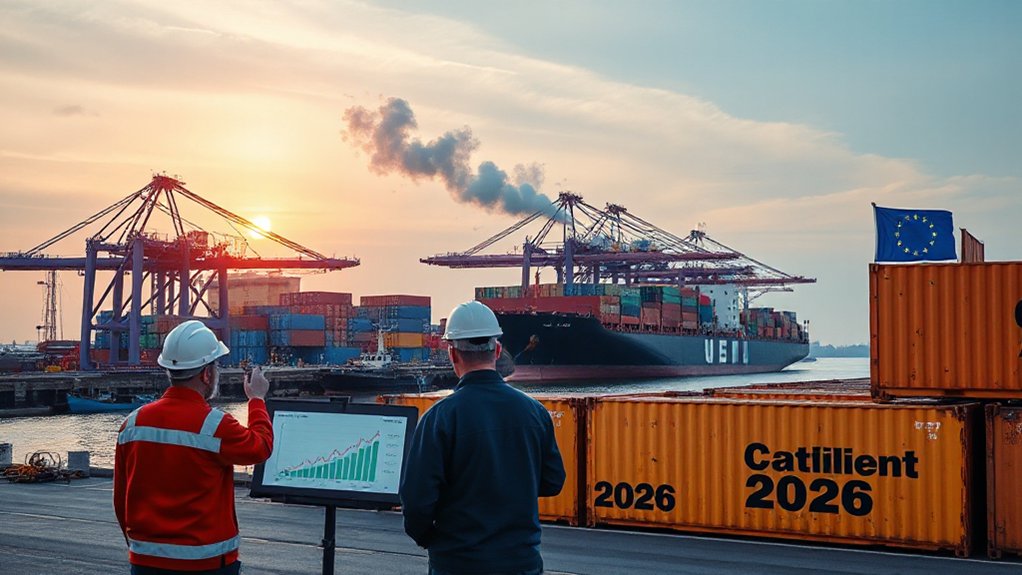
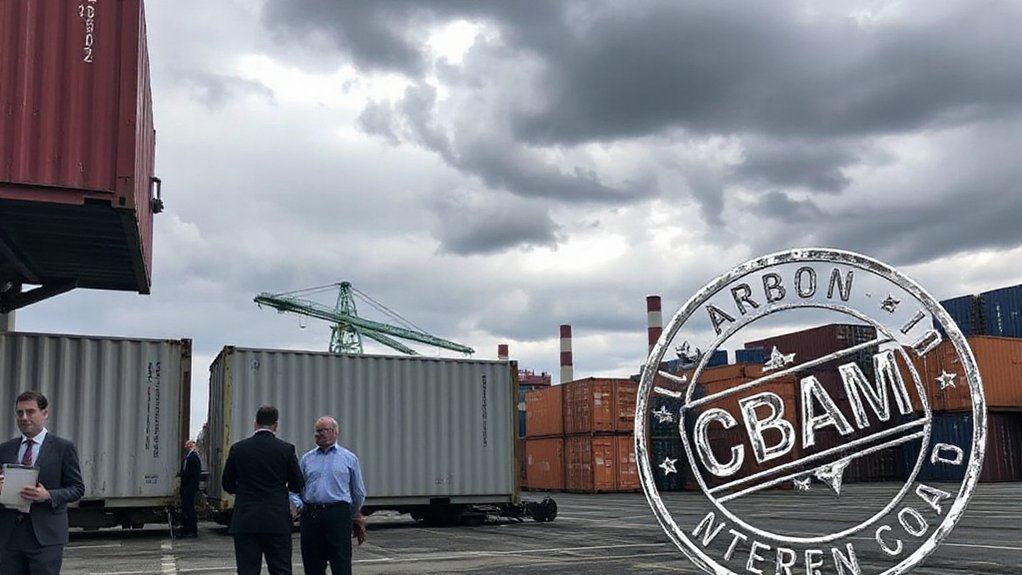
While businesses worldwide scramble to adapt, the European Union’s Carbon Border Adjustment Mechanism (CBAM) is poised to shake up global industries with unprecedented carbon pricing demands. The clock is ticking. Come January 1, 2026, the EU will no longer be playing nice with carbon-intensive imports. Steel, cement, aluminum, fertilizers, electricity, and hydrogen producers? Yeah, you’re first in line.
The EU isn’t messing around. After a 2023-2025 adjustment phase that’s basically been a practice run, the real game starts in 2026. Companies will actually have to pay up. Buy certificates. Match their emissions. Fork over cash based on EU carbon prices. It’s the environmental equivalent of “put your money where your mouth is.”
Foreign manufacturers are about to discover what EU producers have dealt with for years. The days of cheap, dirty production getting a free pass? Gone. Companies that have been pumping out carbon-intensive goods without consequence will face a rude awakening. The mechanism targets over 50% of emissions in sectors covered by the EU’s Emissions Trading System.
The Western Balkans are sweating bullets. Energy Community countries got a temporary reprieve on electricity until 2028, but everyone else better get their carbon accounting in order. Fast.
There are some small mercies. The EU has postponed certificate sales until February 2027. They’ve reduced quarterly coverage thresholds from 80% to 50%. Minor exceedances get penalty relief. Still feels like putting a Band-Aid on a broken leg for unprepared industries.
Smart companies are already preparing. The first surrender of certificates happens in 2027, covering 2026 imports. By then, quarterly holdings must cover 50% of embedded emissions. Wait too long and you’re toast.
The message is clear: decarbonize or pay up. This push toward cleaner energy aligns with research showing fossil fuels generate 500 times more waste than solar alternatives. The EU has thrown down the gauntlet. Global industries can adapt or watch their profits evaporate at the border. Importers dealing with over 50 tonnes of goods will need to become authorized CBAM declarants to legally import these carbon-intensive products. Manufacturers must be ready to provide verified emissions data that follows strict calculation methodologies to remain competitive in the EU market. Either way, 2026 is coming.
References
- https://taxation-customs.ec.europa.eu/carbon-border-adjustment-mechanism_en
- https://oneclicklca.com/en-us/resources/articles/cbam-a-guide-to-carbon-border-adjustment-mechanism
- https://www.ifc.org/en/events/2025/knowledge-event-eu-cbam-compliance-mitigation-latest-state-of-play
- https://icapcarbonaction.com/en/news/eu-adopts-simplifications-cbam-rules-ahead-compliance-phase-starting-2026
- https://www.bruegel.org/analysis/case-delaying-application-eus-carbon-border-levy-electricity