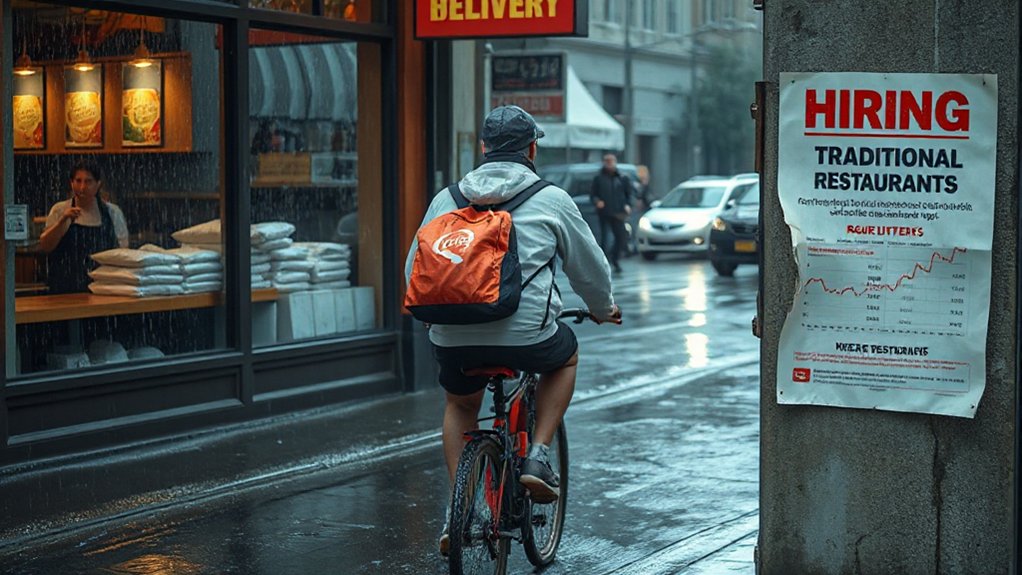

While food delivery apps once seemed like a luxury, they’ve become as essential as the smartphones they run on. But the future isn’t all rosy for the delivery titans. With global revenue projected to hit a staggering $1.4 trillion in 2025, everyone wants a piece of the pie—literally.
The competition is getting nasty. DoorDash, Uber Eats, and Grubhub continue throwing punches in urban markets, but they’re no longer the only fighters in the ring. Big restaurant chains are tired of watching their profits disappear into platform fees. They’re building their own delivery networks. Smart move.
Grocery delivery is the new darling, outpacing meal delivery with projected revenue growth of 11% in 2026. Turns out people want milk and eggs more consistently than they want pad thai. Who knew?
The humble grocery order is eating restaurant delivery’s lunch. Basic necessities trump occasional cravings every time.
The numbers don’t lie, but they do contradict each other. Market estimates for 2025 range wildly from $189.8 billion to $1.4 trillion. Analysts can’t even agree on what counts as “food delivery” anymore. Not exactly confidence-inspiring.
Unit economics remain brutal. These companies are still bleeding money on promotions, driver costs, and the general reality that delivering a $12 burrito five miles isn’t naturally profitable. Shocking.
Subscription models are the industry’s desperate attempt at stability. Pay us monthly, and we’ll pretend the delivery is “free.” Consumers are buying it—for now.
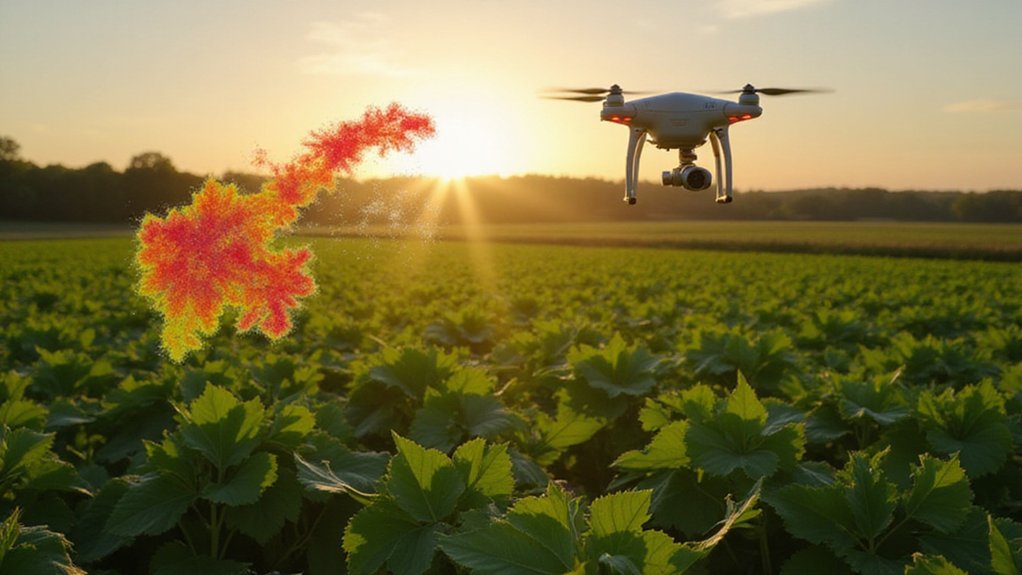
The battlefield of 2026 will be fought with automation, micro-fulfillment centers, and virtual kitchens. Companies are increasingly exploring drone delivery solutions to reduce labor costs and improve delivery times in congested urban areas. The winners won’t just deliver food faster; they’ll do it cheaper without making everyone involved miserable.
Urban markets are saturated, but the real growth potential lies in converting the delivery-hesitant. Those stubborn people who still think driving to a restaurant is normal behavior. How quaint.
The food delivery giants face a reckoning: adapt to tighter margins, broader offerings, and smarter logistics—or watch restaurants and grocers build their own solutions. The delivery wars are far from over. Beyond 2025, we’ll see further market acceleration with an expected CAGR of 7.79% through 2029, pushing the industry toward nearly $1.9 trillion.
References
- https://stackfood.app/blog/food-delivery-service-market-trends-forecast/
- https://www.fortunebusinessinsights.com/online-food-delivery-market-110672
- https://www.icoderzsolutions.com/blog/food-delivery-market-trends-and-scope-of-mobile-applications-in-food-business-by-2025/
- https://www.expertmarketresearch.com/reports/united-states-online-food-delivery-market
- https://www.briefingwire.com/pr/online-food-delivery-market-growth-forecast-and-trends-20262035
- https://deonde.co/blog/the-changing-food-delivery-market-global-research/
- https://www.statista.com/outlook/emo/online-food-delivery/worldwide
- https://www.grandviewresearch.com/horizon/outlook/online-food-delivery-market/united-states