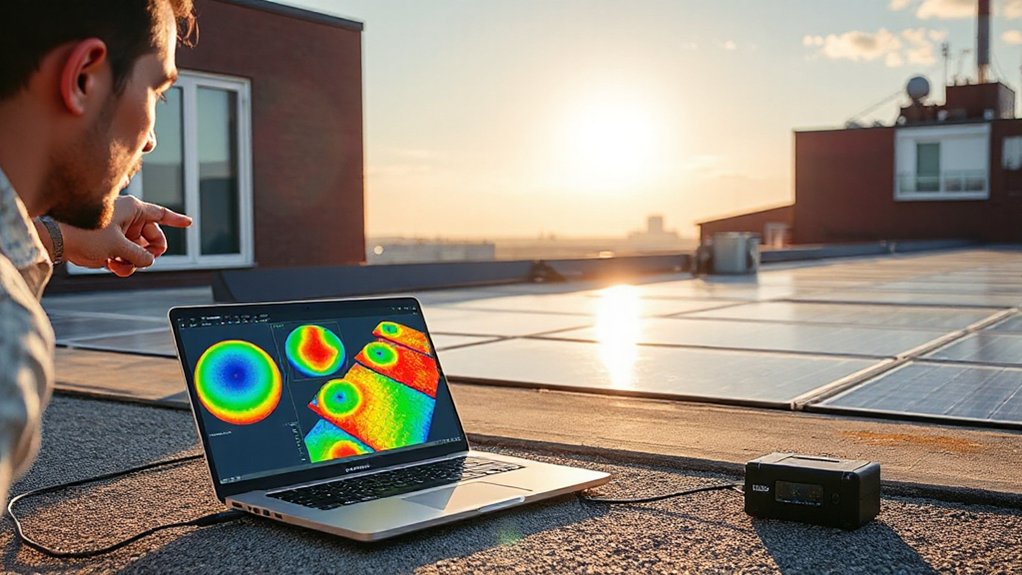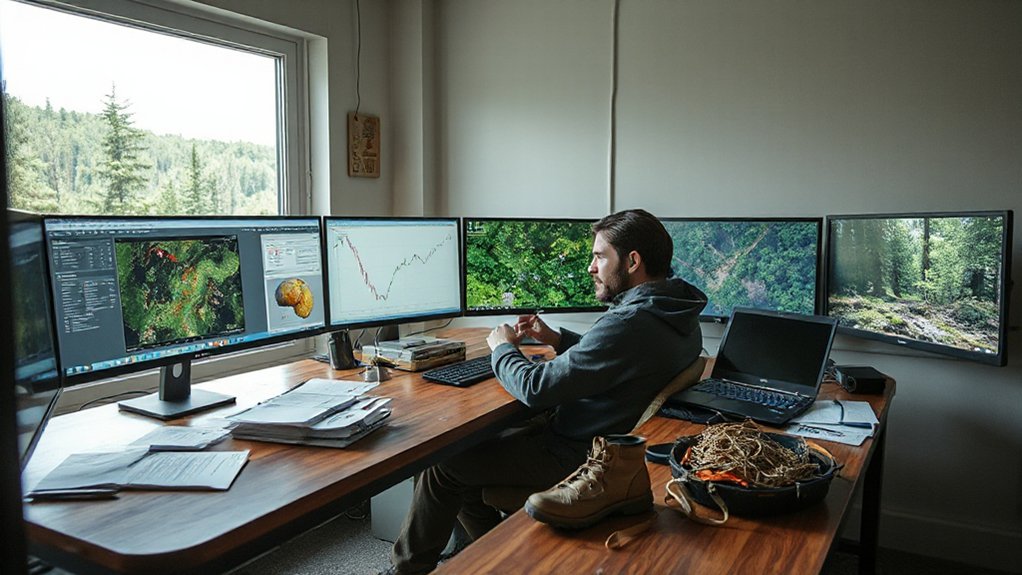

While field scientists once spent their days collecting samples and making observations in natural environments, they’re now increasingly glued to screens. It’s a massive shift in how science happens. The numbers tell the story: 89% of biotech scientists now use AI copilots or reasoning tools as their default way to handle data. Nature? Who needs it when you’ve got algorithms?
AI has spawned its own “killer apps” in science. Literature extraction tools (76% adoption), protein structure modeling (71%), and scientific reporting (66%) dominate researchers’ digital toolboxes. Notice anything? None of these involve mud, rain, or actual fieldwork. The physical world is becoming optional.
The lab has replaced the forest, the algorithm now trumps observation, and reality has become just another dataset.
Scientists aren’t making this choice in a vacuum. With global AI adoption hitting 78% across business functions, research institutions feel the pressure to “digitally transform” like everyone else. Healthcare and life sciences are leading the AI charge, not trailing it. The healthcare sector’s remarkable 36.8% CAGR in AI adoption demonstrates why field scientists feel compelled to embrace these digital tools. This shift is especially pronounced in drug discovery, where AI applications help identify promising compounds without lengthy lab work. Today’s researchers can leverage specialized AI models like DeepSeek R1 that outperform human coders and analysts in technical tasks.
Time in the field is shrinking as AI tools excel at ingesting, analyzing, and documenting information. Why trek into the wilderness when you can generate hypotheses from your ergonomic chair? Field notes and primary observations are being replaced by AI-powered knowledge systems. Much cleaner that way. No bugs.
The productivity gains are real, though. AI-enabled literature review and reporting deliver measurable benefits. Organizations report average ROI multipliers around 3.2x in healthcare and life sciences. Executives love numbers like these. The chief data officer is now a hero in 70% of large enterprises.
There are limits. AI adoption drops dramatically for messier problems like generative molecular design (42%), biomarker analysis (40%), and ADME prediction (29%). Turns out some science still requires getting your hands dirty.
But the trend is clear: scientists are trading their hiking boots for ergonomic chairs, their collection jars for cloud storage. Nature isn’t going anywhere. The scientists, however, might not be visiting as often.
References
- https://www.netguru.com/blog/ai-adoption-statistics
- https://www.secondtalent.com/resources/industries-seeing-the-fastest-ai-adoption-rates/
- https://www.nu.edu/blog/ai-statistics-trends/
- https://downloads.ctfassets.net/kzeezny59h5p/YpQPwDughrM22nvqp8pxl/ac49d590d9c9c74400dde6e6bf0657ea/2026-Biotech-AI-Report.pdf
- https://www.benchling.com/biotech-ai-report-2026
- https://sloanreview.mit.edu/article/five-trends-in-ai-and-data-science-for-2026/
- https://www.cutterassociates.com/insights/ai-adoption-rolling-it-out-is-just-the-first-step
- https://www.mckinsey.com/capabilities/quantumblack/our-insights/the-state-of-ai
- https://www.deloitte.com/us/en/insights/topics/technology-management/tech-trends.html