Energy realism is gaining ground as U.S. officials and oil executives push back against the renewable revolution narrative. They point to stubborn math: fossil fuels still power over 80% of global needs, while renewable intermittency problems remain unsolved. Developing nations keep building coal plants despite Western finger-wagging. Even Biden’s administration has presided over record oil production. The uncomfortable truth? Clean energy has dirty secrets most climate discussions conveniently ignore.
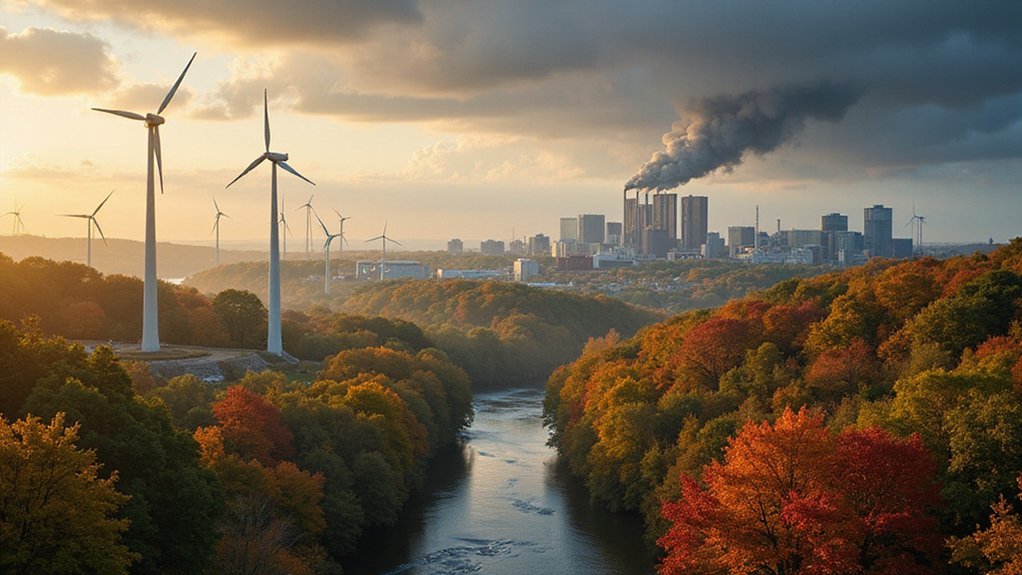
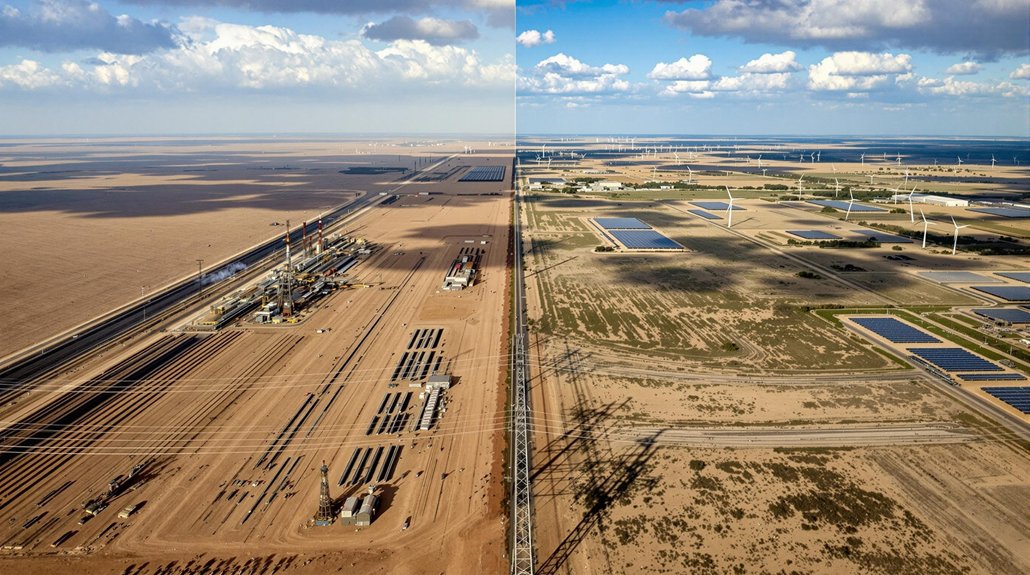
While climate activists push for an immediate change to wind and solar, the reality of our energy landscape tells a more complicated story. Fossil fuels still power over 80% of our global energy needs. That’s not changing overnight, folks. The math just doesn’t add up for a rapid shift, no matter how many colorful graphs get shared on social media.
The Trump administration‘s “drill, baby, drill” approach marks a stark departure from green energy promises. With fracking CEO Chris Wright tapped for Energy Secretary, the message couldn’t be clearer: America’s betting on hydrocarbons. Curiously, even the Biden administration oversaw record oil and gas production. Actions speak louder than climate summit speeches, don’t they?
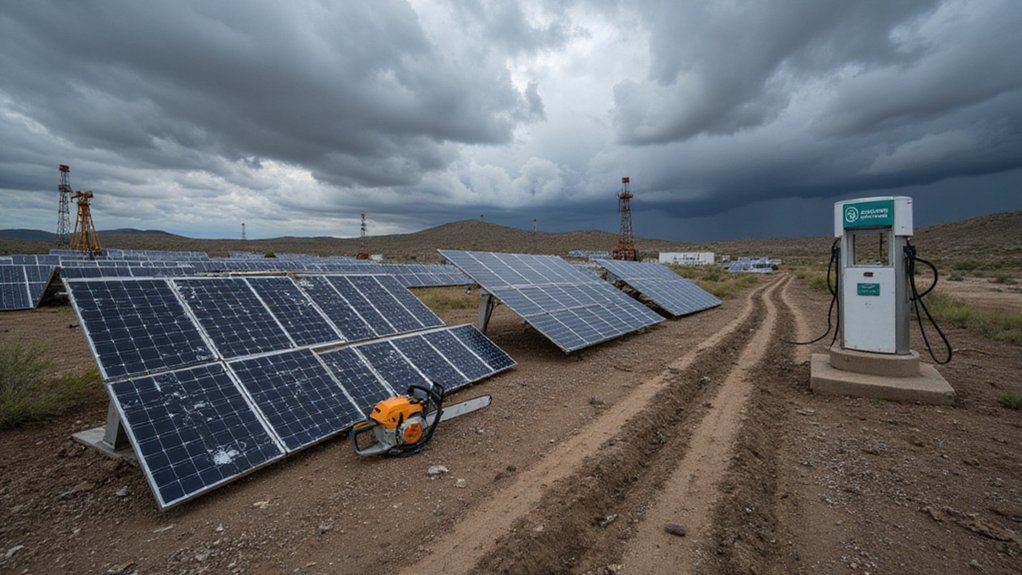
Renewables face real-world hurdles that can’t be wished away. Wind doesn’t always blow. Sun doesn’t always shine. And those massive batteries to store all that intermittent energy? Still more science fiction than reality at grid scale. Not exactly the perfect replacement narrative we’ve been sold.
Energy experts point to uncomfortable truths about our shift timeline. Developing nations need more energy, not less. They’re building coal plants while Western environmentalists lecture about carbon footprints. China and India aren’t exactly shutting down their fossil fuel infrastructure anytime soon. Shocking, right?
The grid itself poses massive challenges. Try powering a hospital during a week-long winter storm with just solar panels. Good luck with that. Conventional power plants provide essential services that renewables can’t yet match, especially during extreme weather events. The integration of wind and solar becomes exponentially more difficult as their penetration in the grid increases, creating technical hurdles that are often glossed over in transition discussions.
Even “clean” energy comes with dirty secrets. Mining rare earth minerals for solar panels and wind turbines isn’t exactly environmentally friendly. Nuclear power – the most reliable zero-carbon option – remains politically radioactive despite its impressive safety record. The true costs of renewables are frequently hidden through subsidies and cost shifting, making their economic viability seem better than it actually is.
Energy realism isn’t about denying climate change. It’s about acknowledging the complex realities of powering modern civilization. A shift is happening, but it’s moving at the speed of economics and physics, not wishful thinking. Sometimes the truth is inconvenient. With electricity generation producing 14.6 gigatons of CO2 annually, the transition challenges are indeed monumental.