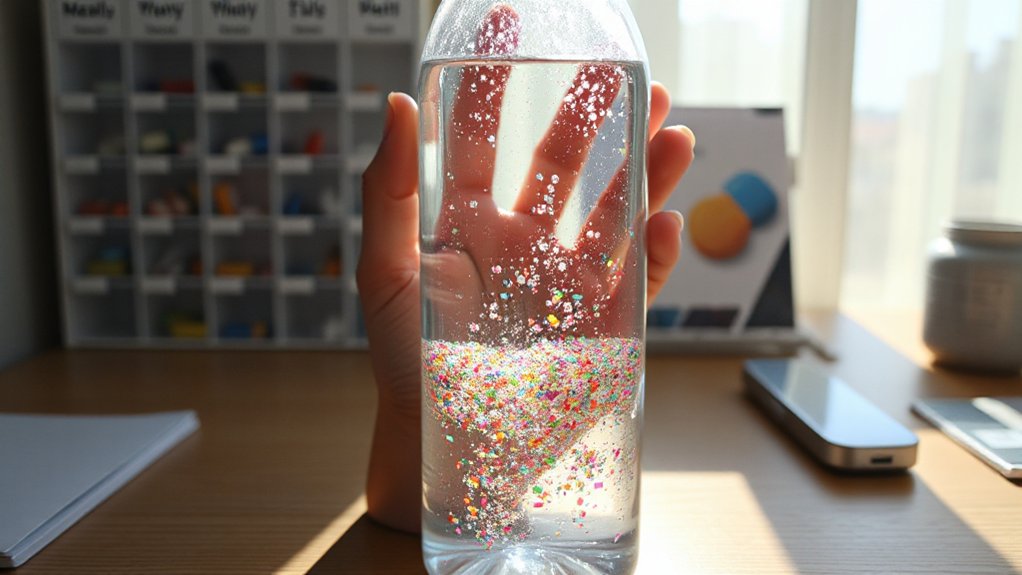
While many consumers reach for bottled water believing it’s a healthier choice, that daily plastic bottle habit might be serving up an unwanted bonus: a hefty dose of microplastics. Recent research paints a startling picture: exclusive bottled-water drinkers could be ingesting up to 90,000 more plastic particles annually than those drinking tap water. Not exactly the premium experience advertised on the label.
The numbers are getting worse, not better. Landmark studies initially estimated around 39,000-52,000 particles consumed yearly from drinking water alone. But newer high-throughput imaging techniques have blown those figures out of the water. One study found an average of 240,000 plastic particles per liter in bottled waters. Yikes. The majority? Nanoplastics—tiny particles smaller than 1 micrometer that older studies completely missed.
Your fancy bottle isn’t just sitting there innocently. It’s actively shedding plastic. Every squeeze, every cap twist, every hot car ride triggers more particle release. The plastic walls, the caps, the linings—they’re all getting in on the action. Production debris and bottling-line aerosols add to the plastic cocktail you’re drinking. Invigorating, isn’t it? Just the action of twisting the cap releases about 131 microplastic particles into the water.
The measurement challenges are substantial. Count-based metrics can reach hundreds of thousands of particles, while mass-based estimates remain tiny because nanoplastics weigh next to nothing individually. Different detection methods yield wildly different results. Some studies report lower numbers, but even these “lower” counts remain concerning. Despite 63% of Americans viewing bottled water as cleaner than tap, research reveals the opposite is true regarding microplastic content.
What’s particularly troubling is the size factor. A large fraction of these particles are nanoplastics, which may pose greater health risks due to their minute size. Lifetime projections suggest bottled water enthusiasts could ingest hundreds of kilograms of microplastics if they maintain their habit.
Bottom line? That convenience comes with unwanted extras. Your daily hydration ritual might be flooding your body with tens of thousands of plastic particles yearly. Maybe that reusable water bottle isn’t looking so inconvenient after all.
References
- https://wellnesspulse.com/research/microplastics-water-bottle-accumulating/
- https://superage.com/bottled-water-is-a-major-source-of-microplastics-according-to-new-study/
- https://www.plasticstoday.com/packaging/microplastics-worry-us-but-we-still-drink-bottled-water
- https://www.foxnews.com/health/hidden-reason-scientists-say-bottled-water-may-not-cleaner-choice
- https://www.aquasana.com/info/earth-day-survey-reveals-plastic-bottled-water-use-pd.html
- https://www.nih.gov/news-events/nih-research-matters/plastic-particles-bottled-water
- https://lamont.columbia.edu/news/bottled-water-can-contain-hundreds-thousands-previously-uncounted-tiny-plastic-bits-study