Who would’ve thought electric vehicles could reshape an entire nation’s travel habits? Yet here we are, watching China’s gasoline demand plummet 9% during Golden Week 2025. First time ever. Pretty wild, right?
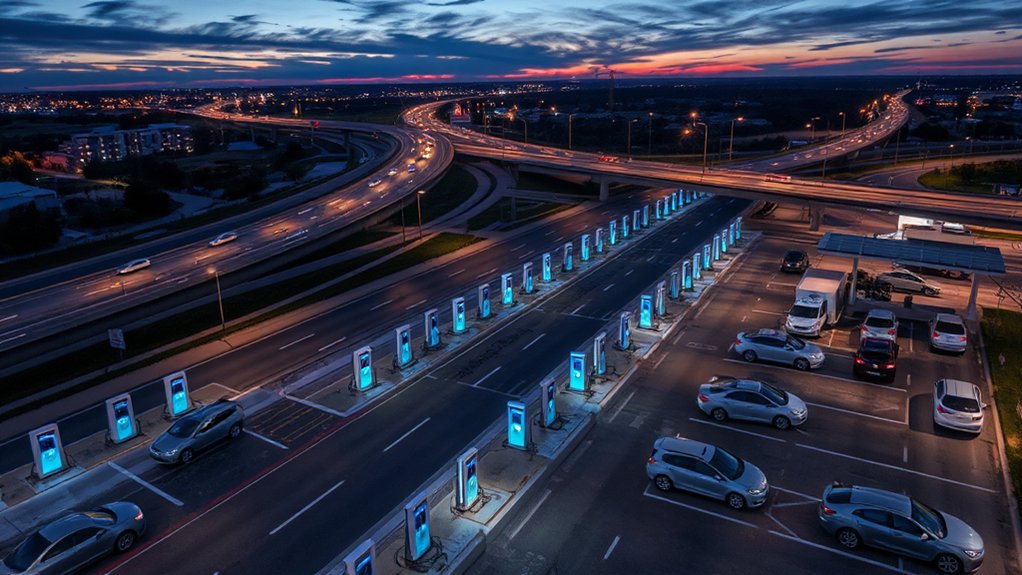
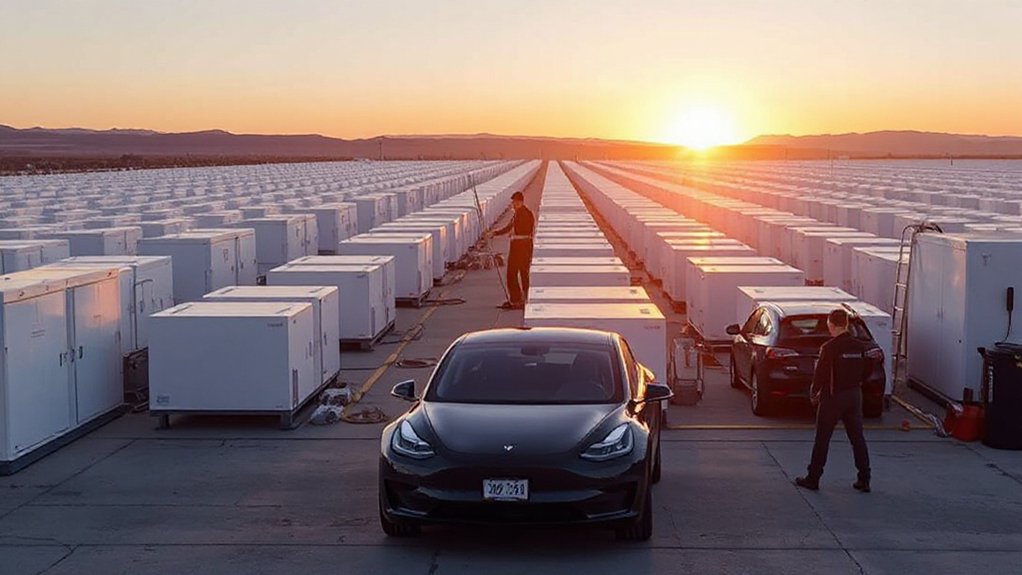
The numbers tell the story. EV charging stations saw electricity consumption jump nearly 46% compared to last year’s holiday. Meanwhile, gasoline stayed flat compared to September—breaking the traditional holiday spike pattern that oil companies counted on for decades. Turns out those predictions about EVs disrupting energy markets weren’t just environmentalist fantasies after all.
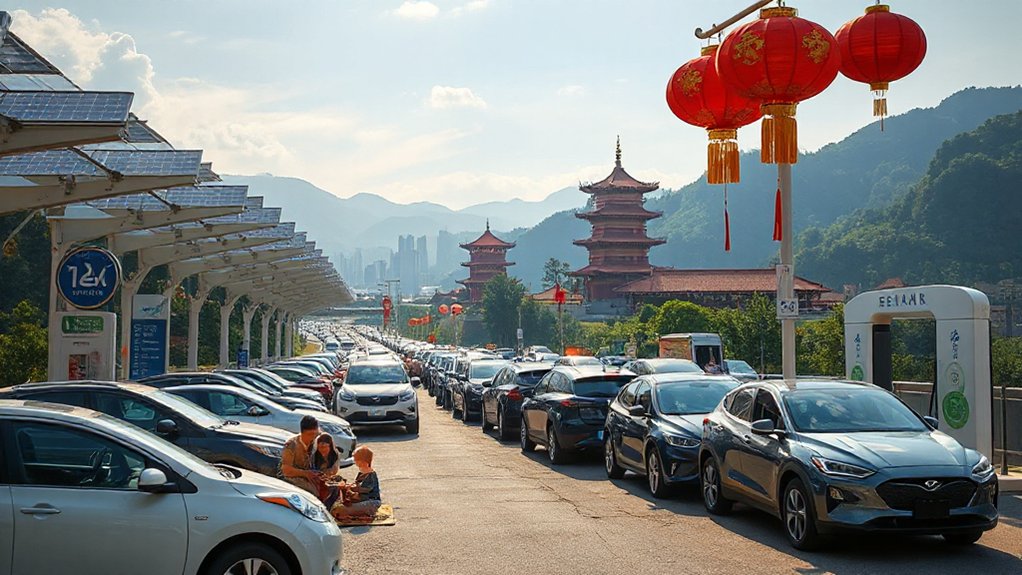
EVs and hybrids made up 20% of the 63.5 million car trips during the eight-day holiday. That’s millions of vehicles humming along on electricity rather than burning fossil fuels. And these weren’t just short jaunts either. Some drivers completed 2,000-km journeys from Sichuan to Beijing. Range anxiety? Please. That’s so 2022.
EVs aren’t just city toys anymore—they’re conquering China’s highways and rewriting the rules of holiday travel.
Interestingly, vehicle registrations actually dropped during Golden Week itself—Nio Group saw a 41% decrease. But don’t get excited, oil execs. It’s just a temporary holiday blip due to factory closures. Sales rebounded dramatically afterward, with Nio and Xiaomi leading the charge. Despite the holiday dip, Nio’s weekly sales quickly rebounded to 7,050 vehicles in the week following the National Day celebration period.
Almost half of new cars sold in China this year are electric or hybrid. Let that sink in. China achieved price parity with gasoline cars in May 2025, making EVs an economical choice for consumers. This mirrors the impressive 50% increase in EV sales seen in the U.S. following Biden’s climate initiatives. The transformation is happening faster than anyone predicted, and Golden Week provided irrefutable evidence.
Remember when critics claimed EVs couldn’t handle long road trips? Laughable now. Expanded charging networks have made thousand-kilometer journeys routine. Consumer perceptions have shifted—dramatically.
This isn’t just about one holiday. It’s a structural change in China’s transportation landscape. The largest oil market in the world is actively reducing consumption during peak travel times. That’s not incremental change; it’s revolutionary.
The EV revolution isn’t coming. In China, during Golden Week 2025, it arrived. No fanfare necessary.
References
- https://evxl.co/2025/10/30/china-ev-boom-ends-golden-week-gasoline-surge/
- https://eletric-vehicles.com/nio/nio-group-weekly-sales-rise-driven-by-onvo-and-nio-brands/
- https://www.btcc.com/en-AU/amp/square/Global Cryptocurrency/1126137
- https://m.fastbull.com/news-detail/chinas-ev-boom-disrupts-holiday-gasoline-demand-patterns-4352153_0
- https://www.travelandtourworld.com/news/article/chinas-golden-week-2025-reveals-a-revolutionary-change-in-travel-habits-with-electric-vehicles-leading-the-way-and-gasoline-demand-declining-by-nine-percent/
- https://energynews.oedigital.com/energy-markets/2025/10/30/electric-vehicles-end-chinas-annual-holiday-spike-in-gasoline-consumption