Chicago homeowners are tapping into earth’s constant heat through geothermal systems. These underground pipe networks slash heating bills by up to 70% while cooling costs drop by half. Yeah, upfront costs run 30-40% higher than traditional HVAC, but systems pay for themselves within 7 years. No combustion means zero carbon monoxide risk and 75% less CO2 emissions. Underground loops last a century, heat pumps for decades. Chicago’s subterranean revolution is just warming up.
While most homeowners struggle with skyrocketing heating bills each winter, a solution lies right beneath their feet. Chicago residents are discovering what Mother Earth has known all along—it’s surprisingly cozy underground. Geothermal heating systems tap into the earth’s constant 50-60°F temperature, turning Chicago’s notorious winters from budget-busters to manageable affairs.
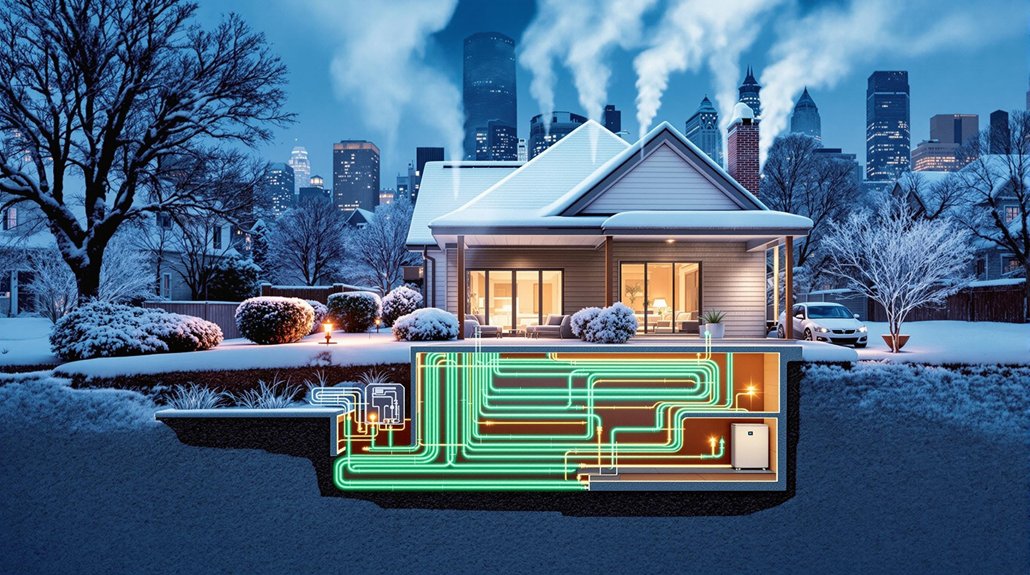
The concept is simple. Fluid circulates through underground pipes, absorbing that steady earth warmth. A heat pump then concentrates this energy and distributes it throughout the home. In summer, the process reverses. Magic? Nope. Just science.
Mother Nature’s thermostat works year-round, turning winter’s chill and summer’s swelter into perfectly balanced comfort.
These systems are ridiculously efficient—300 to 500 percent compared to conventional systems’ measly 95 percent. That translates to slashing heating costs by up to 70 percent and cooling costs by half. No more temperature roller coasters, either. The heat distribution is even. Consistent. Actually comfortable.
The upfront costs? Yeah, they’re higher—about 30-40 percent more than traditional HVAC systems. But the payback period is typically 5-7 years, with systems saving over $1,000 annually on utility bills. The heat pump lasts 20-25 years, while those underground loops keep working for 50-100 years. Talk about long-term thinking.
For the environmentally conscious (or just those who enjoy breathing), geothermal systems produce 75-85 percent less CO2 than gas or oil heating. No combustion means zero carbon monoxide risk. Clean. Green. Smart.
Even in Chicago’s dense urban landscape, geothermal is viable. Systems can utilize space beneath alleys and streets, and community-scale operations can serve multiple buildings simultaneously. It’s an underground revolution in the most literal sense.
Maintenance is minimal compared to traditional systems. Fewer moving parts, no outdoor unit battling Chicago’s elements, and simple annual inspections keep everything running smoothly. Homeowners appreciate the remarkably quiet operation that creates a peaceful indoor environment compared to traditional HVAC systems. Operating with a 96% capacity factor, these systems provide reliable heating regardless of weather conditions, unlike other renewable energy alternatives. When paired with renewable electricity, these systems achieve zero operational emissions. Unlike fossil fuel alternatives, these installations produce no nitrogen oxides or sulfur dioxide, further enhancing their environmental benefits.
The future of heating in the Windy City? It’s underground. And it’s already here.