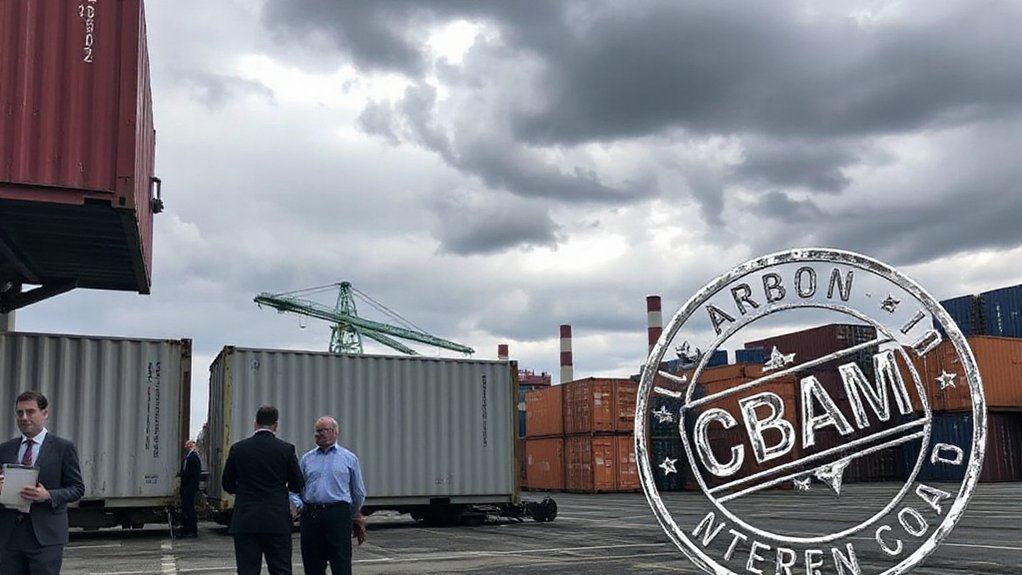
As the European Union rolls out its ambitious Carbon Border Adjustment Mechanism (CBAM), importers are facing a new reality: pay up for pollution or clean up production. The mechanism, which kicked off its changeover phase in October 2023, isn’t just another bureaucratic hurdle—it’s a climate policy with teeth. And boy, does it bite.
CBAM targets carbon-intensive goods entering the EU market, forcing importers to account for emissions produced during manufacturing. First quarterly reports were due January 31, 2024. Not exactly a fun deadline for affected businesses. The initial scope includes the usual suspects: cement, steel, aluminum, fertilizers, electricity, and hydrogen. You know, just the backbone of global industrial production. No big deal.
Companies had options for the changeover reporting—follow EU methods, use equivalent approaches, or rely on default values. But those defaults? Only available until July 2024. Clock’s ticking.
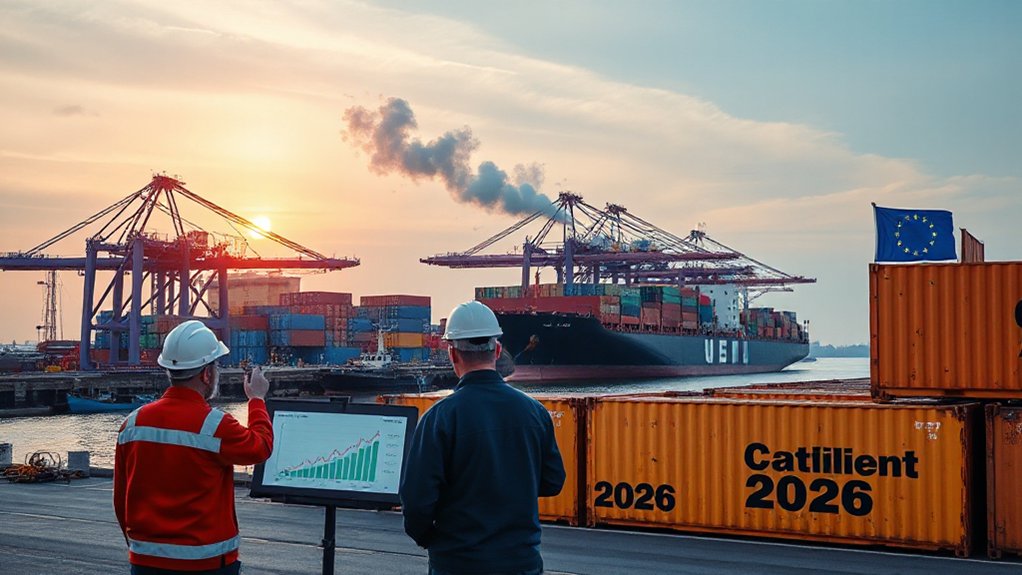
The real party starts January 2026. That’s when importers will actually have to purchase certificates based on the EU ETS carbon price. Money talks, and Brussels is listening. Businesses need to get authorized as CBAM declarants before then. Another form, another headache.
China isn’t taking this lying down. They’ve labeled the mechanism “unfair and discriminatory.” Shocking, right? They’re particularly miffed about the high default carbon-intensity values assigned to Chinese products. Countermeasures are promised. Trade war, anyone?
The EU isn’t alone in this carbon border tax game for long. The US is planning similar fees starting in 2025. Two global economic powerhouses charging for carbon? That’s going to leave a mark.
When fully implemented, CBAM will capture more than half of emissions in sectors covered by the EU’s Emissions Trading System. The mechanism directly addresses carbon leakage risks by preventing companies from relocating production to countries with less stringent climate policies. This approach parallels the growing legal accountability that fossil fuel producers are facing in courts worldwide. It’s the world’s first carbon tariff on imports. Historic? Yes. Controversial? Absolutely. Necessary? Well, that depends on which side of the border you’re standing.
Least developed countries have raised serious objections to the policy, viewing it as an unfair tax that ignores their limited emission contributions compared to wealthier nations with extensive industrial histories.
References
- https://taxation-customs.ec.europa.eu/carbon-border-adjustment-mechanism_en
- https://www.brookings.edu/articles/what-is-a-carbon-border-adjustment-mechanism/
- https://www.bruegel.org/analysis/case-delaying-application-eus-carbon-border-levy-electricity
- https://www.energyconnects.com/news/utilities/2026/january/china-calls-eu-carbon-border-tax-unfair-warns-of-counter-moves/
- https://www.canarymedia.com/articles/clean-industry/europe-cbam-carbon-tariff-imports
- https://icapcarbonaction.com/en/news/eu-adopts-simplifications-cbam-rules-ahead-compliance-phase-starting-2026