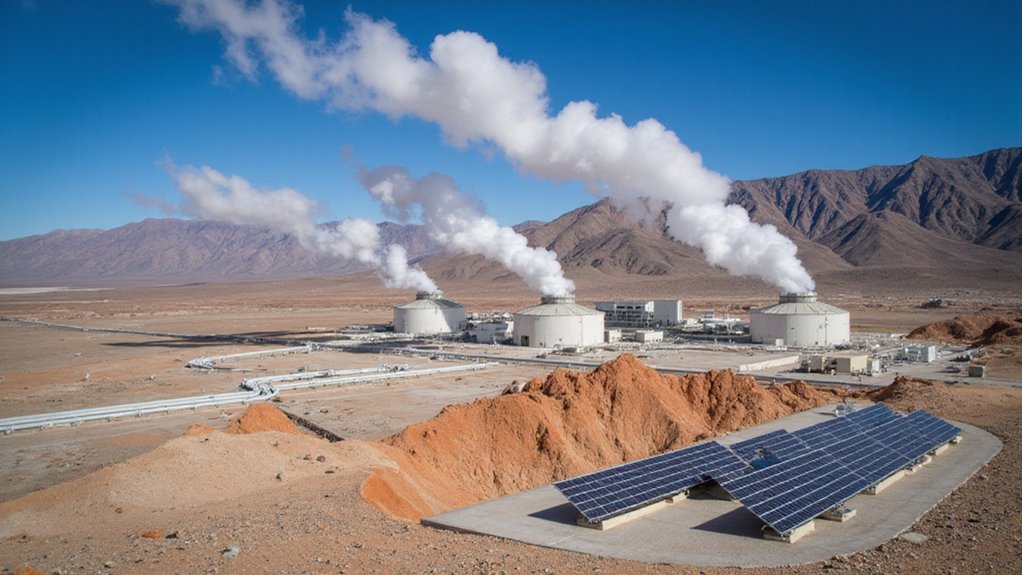
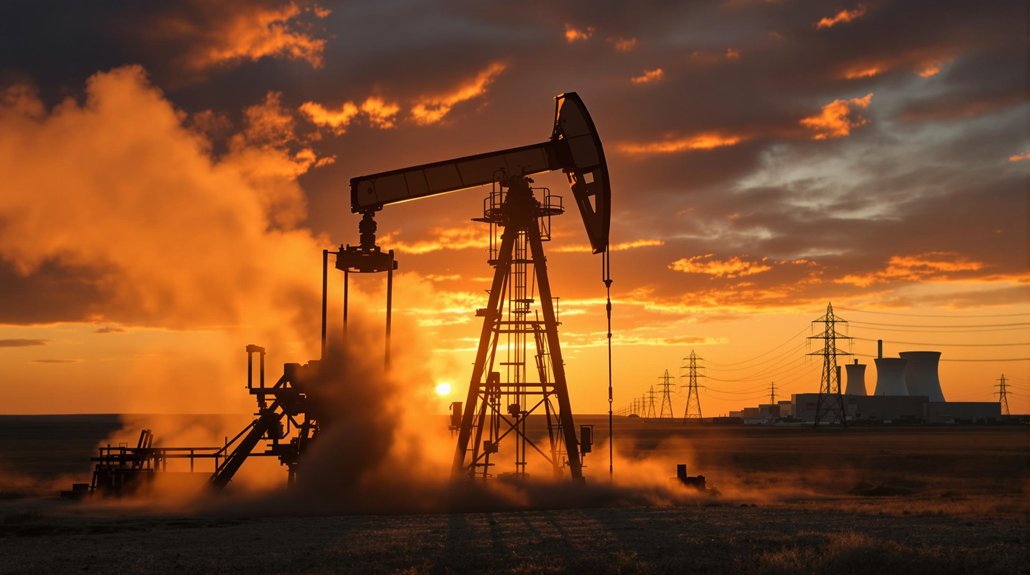
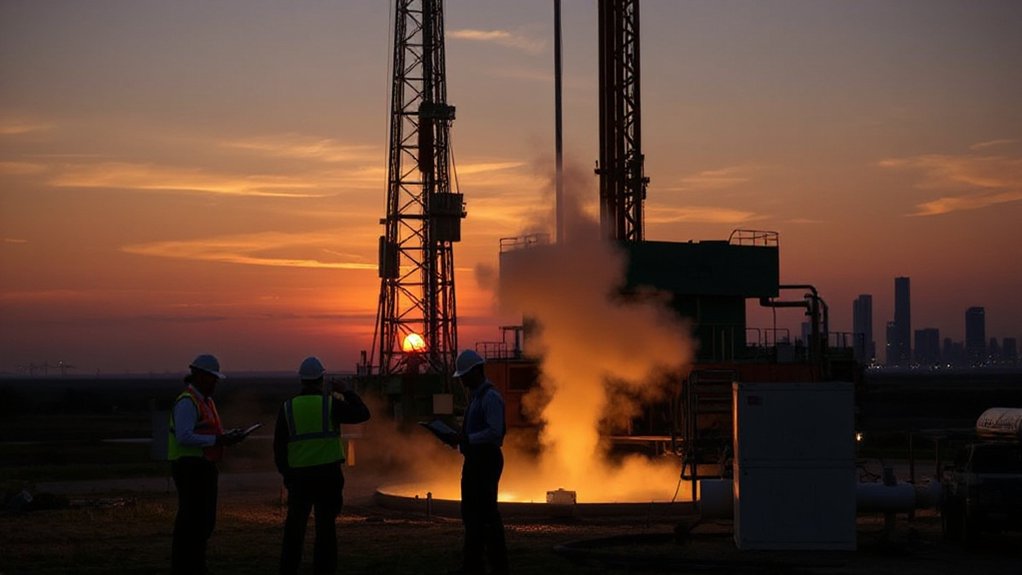
California’s geothermal industry faces multiple challenges despite its historical dominance. Annual capacity losses of 1-2% plague major fields like The Geysers. Economic obstacles include high upfront costs and competition from cheaper solar and wind power, reducing geothermal’s share to just 3% of the power mix. Land use conflicts, regulatory hurdles, and environmental concerns further complicate expansion. Technological innovations like Enhanced Geothermal Systems offer potential solutions if investment barriers can be overcome.
While California has long been a leader in geothermal energy production, its dominance in this renewable resource is now under serious threat. The state’s geothermal fields, particularly The Geysers, are experiencing annual capacity losses of 1-2% due to mineral buildup in rock fractures. This decline happens as native groundwater depletes over time, reducing the steam needed for power generation.
The environmental challenges can’t be overlooked. Geothermal water often contains toxic substances including heavy metals and hydrogen sulfide gas. Despite these challenges, California maintains its status as global geothermal leader with over 50 active plants statewide. Abandoned or unused wells risk contaminating groundwater systems. There’s also growing concern that continuous extraction may trigger earthquakes in seismically active regions of California.
Toxic minerals, abandoned wells, and potential seismic risks darken geothermal’s green energy promise in California.
Economic factors further complicate geothermal’s future. Plants require high upfront costs and face lengthy timeframes for investment returns. Meanwhile, solar and wind energy have gained market share, leaving geothermal with just 3% of California’s power mix. Rural areas like Imperial County lack adequate transmission networks to distribute geothermal electricity effectively. Despite these challenges, geothermal offers stable energy prices that aren’t affected by global market fluctuations or crises.
Land use conflicts present another hurdle. Many prime geothermal sites overlap with protected lands or important agricultural areas. Drilling deeper for enhanced systems requires specific geological conditions and technical expertise. The Geysers’ proximity to volcanic zones raises concerns about geological stability and safety. The field currently produces steam heated to an average of 465 degrees by underlying magma.
Regulatory requirements add more complexity. Permit processes and safety measures often delay project development. Some county policies prioritize farming over geothermal projects, creating political barriers. The California Public Utilities Commission’s reliability mandates affect how resources are allocated for new geothermal developments.
Modern solutions like Enhanced Geothermal Systems (EGS) show promise but face technological and financial barriers. Tapping deeper, superheated layers could counteract the decline, but these methods are expensive and still developing. Without increased investment and supportive policies, California’s pioneering role in geothermal energy may diminish just when clean energy sources are most needed to address climate change.