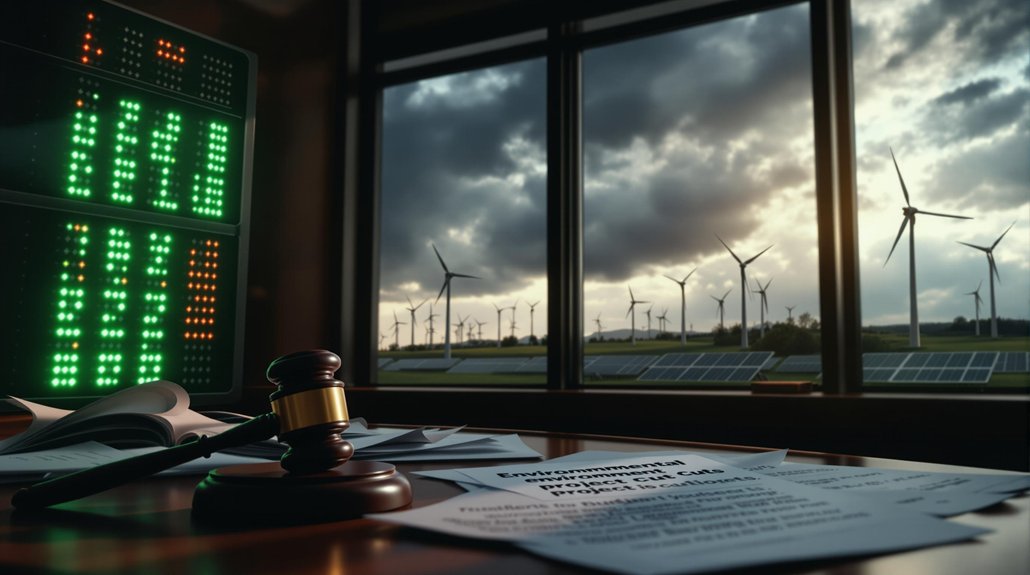
California’s push to make corporate climate impacts transparent just kicked into high gear. Two groundbreaking laws—SB 253 and SB 261—are forcing thousands of companies to spill their climate secrets, whether they like it or not. No hiding in the corporate shadows anymore.
California’s climate transparency revolution has arrived, yanking corporations from the shadows and forcing them to reveal their environmental footprint.
The bigger law, SB 253, targets U.S. companies with annual revenue exceeding $1 billion that do business in California. Doesn’t matter where your fancy headquarters is located. If you’re making big money in the Golden State, you’re on the hook. Its smaller companion, SB 261, catches companies with revenue above $500 million. Different thresholds, same goal: climate accountability.
The clock is ticking. Companies must report their Scope 1 and 2 greenhouse gas emissions in 2026 for 2025 data. Scope 3 emissions—you know, the really complicated value chain stuff that companies hate tracking—gets reported starting in 2027. Climate risk reports under SB 261 kick in January 2026. Regulators are still finalizing the rules, but deadlines won’t wait for stragglers.
These aren’t your grandmother’s voluntary disclosures. The laws require third-party verification. Limited assurance first, then reasonable assurance by 2030. It’s like the difference between “we’re pretty sure” and “we’d bet our jobs on it.” Companies can’t just make up numbers anymore. Imagine that. This oversight stands in stark contrast to the situation in rural America, where the closure of EPA justice offices has left communities without federal protection against pollution hazards.
California isn’t playing around. These are the toughest climate disclosure requirements in America. Period. They’re filling the void left by federal rollbacks and setting a new baseline for corporate transparency. Despite a recent legal challenge from the US Chamber of Commerce that was denied by the US District Court, companies must still comply with all deadlines. Multinational corporations can’t simply ignore California—it’s too big a market.
Companies that fail to comply face penalties when enforcement begins in 2026. The state will impose up to $500,000 in annual penalties for non-compliance with SB 253, while SB 261 violations can cost up to $50,000 per year. But the real punishment might be public scrutiny. Nothing like having your dirty carbon laundry aired for all to see.
Get ready for a new era of corporate climate transparency. California’s making sure of it. Whether businesses are prepared or not.
References
- https://www.persefoni.com/blog/california-sb253-sb261
- https://www.klgates.com/Companies-Must-Prepare-for-Complying-With-Californias-Climate-Disclosure-Laws-Even-Though-California-Air-Resources-Board-Regulations-Are-Not-Final-8-29-2025
- https://www.sidley.com/en/insights/newsupdates/2025/09/california-air-resources-board-releases-checklist-for-climate-related-financial-risk-reporting
- https://www.eenews.net/articles/california-releases-draft-corporate-climate-risk-disclosure-guidelines/
- https://www.environmentallawandpolicy.com/2025/07/carb-releases-faqs-addressing-upcoming-california-climate-disclosures/