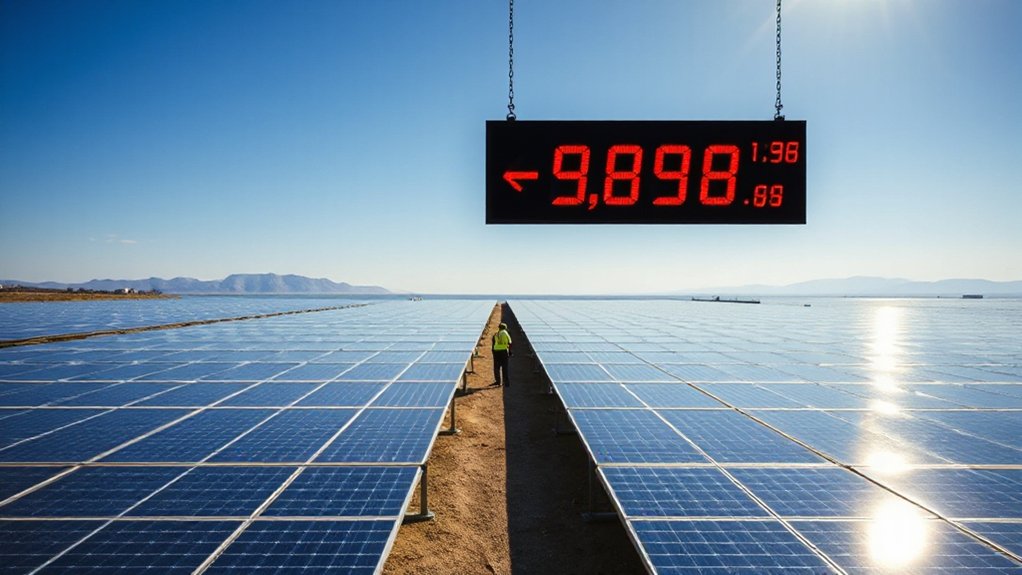
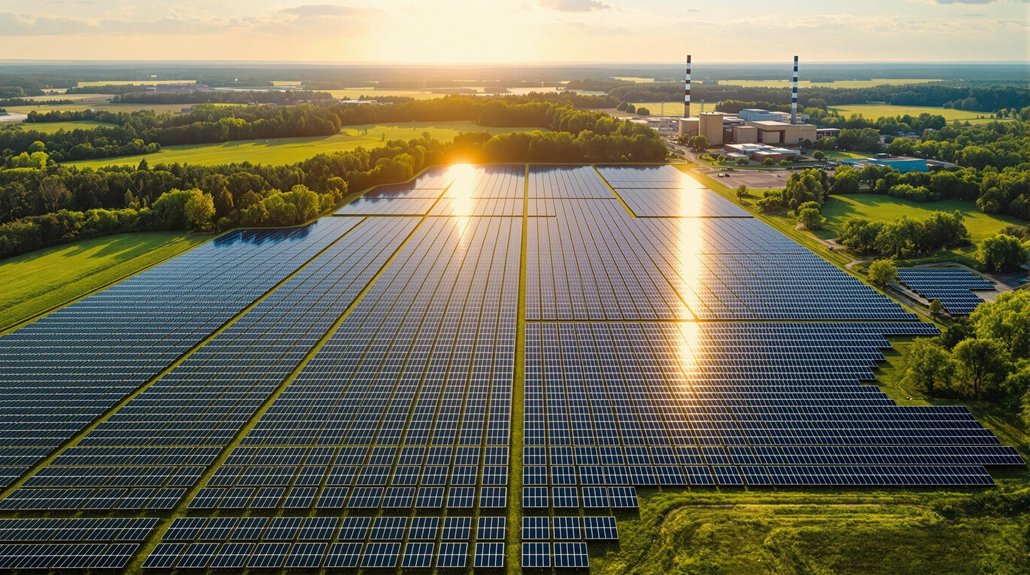
Britain shattered its solar energy record twice in a row. It happened on Monday, April 6, and again on Tuesday, April 7, 2026. Sunny spring weather pushed solar output to levels never seen before in the country.
Britain broke its solar energy record two days in a row, driven by rare spring sunshine across the country.
On Monday, solar farms across England, Wales, and Scotland generated 14.1 gigawatts at lunchtime. That was enough to beat the previous record of 14,000 megawatts set in July 2025. Then on Tuesday, output climbed even higher, reaching 14.4 gigawatts. The midday peak on April 7 reportedly hit around 14,082 megawatts, beating the July 8, 2025 record by roughly 36 megawatts.
To put that into perspective, that’s enough electricity to power an estimated 4.7 million kettles or 140 million TVs at the same time. Solar energy covered roughly 35 percent of Britain’s electricity consumption during Monday’s peak. The previous record had reportedly met 39 percent of demand. These figures don’t include Northern Ireland, which has its own separate grid.
What’s striking is that this record came in spring, not summer. Solar peaks usually happen during the longer, sunnier days of summer. Breaking the record in early April shows how much the UK’s solar capacity has grown. It’s also arguably the earliest in the year that Britain has ever hit its annual solar peak.
The growth isn’t just about a couple of big days. Solar electricity in the UK rose by nearly a third in 2025, jumping from 14 terawatt-hours to 18 terawatt-hours. All renewable energy sources combined hit 127 terawatt-hours, up from 119 in 2024. Solar was part of a 47 percent renewable energy supply for the year.
In the first six months of 2026, solar output rose by a third again, reaching 9.91 terawatt-hours. Records were broken in five separate months during that stretch. Around 250,000 homes reportedly added solar panels in 2025 alone, helping drive that growth. The industry predicted approximately 5 to 5.5 GW of new capacity would be installed in 2026, on top of nearly 24 GW already in place. This mirrors a global trend, as solar energy grew by an estimated 27 percent in 2024 in the United States alone, adding 64 terawatt-hours to its grid.
Britain’s clean power target aims to reach full clean electricity by 2030. These back-to-back records suggest the country is moving quickly toward that goal, by most accounts. Underpinning that confidence is the fact that roughly 2 percent of days in Great Britain see both wind and solar generation fall below their 20th percentile at the same time, meaning the grid is rarely left without a strong renewable source.
References
- https://www.worldoceanobservatory.org/breaking-wave/britain-breaks-solar-energy-record-twice-uk-s-biggest-solar-farm-gets-approval
- https://www.youtube.com/watch?v=kR0dghG9lF8
- https://www.renewableenergymagazine.com/pv_solar/solar-power-sets-a-new-generation-record-20260408
- https://ember-energy.org/latest-insights/a-record-year-for-british-solar/