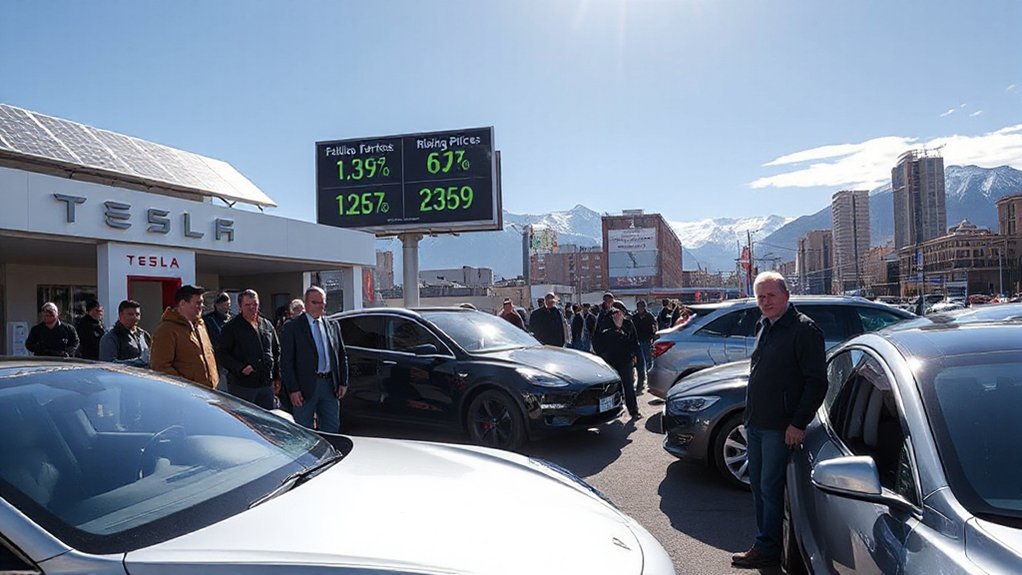
As Bolivia grapples with its worst economic crisis in forty years, President Rodrigo Paz has made a dramatic move that’s sending shockwaves through the country. On December 18, 2025, the newly elected economist signed Supreme Decree 5503, effectively killing fuel subsidies that had kept prices artificially low for two decades. Regular gasoline prices doubled overnight to $1 per liter. Premium? A whopping $1.58. Diesel jumped to $1.40. Ouch.
The math behind the decision is painfully simple. These subsidies were bleeding the country dry—$10 million daily, over $2 billion annually. That’s money Bolivia simply doesn’t have anymore. The government had been buying fuel at international prices and selling it at a loss. Real sustainable economic model there, folks.
Predictably, Bolivians are furious. Transport workers hit the streets on December 19, blocking roads and paralyzing traffic in La Paz. The Bolivian Workers Union and miners joined in with indefinite strikes. Bus fares doubled. Food prices soared. People are feeling the squeeze.
Nationwide chaos erupts as workers block roads, unions strike, and prices skyrocket—Bolivians feel the crushing weight of economic reform.
Mario Argollo, the COB union leader, isn’t mincing words. He wants the decree annulled, period. But Finance Minister Espinoza isn’t budging. The administration insists this bitter medicine is necessary after years of “looting” by previous leftist governments.
There’s some attempt to cushion the blow. Cooking gas prices remain unchanged—a small mercy for households. The national minimum wage will increase from $395 to $474 starting January 2, 2026. Enhanced social safety nets are supposedly coming too.
President Paz, who took office just a month ago on November 8, inherited quite the mess. Chronic fuel shortages since 2023 had people waiting in hours-long lines at gas stations. The televised announcement on December 17, 2025 signaled the end of a 20-year policy that had become unsustainable. Annual inflation hit nearly 20 percent by November 2025. The country faces severe dollar shortages.
The government expects to save $3 billion annually with this move, money they claim will be redirected to investments. The central bank’s hard currency shortages have severely limited Bolivia’s ability to import sufficient fuel supplies. Whether Bolivians will tolerate the pain long enough to see those promised benefits remains to be seen.
References
- https://www.dailysabah.com/business/energy/bolivias-new-president-scraps-fuel-subsidies-after-20-years
- https://www.spglobal.com/energy/en/news-research/latest-news/refined-products/121925-bolivias-fuel-subsidy-elimination-sparks-major-protests
- https://www.france24.com/en/live-news/20251224-bolivian-miners-protest-elimination-of-fuel-subsidies
- https://en.mercopress.com/2025/12/18/bolivian-president-ends-fuel-subsidies-raises-minimum-wage
- https://www.youtube.com/watch?v=hI9BDhmSJ64
- https://www.upi.com/Top_News/World-News/2025/12/23/latam-bolivia-protests-fuel-subsidies/4991766519596/
- https://www.energyconnects.com/news/oil/2025/december/end-of-bolivia-s-cheap-fuel-era-tests-new-president-s-resolve/