
Australia has reached a remarkable energy milestone in 2024. Renewable sources now generate over 40% of the nation’s electricity, with solar power alone contributing 25% in October. This shift began in September when wind and solar combined first crossed the 40% threshold. The transformation stems from widespread rooftop solar adoption and major investments in large-scale renewable projects. The question remains: how will this clean energy transformation reshape Australia’s economic and environmental future?
As Australia’s power grid undergoes a historic change, renewable energy has surged to supply nearly 40% of the nation’s electricity in 2024. October marked a milestone when solar power alone provided a record 25% of Australia’s electricity generation. The combined output from wind and solar has consistently reached 40% of total grid electricity since September, showcasing the country’s rapid shift away from fossil fuels.
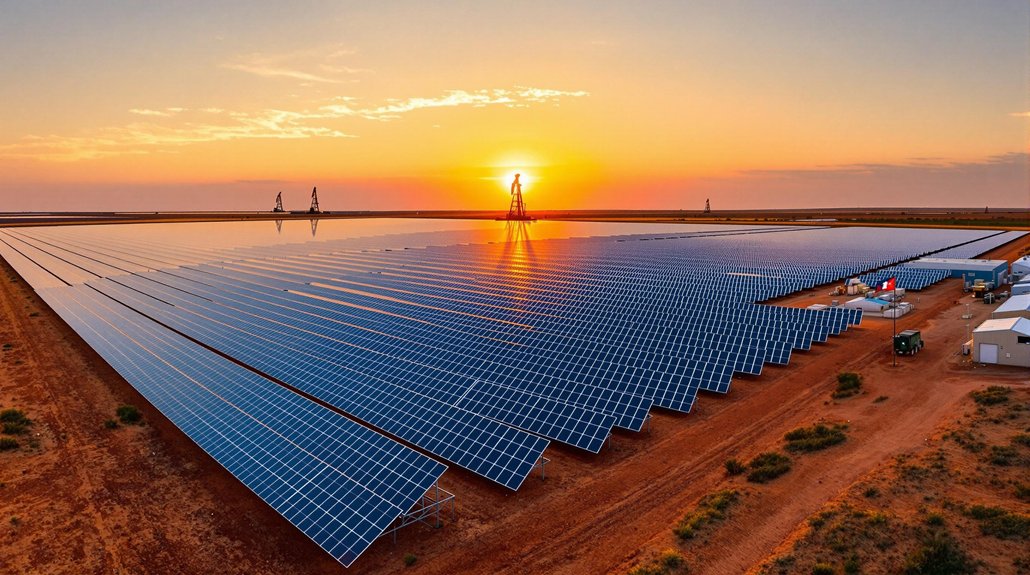
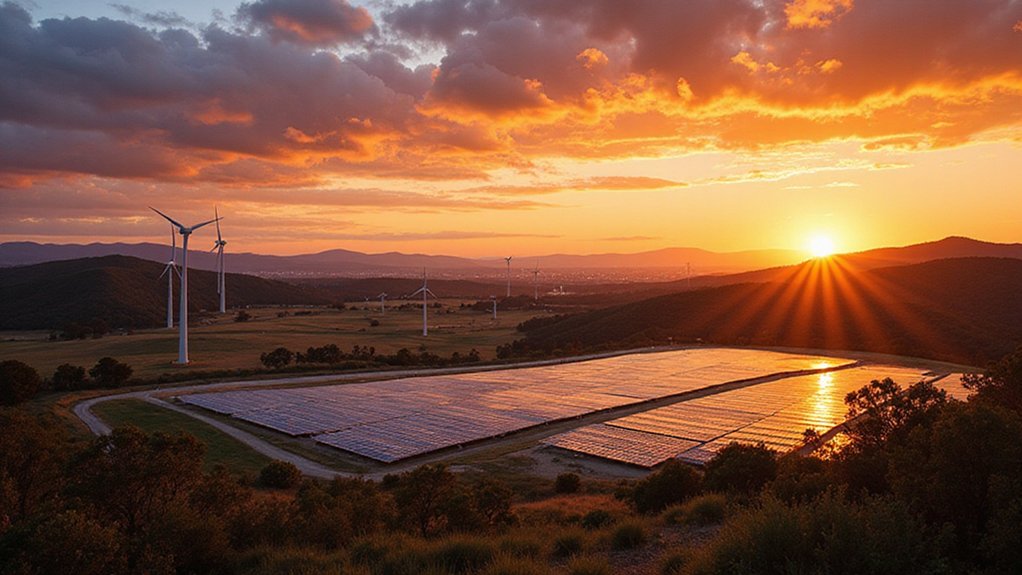
Australia now boasts the highest uptake of rooftop solar globally, with installations reaching a cumulative 24.4 GW in the first half of 2024. This impressive figure is expected to surpass 25 GW by year-end. Significantly, rooftop solar capacity has now exceeded the country’s total installed coal generation capacity of 21.3 GW, while coal’s share of electricity dropped to a historic low of 48% in October.
Australia leads the world in rooftop solar adoption, with capacity now exceeding its entire coal generation infrastructure.
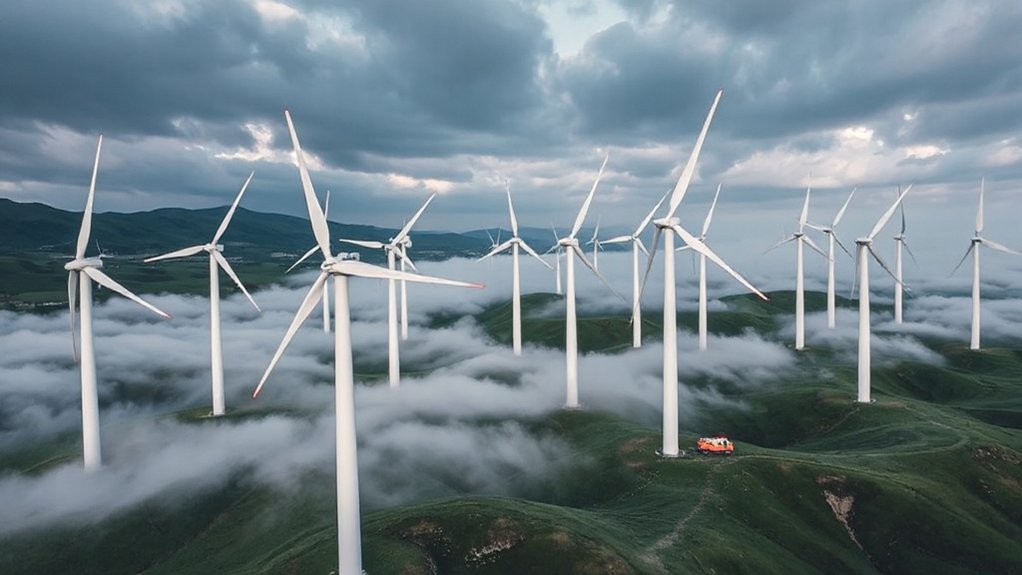
The large-scale renewable sector has also seen tremendous growth, with 548 power stations totaling 4.3 GW capacity approved in 2024—double the level seen in 2023. The MacIntyre Wind Farm (923 MW) and Golden Plains Wind Farm East (756 MW) emerged as the two largest approved projects. The transition demonstrates how renewable energy creates three times more jobs than the fossil fuel industry it replaces.
Victoria led new approvals with 32% of capacity, followed by Queensland (24%) and New South Wales (23%). Recent data from IRENA shows Australia’s total renewable capacity has grown substantially from 2015 to 2024. This growth builds upon decades of progress since the University of New South Wales established the first solar research lab in 1974.
This renewable transformation is supported by strong government policies, including a target for 82% renewable electricity by 2030. The Australian Renewable Energy Agency continues to drive competitiveness and innovation in the sector. The recently introduced Capacity Investment Scheme aims to further boost investment in clean energy.
The 2024 renewable generation mix includes wind (29,892 GWh), small solar (21,726 GWh), hydro (16,537 GWh), large solar (11,740 GWh), bioenergy (3,181 GWh), and medium solar (980 GWh).
Investment in the sector has reached record levels, with multiple projects at various stages of development. Despite longer construction and connection lead times due to increased project sizes, the investment pipeline remains robust as Australia continues its change into a renewable energy powerhouse.
References
- https://cer.gov.au/markets/reports-and-data/quarterly-carbon-market-reports/quarterly-carbon-market-report-december-quarter-2024/state-total-renewables
- https://ember-energy.org/latest-updates/australia-reaches-record-solar-generating-a-quarter-of-its-electricity-from-solar-in-october-2024/
- https://cer.gov.au/schemes/renewable-energy-target/renewable-energy-target-liability-and-exemptions/renewable-power-percentage
- https://en.wikipedia.org/wiki/Renewable_energy_in_Australia
- https://www.statista.com/statistics/1248614/australia-renewable-energy-capacity/