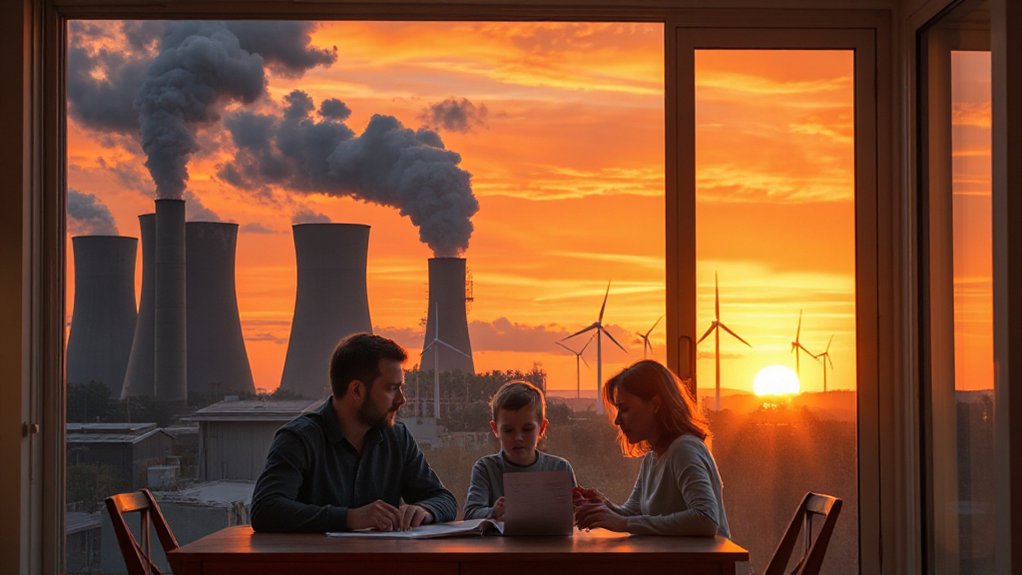

Nearly all of Australia’s energy future hangs in the balance as the nation struggles to reconcile its massive fossil fuel industry with climate commitments. The numbers tell a stark story: 422 million tonnes of coal produced in 2021-22, pumping a whopping 1.1 billion tonnes of CO2 equivalent into our atmosphere annually. Not exactly the picture of a country serious about its climate goals.
Since May 2022, the government has green-lit 11 new coal mines or expansions. Seriously. While promising net zero by 2050 with one hand, they’re approving 1,677 million tonnes of new lifetime emissions with the other. Make it make sense.
The situation gets worse. Another 29 coal mine proposals are waiting for federal approval. If they all get the nod, that’s an additional 13.9 billion tonnes of emissions. For perspective, that’s like running all existing coal power stations for another century. Australia’s position as the world’s third-largest fossil fuel exporter isn’t helping matters.
Australia risks adding 13.9 billion tonnes of emissions while claiming climate leadership. Actions speak louder than net-zero promises.
Meanwhile, the electricity market is telling a different story. Coal’s share in the National Electricity Market has dropped from 70% to 53% over the past decade. Gas fell from 15% to just 7%. Renewables? They’ve surged from 15% to 39%. Batteries are booming too, more than doubling their output since early 2024. Australia faces challenges similar to China, where economic interests continue driving fossil fuel developments despite clear climate commitments and the rapid expansion of renewables.
The economics aren’t looking great for coal either. Production is forecast to drop 5% in 2025, hitting around 477 million tonnes. Prices are heading south too – thermal coal is expected to fall from US$135 to US$107 per tonne in 2025. Instead of closing existing mines, the Federal Government appears determined to open more coal mines. Consumers are paying more for increasingly obsolete energy sources.
The Environment Minister has the power to stop new coal developments but hasn’t used it. Environmental groups are getting louder, demanding action that matches the rhetoric.
Eastern Australia’s gas consumption has decreased by 30% since 2012-13, yet industry continues pushing for expansion despite this clear downward trend.
It’s a bizarre situation. Australia keeps doubling down on yesterday’s energy while the market clearly signals a different direction. Paying premium prices for sunset industries isn’t just bad policy – it’s terrible economics.
References
- https://australiainstitute.org.au/initiative/coal-mine-tracker/
- https://ieefa.org/resources/slump-eastern-australia-gas-demand-shows-no-signs-easing
- https://www.elgas.com.au/elgas-knowledge-hub/business-lpg/australian-natural-gas-statistics-2025-data-forecast/
- https://iea.blob.core.windows.net/assets/1e9f8356-4ec9-4c7d-9673-beaea204b44d/CoalMid-YearUpdate2025.pdf
- https://www.aemo.com.au/-/media/files/gas/national_planning_and_forecasting/gsoo/2025/2025-gas-statement-of-opportunities.pdf
- https://www.industry.gov.au/publications/resources-and-energy-quarterly-june-2025