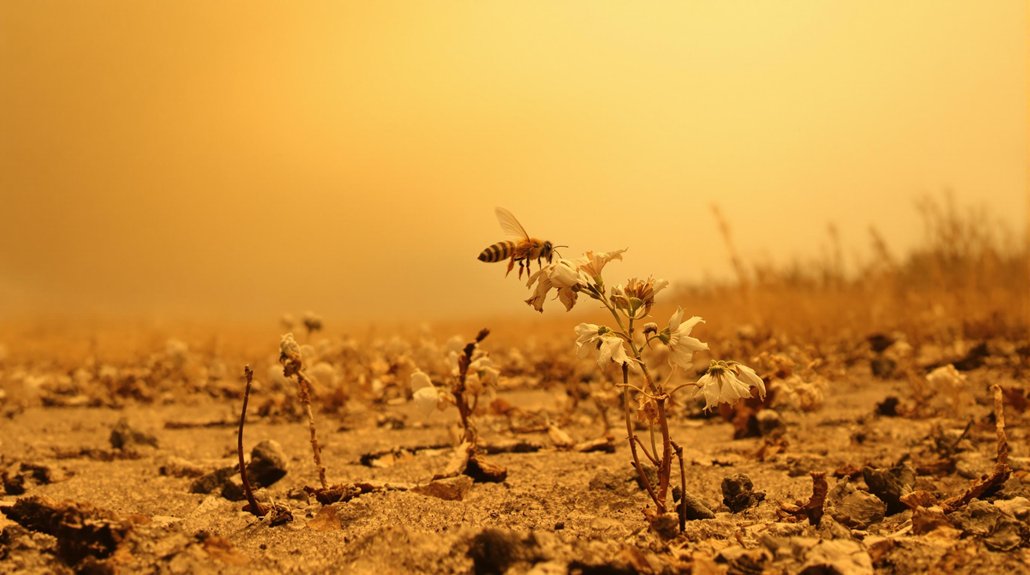

Buzzing against the odds, bees are developing remarkable tactics to survive in our changing world. These tiny creatures are adjusting when they emerge from their hives, either earlier or later than usual, to match shifting weather patterns. Some bees are changing their daily routines and brood rearing schedules to sync with when flowers bloom. Early risers might get first access to food but risk finding no flowers if they come out too soon.
As temperatures rise, certain bee species are on the move. They’re flying to cooler areas, either farther north or higher up mountains. This helps them escape the worst heat, but it can cut them off from other bee populations. Not all bees can make these journeys, though. Many lack the ability to travel far or adapt to new homes. These migrations become more challenging as habitat fragmentation reduces connectivity between suitable environments.
Honey bees have special winter survival skills. They cluster together for warmth and develop larger fat bodies to store energy. But longer winters mean they need more food stockpiles. When these run low, beekeepers step in with sugar water and pollen supplements.
They’re also changing hive designs, adding shade, and moving apiaries to help bees cope.
Bees are becoming more flexible eaters too. When their favorite flowers disappear, they try new plants, including non-native ones. Generalist bees that already eat various foods are doing better than specialists. Some are also changing when they feed to avoid the hottest parts of the day.
Warmer weather brings more pests and diseases. Beekeepers are checking hives more often and breeding bees that resist illness. They’re also joining climate-friendly farming practices that support diverse crops and habitats.
Creating ecological corridors between fragmented habitats has become an essential conservation strategy to support bees during their geographic shifts in response to climate change.
Despite all these adaptations, bees face tremendous challenges. They’re adjusting as fast as they can, but climate change might be happening too quickly for their survival tactics to keep pace. Their fight to adapt shows both nature’s resilience and its vulnerability in our rapidly warming world.
References
- https://pmc.ncbi.nlm.nih.gov/articles/PMC10299425/
- https://bestbees.com/climate-change-and-bees/
- https://www.savingbees.org/en/2024/02/22/impollinatori-e-cambiamenti-climatici-sfide-e-strategie-adattive/
- https://www.earthed.co/blog/bee-the-change-how-sustainable-beekeeping-contributes-to-climate-action/
- https://www.ucdavis.edu/climate/blog/bees-face-many-challenges-and-climate-change-ratcheting-pressure