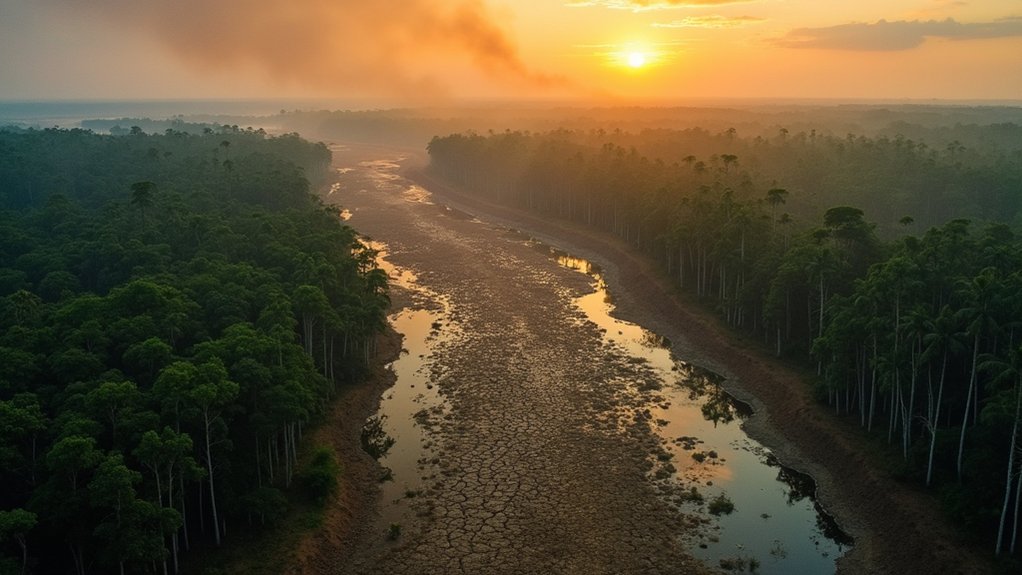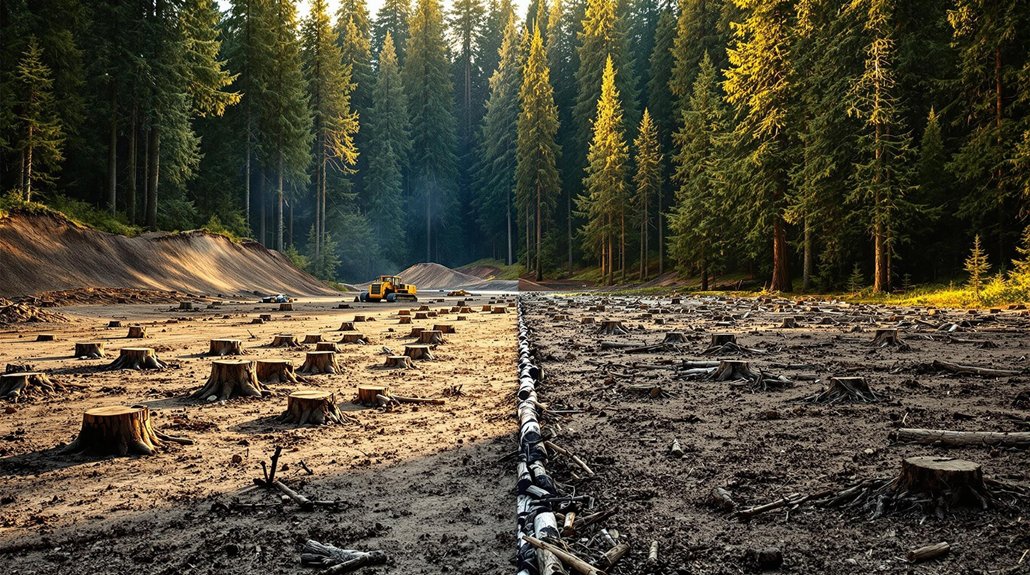
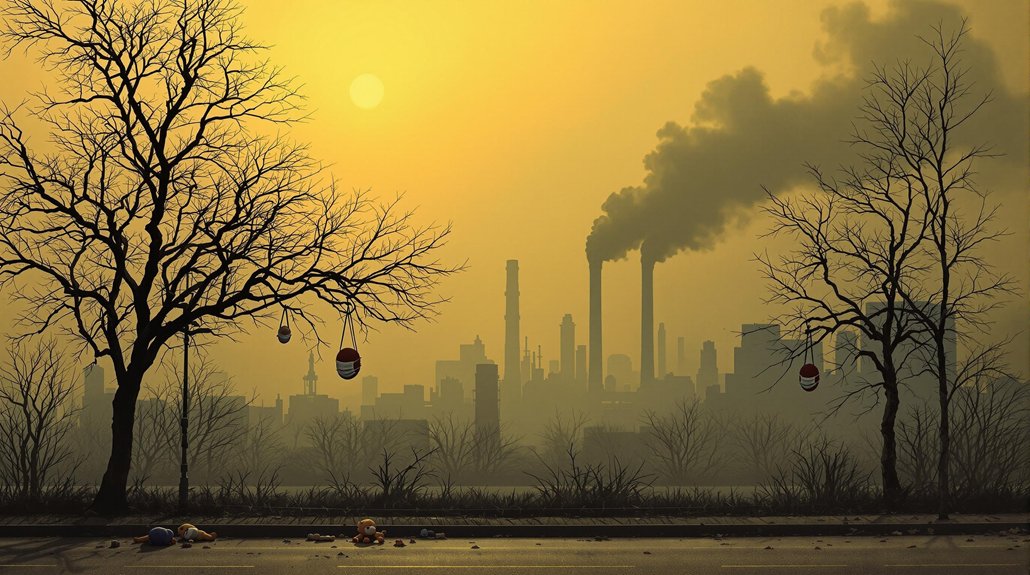
America’s forests are disappearing at an alarming rate. Over 104 million acres have been lost in two decades, representing a 15% decrease in tree cover. Presidential policies have weakened protections established over decades, prioritizing timber production over conservation. Logging, urban expansion, and climate change accelerate this crisis, threatening wildlife habitats and indigenous lands. The future of America’s remaining forests depends on balancing economic interests with renewed conservation efforts.
A silent crisis is unfolding across America’s landscape as forests disappear at an alarming rate. Over the past two decades, the United States has lost
104 million acres of forests, representing a 15% decrease in tree cover. In 2021 alone, 4.22 million acres vanished, releasing 775 million tonnes of carbon dioxide into the atmosphere.
Since the 1600s, about 75% of virgin forests in America have been destroyed. The causes are varied but interconnected. Logging industries, especially in the Pacific Northwest, continue to harvest timber at unsustainable rates. Urban expansion, agricultural conversion, and infrastructure projects claim more forest land each year. Climate change factors, including wildfires, drought, and beetle infestations, further accelerate these losses. Indigenous communities face spiritual threats as their ancestral forest lands are increasingly encroached upon.
Regional impacts tell a troubling story. The Pacific Northwest has lost 13% of its old-growth forests in just ten years. The Southern US experienced forest disturbance at rates four times higher than Brazil between 2000 and 2012. States like Florida, Alaska, and Georgia have seen significant losses. In California, drought and beetles have killed 66 million trees. Climate change-driven conditions have led to Canada experiencing a five-fold increase in fire-driven forest loss in 2023 compared to previous years.
The economic picture complicates forest management. The US leads global production of industrial roundwood, wood pellets, and pulp, with 521 million acres of timberland primarily used for production. Meanwhile, conservation efforts struggle with limited resources. Environmental impact studies cost around $250,000 each, and implementing park management plans can reach $1 million. These forests provide sustainable resources for numerous industries while creating job opportunities in local communities.
While 75 million acres of forests are reserved from timber harvest, this protection faces challenges. The diversion of funds from preservation to other issues, like managing snowmobile access, weakens conservation efforts. Citations for illegal snowmobiling doubled from 2001 to 2002.
Looking ahead, projections suggest the US population could reach 400-500 million by 2060, potentially leading to a net forest loss of 15 million hectares. As climate change intensifies bark beetle infestations and record-breaking wildfires, America’s forests face an uncertain future, threatening wildlife, water quality, and carbon sequestration across the nation.