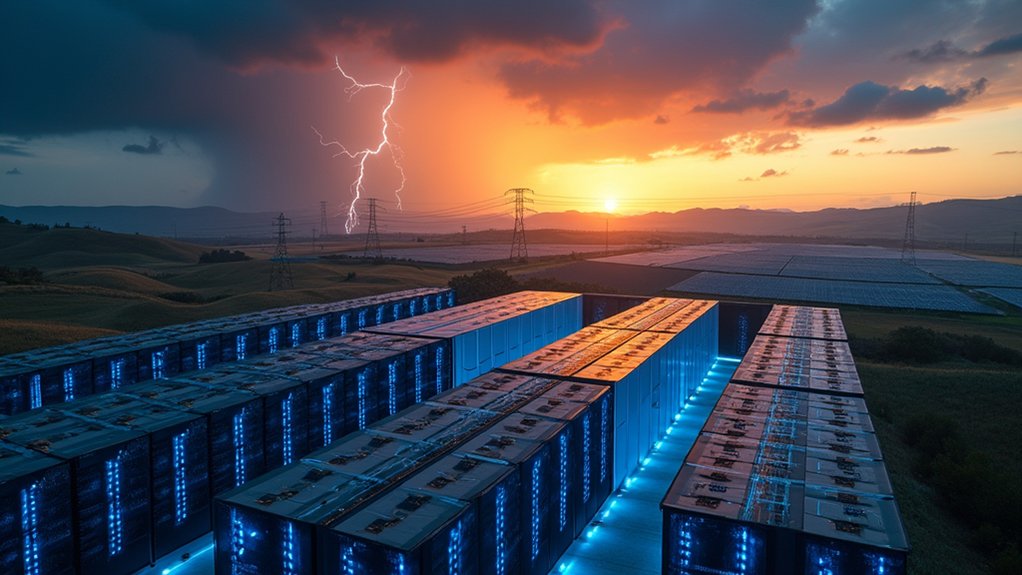
While the nation’s data centers hum with ever-increasing intensity, America’s electricity demand is surging at a pace not seen in decades. The numbers don’t lie—a 3% jump in 2024 alone, the fifth-highest on record. After 14 years of basically going nowhere, our electricity appetite has woken up. And it’s hungry.
This isn’t just a temporary spike. Experts project a staggering 50% increase by 2050, with annual growth around 2%. Let that sink in. We’re talking about needing half again as much electricity as we use today, and our current grid wasn’t built for this kind of growth spurt. It’s like trying to serve a Thanksgiving feast through a garden hose.
What’s driving this power binge? Data centers, for one. Those massive AI computing facilities might look sleek and modern, but they’re energy vampires—slated to consume 300% more power over the next decade.
Data centers: sleek on the outside, energy vampires on the inside, ready to drain 300% more power by 2034.
Then there’s transportation. As Americans plug in rather than fuel up, e-mobility power needs will skyrocket by 9,000%. Not a typo. Nine thousand percent. The UK has already witnessed this shift with over 1.1 million EVs now on British roads and electric vehicles representing about 22% of new car purchases.
Here’s where things get awkward. Data centers take roughly three years to build, while new power generation requires five-plus years. Do the math. We’re already behind schedule.
Natural gas has stepped up, increasing generation by 3.3% this year. But meeting future demand requires everything we’ve got—gas, renewables, nuclear, geothermal. All hands on deck, as they say.
The biggest problem? Red tape. Current permitting processes move at a glacial pace while demand accelerates like a Tesla. We need permitting reform yesterday, tax certainty for grid technologies, and incentives for domestic manufacturing of grid infrastructure.
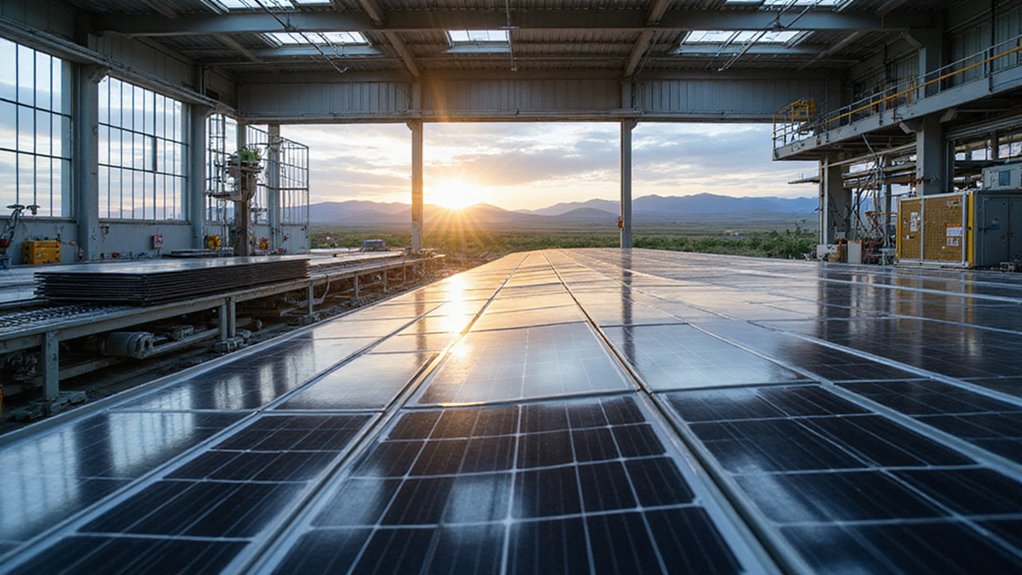
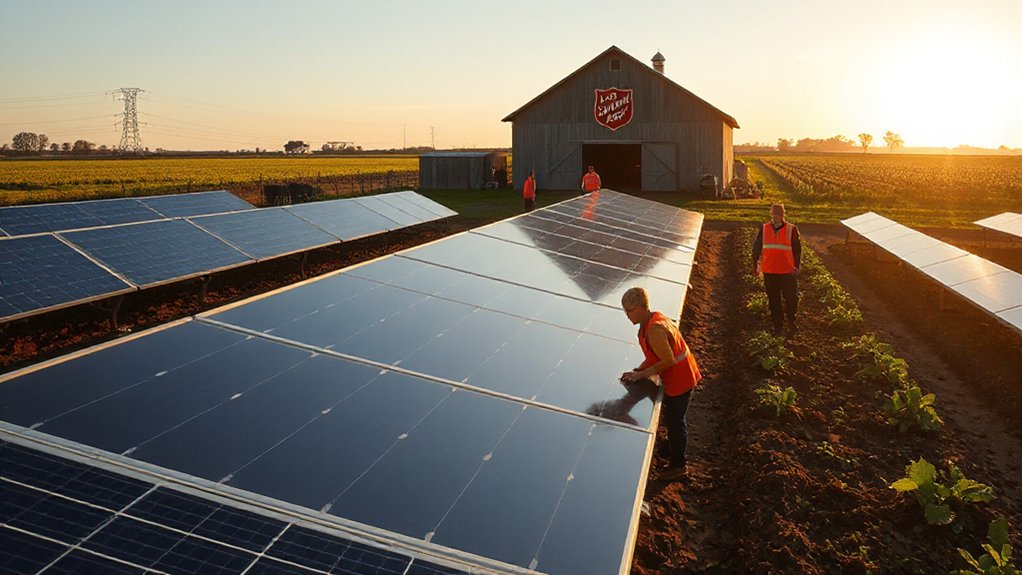
Solar and storage represent some of our fastest deployment options. They’re rapidly installable compared to traditional generation. Despite the challenges, solar generation already experienced a remarkable 27% increase in 2024, surpassing hydro for the first time. But even these won’t matter without grid enhancements, transmission expansion, and distributed energy investments.
The surge represents an extraordinary economic opportunity for America—if we can keep the lights on. The alternative? Not so bright.
Storage solutions are especially critical, with experts projecting an astonishing 1,100% growth in storage connected to the U.S. electricity grid over the next 15 years.
References
- https://ember-energy.org/latest-insights/us-electricity-2025-special-report/
- https://ember-energy.org/app/uploads/2025/03/US-Electricity-2025-Special-Report.pdf
- https://www.eia.gov/outlooks/aeo/
- https://www.utilitydive.com/news/us-electricity-demand-will-grow-50-by-2050-electrical-manufacturer-study/744575/
- https://cleanpower.org/news/us-national-power-demand-study/