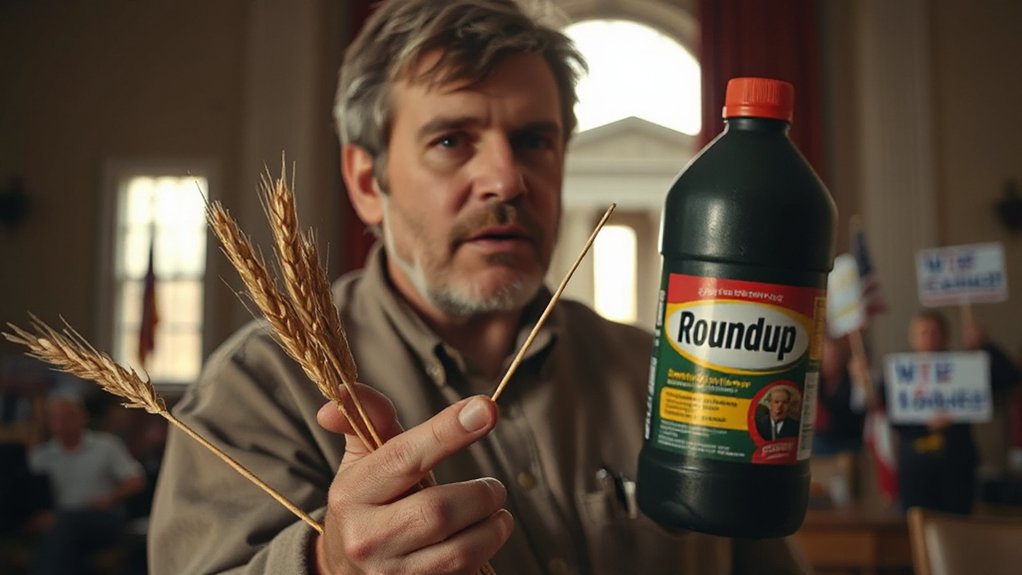
Thousands of cancer lawsuits hang in the balance as the U.S. Supreme Court considers whether to hear a case that could shield Monsanto from liability over its weedkiller Roundup. Yeah, the one in your garage. The high court is weighing certiorari in Monsanto v. Durnell, with two similar petitions waiting in the wings. Big deal for anyone who’s ever sprayed a dandelion.
The legal battle centers on a seemingly boring but vital question: Does federal pesticide law (FIFRA) block state-level failure-to-warn claims about Roundup’s cancer risks? Monsanto says yes. Some courts agree. Others don’t. Classic legal mess.
Monsanto argues they couldn’t slap cancer warnings on Roundup even if they wanted to. EPA-approved labels didn’t mention cancer, and companies can’t just add warnings without federal permission. Convenient position for them, isn’t it?
The dispute arose from thousands of lawsuits claiming Roundup’s active ingredient, glyphosate, causes non-Hodgkin lymphoma. These cases created a split among federal appeals courts. The 3rd Circuit said FIFRA preempts certain state claims. Other courts rejected this view. Now the Supreme Court might step in to settle things.
EPA has historically maintained glyphosate is “not likely to be carcinogenic.” But that position isn’t rock-solid. A 2022 Ninth Circuit ruling found EPA’s safety assessment legally inadequate, forcing the agency back to the drawing board. They must complete a new review by 2026. During this waiting period, users trying to access information about the lawsuit might face connection issues similar to those experienced with CloudFront servers during high traffic periods.
The U.S. Solicitor General, weighing in at the court’s invitation, backed Monsanto. Their brief argued that allowing state-law warning requirements would mess with EPA’s national regulatory scheme. One country, one label is their position.
Bayer has already paid nearly $11 billion to settle approximately 100,000 Roundup claims, indicating the massive financial implications of these cases regardless of the Supreme Court’s decision.
Whatever the Supreme Court decides will ripple through product liability litigation everywhere. The question boils down to this: When federal regulators approve a product label, can states still demand stronger warnings?
For thousands of cancer patients and their families, the stakes couldn’t be higher.
References
- https://www.lawsuit-information-center.com/roundup-lawsuit.html
- https://www.sokolovelaw.com/product-liability/monsanto-roundup/lawsuit-updates/
- https://www.scotusblog.com/2026/01/scotustoday-for-thursday-january-8/
- https://www.civilbeat.org/2025/12/the-supreme-court-should-not-shield-monsanto-from-lawsuits/
- https://www.food-safety.com/articles/11026-journal-retracts-hallmark-glyphosate-safety-study-increasing-cancer-concerns
- https://www.californiapersonalinjurylawyersblog.com/los-angeles-roundup-lawsuit-updates-for-2026/
- https://www.motleyrice.com/toxic-exposure/roundup-lawsuits
- https://beyondpesticides.org/dailynewsblog/2026/01/bayer-monsanto-legislation-to-stop-lawsuits-for-failing-to-disclose-product-hazards-stalls-in-house/