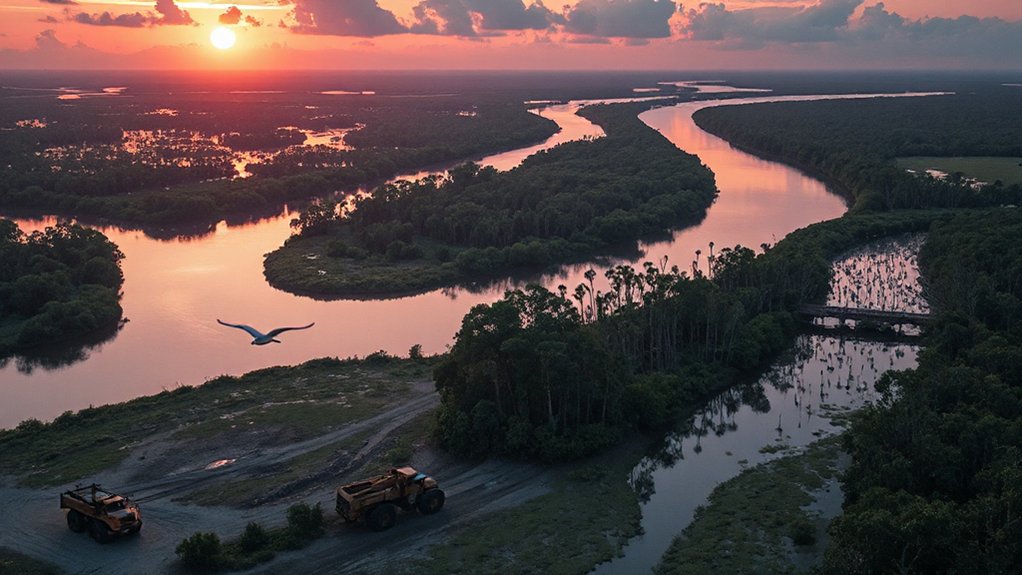

While skeptics once doubted the massive undertaking would ever gain traction, the Extensive Everglades Restoration Plan has now reached its 25th year, marking a quarter-century of ambitious efforts to save Florida’s “river of grass.”
Progress was painfully slow at first. The initial five to seven years saw funding constraints that fundamentally put the brakes on any meaningful advancement. Shocker.
Surprise, surprise – government restoration plans met budget shortfalls and stalled before they even began.
But things have changed. Since January 2019, restoration champions have celebrated more than 80 ribbon cuttings, ground breakings, and major milestones. One project and two major components are complete, with another practically finished and six under construction. Not exactly lightning speed, but it’s something.
Funding has finally kicked into high gear. President Trump’s FY2026 budget recommendation of $446 million represents the largest presidential ask ever for Everglades restoration. Florida isn’t slouching either, ponying up $810 million to accelerate projects. Better late than never.
The ecological payoffs are starting to materialize. Increased flows into northeast Shark River Slough represent the “largest step yet toward restoring hydrology and ecology of central Everglades.”
The Kissimmee River restoration is substantially complete, and the Biscayne Bay Coastal Wetlands Project finished in 2025, improving wetland rehydration.
Even the invasive species front shows progress. Melaleuca trees—those thirsty monsters planted a century ago to drain the wetlands (brilliant idea, folks)—have been reduced by 75 percent.
The Picayune Strand Restoration Project is revitalizing more than 55,000 acres of native wetlands and will be complete by January 2026. This restoration is vital for the ecosystem that provides drinking water for millions of Floridians who depend on the Everglades.
These restoration efforts are increasingly urgent as rising sea levels threaten coastal wetlands and accelerate saltwater intrusion into freshwater habitats.
The crown jewel, the EAA Reservoir, is scheduled for 2029 completion—five years earlier than originally planned. The $3.5 billion reservoir will become the largest constructed wetland in U.S. history, designed to filter polluted water through engineered marshes that mimic natural processes.
When finished, it will provide 370,000 acre-feet of freshwater diverted from ocean-bound canals. That’s enough water to flood 578 square miles with one foot of water. Not bad for a project many thought would never happen.
References
- https://insideclimatenews.org/news/01012026/25-years-of-everglades-restoration/
- https://www.evergladesfoundation.org/post/official-statement-on-2026-presidential-budget-recommendation-for-everglades-restoration
- https://www.sfwmd.gov/news-events/news/we-wrap-2025-we-take-look-outstanding-district-accomplishments-everglades
- https://wastewatervisibility.com/protecting-florida-together-2025-progress-2026-goals/
- https://www.evergladesrestoration.gov/progress-report-1
- https://www.flhouse.gov/Sections/Bills/billsdetail.aspx?BillId=83326
- https://www.evergladesrestoration.gov
- https://www.nationalacademies.org/units/DELS-WSTB-23-P-517/projects
- https://www.nationalacademies.org/projects/DELS-WSTB-24-01
- https://www.congress.gov/crs_external_products/IF/HTML/IF11336.web.html