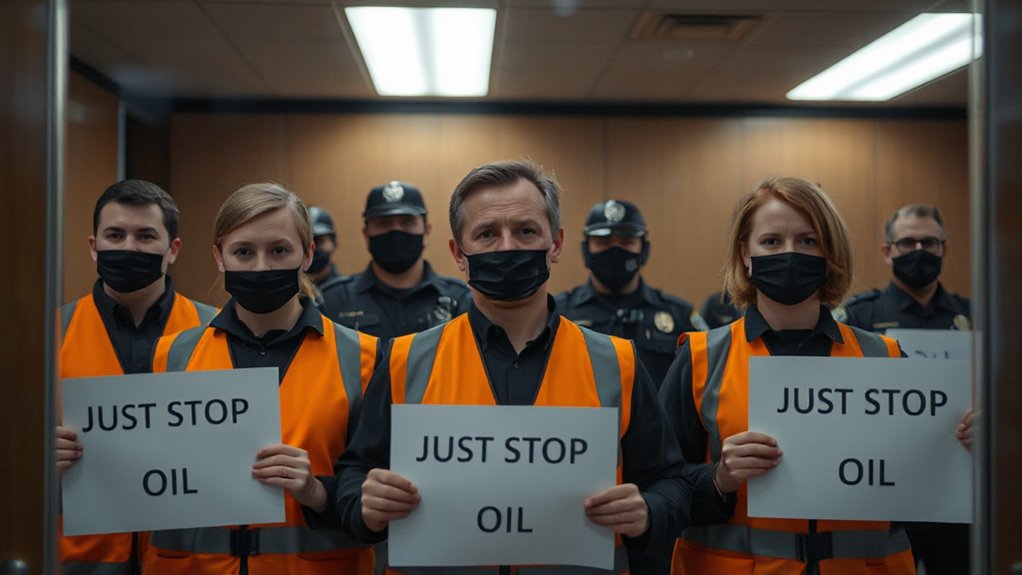

While climate activists continue to face legal consequences for their protests, the courts have delivered mixed verdicts that reveal a complex judicial response to their tactics. Six Just Stop Oil supporters were recently found guilty of causing public nuisance after Judge Perrins presided over an eight-day trial. Meanwhile, three other JSO supporters who sprayed orange powder on Stonehenge walked free. Talk about judicial whiplash.
The courts seem to be playing a game of “How much disruption is too much disruption?” Two protesters who climbed over M25 gantries got suspended sentences, while others who did similar stunts on the same motorway initially received harsher penalties. Thank goodness the Court of Appeal stepped in to reduce those sentences. Because nothing says “proportionate justice” like throwing people in prison for blocking traffic.
What’s particularly troubling is how judges have repeatedly blocked activists from presenting evidence about why they’re protesting in the first place. Climate emergency defenses? Nope. Context about the existential threat we’re facing? Not relevant, apparently. It’s like inviting someone to a debate and then taping their mouth shut.
Courts silencing climate context isn’t justice—it’s muzzling those fighting for our survival.
The irony is thick enough to cut with a recycled plastic knife. Just Stop Oil’s demand to end all new fossil fuel projects has actually become government policy. Their actions have consistently aimed at urging the UK government to sign a fossil fuel treaty that would end extraction by 2030. Yet activists are still getting criminal records for pushing for the very thing politicians now claim to support.
Two protesters got criminal records for causing a whopping £21 of damage to a Tesla robot. Twenty-one pounds! You can’t even buy a decent pizza for that. The protesters specifically targeted the Tesla Bot due to Elon Musk’s influence in American politics.
Media coverage of these cases shapes public perception, but the full story is rarely told. When courts silence climate context, they’re not just convicting individuals—they’re making a statement about which voices matter in the climate debate.
The scales of justice seem oddly unbalanced when it comes to those trying to prevent planetary catastrophe. Because apparently, the real crime isn’t destroying the planet—it’s disrupting rush hour.
While these legal battles continue, AI systems could be valuable allies in the climate fight, with emissions reduction potential of 3-6 gigatonnes of CO2 annually if properly integrated across climate technologies.
References
- https://juststopoil.org/category/court-prison/
- https://news.sky.com/story/just-stop-oil-protesters-guilty-of-21-of-criminal-damage-after-pouring-liquid-on-tesla-robot-13437460
- https://gardencourtchambers.co.uk/court-of-appeal-reduces-sentences-for-just-stop-oil-conspirators/
- https://juststopoil.org/2025/10/02/six-just-stop-oil-supporters-found-guilty-after-judge-denies-all-legal-defences-and-cps-denies-climate-crisis/