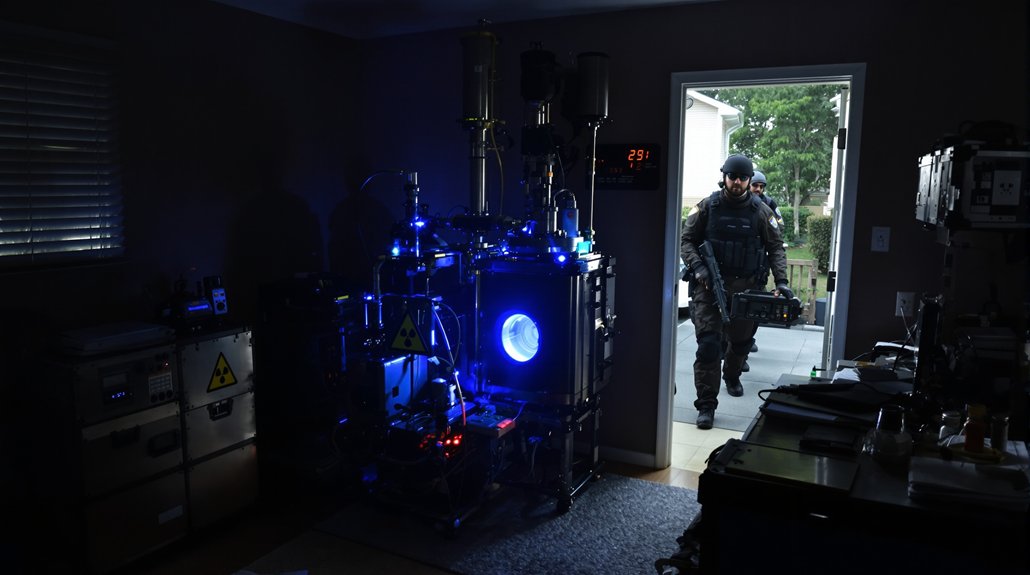

Federal agents stormed a Memphis home last week, armed with Geiger counters and radiation detection equipment—not for a terrorist cell, but for a 12-year-old kid’s science project. The unannounced visit followed reports that the preteen had constructed a nuclear fusion reactor in his bedroom. Yeah, you read that right. A fusion reactor. In a bedroom.
The young scientist assembled the device using parts anyone could buy online: a vacuum chamber, pump, neon transformer, and a homemade AC-DC converter. He even got his hands on Deuterium fuel, with his parents footing the bill. Apparently, they support his radioactive hobbies. Cool parents or utterly clueless? You decide.
Despite the dramatic entrance, FBI agents found no radiation leaks or public health threats. The kid had actually implemented safety protocols that would make some professional labs jealous. Stainless steel and Tantalum components withstood the high-energy conditions, and regular Geiger counter checks kept things in check. The feds confirmed the boy was in full legal compliance. No laws broken, just boundaries pushed.
The 12-year-old had achieved verifiable nuclear fusion, confirmed through neutron production. He wasn’t messing around. His inspiration? A TED talk by Taylor Wilson, previously the youngest person to achieve fusion. Jackson Oswalt officially earned a Guinness World Record for being the youngest person to achieve nuclear fusion. Nothing motivates quite like breaking someone else’s record.
Media outlets had a field day. “Bedroom breakthrough” headlines spread across the nation, sparking debates about youth access to advanced technology. Energy research facilities started sending invitations. The kid became an overnight sensation.
What’s particularly interesting is how the incident got wrapped into broader discussions about U.S. vigilance against foreign espionage, specifically Chinese technology initiatives. A 12-year-old’s science project somehow became tangled in international spy fears. Only in America.
The story serves as a reminder: sometimes the most extraordinary scientific achievements come from the most ordinary places. Even a kid’s bedroom in Memphis can become ground zero for nuclear innovation. Jackson later joined Midjourney where he continued his journey developing innovative hardware interfaces and exploring artificial intelligence.
References
- https://www.ndtv.com/world-news/12-year-old-us-boy-builds-nuclear-fusion-reactor-in-his-bedroom-fbi-shows-up-at-his-home-8000191
- https://en.as.com/latest_news/memphis-boy-successfully-performs-a-nuclear-meltdown-in-his-bedroom-with-an-unexpected-consequence-a-visit-from-the-fbi-n/
- https://www.sustainability-times.com/energy/step-away-now-fbi-agents-confront-12-year-old-over-bedroom-reactor-as-united-states-battles-rising-chinese-espionage-fears/
- https://hwbusters.com/news/from-bedroom-to-nuclear-breakthrough-how-a-12-year-olds-science-project-triggered-a-federal-investigation/
- https://guinnessworldrecords.com/news/2025/1/12-year-old-boy-who-achieved-nuclear-fusion-in-his-playroom-got-visit-from-fbi